

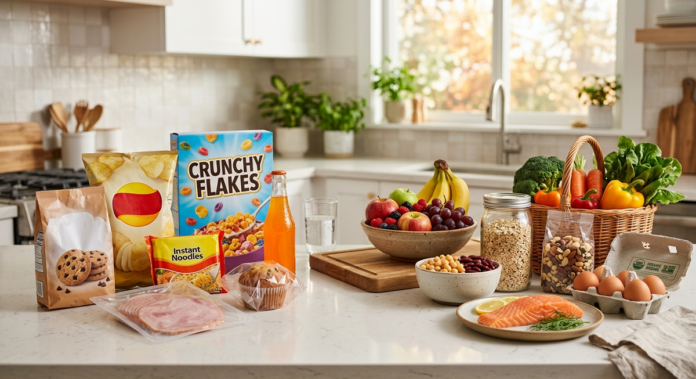
Have you ever looked at a food label and wondered why a simple snack has a long list of ingredients you barely recognize?
You may be looking at an ultra-processed food.
Ultra-processed foods, often called UPFs, are now a major part of many people’s diets. They include many packaged snacks, sugary drinks, instant meals, sweetened breakfast products, processed meats, and other ready-to-eat foods.
But what makes a food “ultra-processed”? Is all processed food unhealthy? And do you need to avoid ultra-processed foods completely?
The answers are more helpful than a simple yes or no.
Research has linked higher consumption of ultra-processed foods with several health problems. However, not every packaged or processed food is automatically unhealthy. Learning how to recognize ultra-processed foods can help you make better choices without following strict food rules.
In this guide, we’ll explain what ultra-processed foods are, how to identify them, common examples, possible health effects, and simple ways to eat fewer of them.
What Are Ultra-Processed Foods?
Ultra-processed foods are foods that have gone through several industrial processes and often contain ingredients that are not normally used in home cooking.
The term is commonly used under the NOVA food classification system, which groups foods based on how much they have been processed and why.
Ultra-processed foods are usually made from combinations of ingredients such as refined starches, sugars, oils, protein isolates, flavorings, colors, sweeteners, emulsifiers, and other additives.
They are often designed to be:
- Ready to eat or drink
- Convenient
- Long-lasting
- Easy to prepare
- Highly tasty
- Consistent in flavor and texture
Examples can include some:
- Soft drinks
- Packaged cookies
- Candy
- Chips
- Sweetened breakfast cereals
- Instant noodles
- Chicken nuggets
- Packaged cakes
- Some frozen meals
- Processed meat products
- Sweetened flavored drinks
The important point is that processing itself is not the problem.
Many healthy foods are processed in some way. The bigger question is how much processing has occurred and what ingredients have been added.
Is All Processed Food Bad for You?
No.
This is one of the most important things to understand.
The word “processed” can sound negative, but almost every food we eat has been processed in some way.
For example:
- Washing vegetables is processing.
- Freezing fruit is processing.
- Cooking beans is processing.
- Pasteurizing milk is processing.
- Grinding wheat into flour is processing.
- Canning fish is processing.
These foods can still be part of a healthy diet.
Harvard’s Nutrition Source explains that foods fall across different levels of processing, from unprocessed and minimally processed foods to processed and ultra-processed foods.
So instead of asking, “Is this food processed?”, a better question is:
“How processed is this food, and what does it contain?”
The 4 Levels of Food Processing
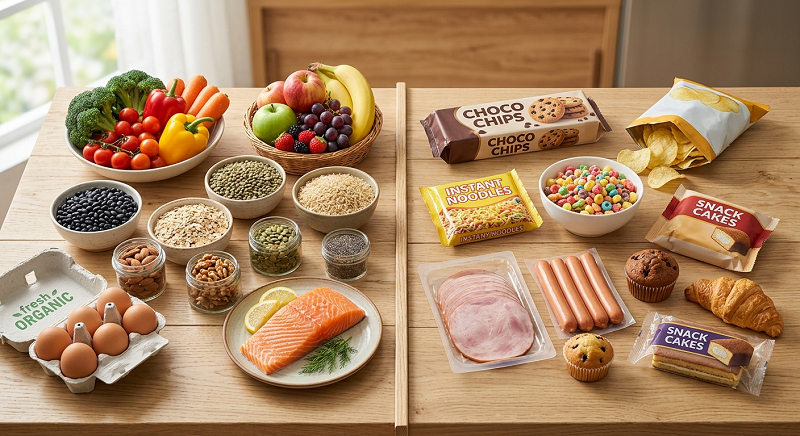
The NOVA system divides foods into four broad groups.
Understanding these groups makes it easier to identify ultra-processed foods.
1. Unprocessed or Minimally Processed Foods
These foods are close to their natural form.
They may be cleaned, cut, dried, frozen, pasteurized, or cooked, but they do not usually contain many added ingredients.
Examples include:
- Fresh fruits
- Fresh vegetables
- Eggs
- Plain milk
- Plain yogurt
- Beans
- Lentils
- Nuts
- Seeds
- Fish
- Fresh meat
- Brown rice
- Oats
These foods form the foundation of many healthy eating patterns.
The World Health Organization recommends that minimally processed and unprocessed foods make up the foundation of a healthy diet.
2. Processed Culinary Ingredients
These are ingredients used to prepare and cook other foods.
Examples include:
- Olive oil
- Vegetable oils
- Butter
- Salt
- Sugar
- Vinegar
These foods can have a place in a balanced diet. The key is how much you use and what you combine them with.
For example, adding a small amount of olive oil to vegetables is very different from eating a highly processed snack made mostly from refined starch, sugar, oils, and additives.
3. Processed Foods
Processed foods are often made by adding ingredients such as salt, sugar, or oil to otherwise basic foods.
Examples can include:
- Canned vegetables with added salt
- Canned fish
- Some cheeses
- Traditional bread
- Fruit canned in syrup
- Some fermented foods
These foods are not automatically unhealthy.
For example, canned beans can be a convenient and nutritious choice. If they contain a lot of sodium, you can rinse them before eating.
The goal is not to fear processed food.
The goal is to understand the difference between processed foods and ultra-processed foods.
4. Ultra-Processed Foods
Ultra-processed foods are the most heavily processed group in the NOVA system.
They often contain several ingredients and substances that are uncommon in a typical home kitchen.
These can include:
- Flavor enhancers
- Artificial or natural flavorings
- Color additives
- Emulsifiers
- Sweeteners
- Thickeners
- Modified starches
- Protein isolates
- Preservatives
They are often manufactured through several industrial processes.
Common examples include packaged snacks, sugary drinks, instant noodles, some breakfast cereals, packaged desserts, and chicken nuggets.
How to Identify Ultra-Processed Foods
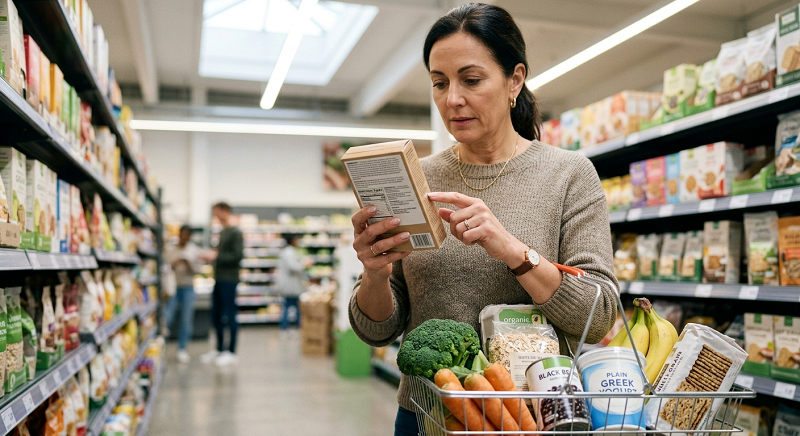
You do not need to memorize every additive or ingredient.
Instead, learn a few simple clues.
1. Check the Ingredient List
A long ingredient list does not automatically mean a food is ultra-processed.
However, a product with many ingredients that are rarely used in home cooking may be a clue.
Look for ingredients such as:
- Flavorings
- Artificial colors
- Emulsifiers
- Sweeteners
- Modified starches
- Protein isolates
- Hydrogenated oils
- Certain preservatives
- Flavor enhancers
These ingredients are often used to improve taste, texture, appearance, or shelf life.
2. Look for Added Sugar
Many ultra-processed foods contain significant amounts of added sugar.
This can include products that do not taste like candy.
Examples include some:
- Breakfast cereals
- Flavored yogurt
- Granola bars
- Packaged breads
- Sauces
- Coffee drinks
- Ready-to-drink beverages
Too much added sugar can make it easier to consume more calories without feeling full.
3. Watch the Sodium
Some ultra-processed foods contain large amounts of sodium.
Common sources include:
- Instant noodles
- Packaged soups
- Processed meats
- Chips
- Frozen meals
- Savory snack foods
Eating too much sodium can contribute to high blood pressure in some people.
4. Consider the Food’s Form
Ultra-processed foods are often ready to eat or require very little preparation.
Think about foods that you can:
Open → heat or pour → eat.
Convenience is not automatically bad.
But if most of your meals come from ready-to-eat packaged products, it may be worth adding more whole or minimally processed foods.
Common Ultra-Processed Foods
You may already have some of these foods in your kitchen.
Breakfast
- Sugary breakfast cereals
- Flavored instant oatmeal
- Sweet breakfast pastries
- Some packaged breakfast sandwiches
Snacks
- Potato chips
- Cheese-flavored snacks
- Cookies
- Candy
- Packaged cakes
- Some protein or snack bars
Drinks
- Soft drinks
- Energy drinks
- Sweetened fruit drinks
- Some flavored coffee drinks
- Sweetened bottled teas
Main Meals
- Instant noodles
- Some frozen dinners
- Chicken nuggets
- Some frozen pizzas
- Some ready-made pasta meals
Meat Products
- Hot dogs
- Some sausages
- Some luncheon meats
- Other heavily formulated processed meat products
Remember that classification can vary between products. Checking the ingredient list and nutrition label is more useful than judging a food by its name alone.
Why Are Ultra-Processed Foods So Popular?
There is a simple reason: they are convenient.
Modern life is busy.
People work long hours, care for children, commute, study, exercise, and manage countless daily tasks.
A packaged meal can be prepared in minutes.
Ultra-processed foods are also often:
- Affordable
- Easy to store
- Easy to carry
- Ready to eat
- Consistent in taste
- Widely available
This does not mean people who eat them are making poor choices.
Food choices are influenced by time, money, access, culture, advertising, and personal preferences.
The goal should be to make healthier choices easier—not to create guilt around food.
Are Ultra-Processed Foods Unhealthy?
A growing body of research has found an association between higher ultra-processed food intake and several health outcomes.
A major 2024 umbrella review published in The BMJ examined 45 pooled analyses involving almost 10 million people. Higher exposure to ultra-processed foods was associated with several adverse health outcomes, including cardiovascular disease-related mortality, type 2 diabetes, obesity, and some mental health outcomes.
However, there is an important detail.
Much of this evidence comes from observational studies. These studies can show an association but cannot always prove that ultra-processed foods directly caused the health problem.
The same BMJ review found that the certainty of evidence varied across outcomes, with much of the evidence rated low or very low quality.
So the science supports caution, but it does not mean that every ultra-processed food causes disease.
Ultra-Processed Foods and Weight Gain
One reason ultra-processed foods may affect weight is that many are easy to eat quickly and may contain high amounts of calories, sugar, fat, or refined carbohydrates.
Some are also low in fiber.
This combination can make it easy to eat a large amount before feeling satisfied.
The World Health Organization notes that diets containing significant amounts of highly processed foods are often high in sodium, sugar, or unhealthy fats and are associated with negative health outcomes.
Instead of focusing only on calories, think about the quality and structure of your meals.
A meal built around vegetables, beans, whole grains, lean protein, fruit, and healthy fats can provide more fiber and nutrients than a meal made mainly from highly processed products.
Ultra-Processed Foods and Heart Health
Heart health is another reason to pay attention to your overall intake.
Some ultra-processed foods are high in sodium, saturated fat, and added sugar.
Eating too much of these nutrients may make it harder to maintain a heart-healthy diet.
The WHO recommends a varied diet built around foods such as vegetables, fruits, legumes, whole grains, and other nutritious foods while limiting foods high in unhealthy fats, free sugars, and sodium.
Reducing ultra-processed foods can therefore be useful when it helps you replace them with more nutritious choices.
Ultra-Processed Foods and Type 2 Diabetes
Research has also linked higher ultra-processed food consumption with a greater risk of type 2 diabetes.
The 2024 BMJ umbrella review found convincing evidence of an association between greater ultra-processed food exposure and higher risk of incident type 2 diabetes, although the quality of evidence varied.
This does not mean that eating one cookie or a serving of instant noodles will cause diabetes.
Your overall diet, activity level, body weight, genetics, sleep, and other factors all matter.
The bigger concern is a long-term dietary pattern dominated by highly processed foods.
Do You Need to Stop Eating Ultra-Processed Foods?
For most people, an extreme approach is not necessary.
You do not need to throw away every packaged food in your kitchen.
Instead, focus on balance and gradual improvement.
Try these simple changes:
Instead of:
Sugary breakfast cereal every morning
Try:
Oatmeal topped with fruit and nuts.
Instead of:
Chips every afternoon
Try:
Fruit, nuts, plain yogurt, or another minimally processed snack.
Instead of:
Instant noodles as a regular meal
Try:
Rice or another whole grain with vegetables, eggs, fish, beans, or lean meat.
Instead of:
Sugary drinks
Try:
Water, sparkling water, or unsweetened tea.
Small changes can add up over time.
Instead of focusing only on foods to avoid, focus on adding more nutritious options to your meals. Check out our guide to the best everyday foods for energy, digestion, and wellness for simple food choices that can help replace highly processed options.
Healthy Foods Can Still Be Convenient
One common mistake is thinking that healthy eating must take hours.
It does not.
You can build quick meals using simple ingredients.
Try keeping these foods available:
- Frozen vegetables
- Canned beans
- Canned tuna or fish
- Eggs
- Oats
- Brown rice
- Fresh or frozen fruit
- Plain yogurt
- Nuts and seeds
- Whole-grain bread
- Pre-cut vegetables
Frozen vegetables, canned beans, and other convenient foods can save time while still supporting a healthy eating pattern.
The WHO emphasizes variety, balance, moderation, and adequacy as key principles of healthy eating.
A Simple Rule for Eating Less Ultra-Processed Food
Try this simple approach:
Add before you subtract.
Instead of starting with a list of foods you cannot eat, add more nutritious foods to your meals.
Add:
- One extra serving of vegetables
- A piece of fruit
- More beans
- Whole grains
- Nuts or seeds
- Water instead of a sugary drink
- A protein-rich food
As nutritious foods take up more space on your plate, there may naturally be less room for highly processed foods.
This approach is often easier to maintain than strict food rules.
What About “Healthy” Ultra-Processed Foods?
This can be confusing.
Some packaged foods are marketed as healthy because they are:
- High in protein
- Low in fat
- Low in sugar
- High in fiber
- Fortified with vitamins
- Made with plant-based ingredients
A product can still be useful even if it is highly processed.
For example, a convenient fortified food may help someone meet a nutritional need.
The word “ultra-processed” alone does not tell you everything about a food’s nutritional value.
This is one reason researchers continue to study whether the level of processing itself, specific ingredients, nutritional quality, or a combination of factors explains the observed health associations.
Rather than judging one food in isolation, look at your overall dietary pattern.
A Better Way to Think About Ultra-Processed Foods
Instead of asking:
“Can I never eat this again?”
Ask:
“How often do I eat this, and what could I eat instead?”
That small change in thinking can make healthy eating feel much easier.
You can enjoy an occasional packaged snack while still eating mostly nutritious foods.
Healthy eating is not about being perfect.
It is about what you do most of the time.
7 Easy Ways to Eat Fewer Ultra-Processed Foods
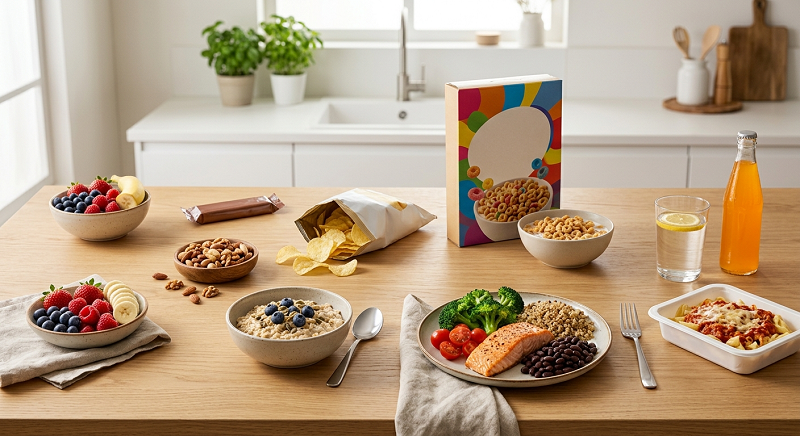
Here are simple steps you can start today.
1. Drink More Water
Replace some sugary drinks with water or unsweetened beverages.
2. Eat More Whole Foods
Add more fruits, vegetables, beans, whole grains, nuts, seeds, eggs, and fish.
3. Read Ingredient Lists
Do not rely only on front-of-package health claims.
Turn the package around and read the ingredients.
4. Prepare Simple Meals
You do not need complicated recipes. A simple combination of protein, vegetables, and whole grains can make a balanced meal.
5. Keep Healthy Snacks Ready
Keep fruit, nuts, boiled eggs, or plain yogurt available when hunger strikes.
6. Shop the Edges of the Store—But Not Only There
Fresh foods are often found around the outside of grocery stores, but healthy choices can also be found in canned, frozen, and packaged sections.
7. Make One Change at a Time
Do not try to completely change your diet overnight.
Start with one meal or one food swap.
Then build from there.
The Bottom Line: What Are Ultra-Processed Foods?
So, what are ultra-processed foods?
They are highly formulated food products that typically contain multiple ingredients and often include substances used to change flavor, texture, color, or shelf life.
Examples include many packaged snacks, sugary drinks, instant meals, sweets, and ready-to-eat products.
Research has found that diets high in ultra-processed foods are associated with several health risks. At the same time, the strength of evidence differs across health outcomes, and association does not always prove cause and effect.
The best approach is not to fear every packaged food.
Instead, build your diet around vegetables, fruits, legumes, whole grains, nuts, seeds, and nutritious protein sources, while limiting foods that are high in added sugar, sodium, and unhealthy fats. This fits with the WHO’s broader guidance for a healthy diet.
Final Thoughts
Ultra-processed foods are not a simple “good versus bad” issue.
They are part of modern food culture, and they can be convenient, affordable, and enjoyable. But when they make up too much of your diet, they may crowd out foods that provide more fiber, vitamins, minerals, and other nutrients.
You do not need a perfect diet to become healthier.
Start small.
Replace one sugary drink with water. Add vegetables to dinner. Choose fruit instead of a packaged dessert. Cook one more meal at home each week.
Your everyday choices matter more than occasional treats.
What ultra-processed food do you eat most often, and what healthy swap could you try this week? Share your thoughts in the comments and start a conversation about making healthier food choices together.