

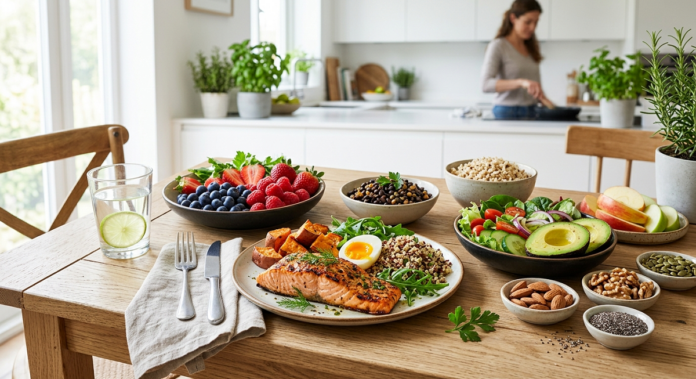
Eating well does not have to mean following a strict diet or giving up all your favorite foods. A healthy diet is built on simple, nutritious foods that give your body the energy, protein, vitamins, minerals, fiber, and healthy fats it needs.
The best foods for a healthy diet are usually foods that are close to their natural form. Vegetables, fruits, whole grains, beans, fish, eggs, nuts, seeds, and other nutrient-rich foods can all have a place on your plate.
The World Health Organization (WHO) recommends a varied diet based on vegetables, fruits, legumes, nuts, and whole grains while limiting excess salt, free sugars, saturated fat, and trans fat.
The good news is that you do not need to eat perfectly. Small changes made often can have a big impact over time.
What Makes a Food Healthy?
Before looking at specific foods, it helps to understand what makes a food a good choice.
Healthy foods tend to provide plenty of nutrients without large amounts of added sugar, sodium, or unhealthy fats. They can also help you feel full and satisfied.
A balanced eating pattern should include different types of foods because no single food can provide every nutrient your body needs.
According to the WHO, the main principles of a healthy diet are adequacy, balance, moderation, and diversity.
A healthy diet should generally include:
- Plenty of vegetables and fruits
- Whole grains and other high-fiber carbohydrates
- Beans, peas, and lentils
- Fish and other quality protein sources
- Eggs, poultry, and lean meats
- Nuts and seeds
- Healthy unsaturated fats
- Dairy or suitable alternatives
- Plenty of water
Now, let’s look at some of the best foods to include in your meals.
1. Leafy Green Vegetables
Leafy greens are some of the most nutrient-dense foods you can eat.
Spinach, kale, pechay, lettuce, bok choy, and other dark green vegetables provide important vitamins, minerals, fiber, and plant compounds.
They can also add volume to meals without adding many calories.
Try adding leafy greens to:
- Omelets
- Soups
- Stir-fries
- Salads
- Smoothies
- Sandwiches and wraps
You do not have to eat the same vegetable every day. Eating a variety of vegetables helps you get a wider range of nutrients.
2. Broccoli and Other Cruciferous Vegetables
Broccoli, cauliflower, cabbage, and Brussels sprouts are part of the cruciferous vegetable family.
These vegetables provide fiber and several vitamins and minerals. They are also easy to add to everyday meals.
Try roasting broccoli with a little olive oil and herbs. You can also add chopped cauliflower or cabbage to soups, rice dishes, and stir-fries.
The goal is not to find one “superfood.” It is to eat a wide range of vegetables regularly.
3. Berries and Other Colorful Fruits
Fruit is an important part of a healthy diet.
Berries such as strawberries, blueberries, and raspberries are especially useful because they provide fiber and many plant compounds.
Other excellent fruit choices include:
- Apples
- Oranges
- Bananas
- Mangoes
- Papaya
- Pineapple
- Guava
- Watermelon
Whole fruit is generally a better everyday choice than fruit juice because it contains fiber and takes longer to consume.
Frozen fruit can also be a convenient option. It can be added to oatmeal, yogurt, or smoothies.
WHO guidance notes that fresh, frozen, and canned fruits and vegetables can all be good choices when canned products do not contain excess added sugar or sodium.
4. Oats
Oats are one of the best whole grains for a healthy breakfast.
They provide carbohydrates for energy and fiber that can help make meals more filling.
A simple bowl of oatmeal can become a balanced meal when you add:
- Fresh fruit
- Nuts or seeds
- Plain yogurt
- Cinnamon
- A small amount of peanut butter
Choose plain oats when possible. Flavored instant oatmeal can contain added sugar, so check the nutrition label.
Whole grains are encouraged as part of healthy dietary patterns because they provide fiber and important nutrients.
5. Brown Rice and Other Whole Grains
Rice can absolutely be part of a healthy diet.
Brown rice is a whole-grain option, while other choices include quinoa, barley, oats, bulgur, and whole-grain bread or pasta.
Whole grains contain more of the grain’s natural parts than refined grains. This means they can provide more fiber and nutrients.
You do not need to completely avoid white rice. Instead, consider adding more whole grains to your weekly meals.
For example, you could try:
- Brown rice with grilled fish and vegetables
- Oatmeal with fruit
- Whole-grain bread with eggs
- Quinoa with beans and vegetables
The current U.S. Dietary Guidelines also emphasize whole, nutrient-dense foods, including whole grains, vegetables, fruits, protein, and healthy fats.
6. Beans, Lentils, and Peas
Beans and lentils are affordable, versatile, and nutritious.
They provide plant-based protein and fiber. They can also help make meals more filling.
Good options include:
- Black beans
- Kidney beans
- Chickpeas
- Lentils
- Green peas
- Mung beans
- Soybeans
Add beans to soups, salads, stews, rice dishes, or wraps.
If you are trying to eat less meat, beans and lentils can be a simple way to increase your intake of plant-based protein.
WHO guidance recommends legumes such as beans, lentils, chickpeas, and peas as important sources of healthy carbohydrates and nutrients.
7. Fatty Fish
Fish is an excellent source of protein and several important nutrients.
Fatty fish such as salmon, sardines, mackerel, and trout also provide omega-3 fatty acids.
Try having fish as part of your meals instead of relying only on processed or high-fat meats.
Healthy cooking methods include:
- Baking
- Grilling
- Steaming
- Broiling
- Air frying
Pair fish with vegetables and a whole grain for a simple, balanced meal.
8. Eggs
Eggs are an affordable and convenient source of protein.
They also contain several vitamins and minerals, making them a useful part of a balanced diet for many people.
Eggs can be enjoyed at breakfast, lunch, or dinner.
Try:
- Scrambled eggs with vegetables
- Boiled eggs with a salad
- An egg and vegetable omelet
- Eggs with whole-grain toast
- Egg and vegetable rice bowls
As with other foods, how you prepare eggs matters. Cooking them with large amounts of processed meat, butter, or salt can change the nutritional quality of the meal.
9. Greek Yogurt and Other Healthy Dairy Foods
Plain Greek yogurt can be a useful source of protein and calcium.
Milk, plain yogurt, and other dairy foods can also contribute important nutrients to a balanced diet.
When choosing yogurt, look for options with little or no added sugar.
You can make plain yogurt more enjoyable by adding:
- Berries
- Banana
- Chia seeds
- Walnuts
- Oats
- Cinnamon
If you do not eat dairy, fortified alternatives may provide similar nutrients. Check the label to compare protein, calcium, vitamin D, and added sugar.
The CDC recommends choosing dairy foods without added sugars as part of a healthy eating pattern.
10. Nuts
Nuts are small but packed with nutrients.
Almonds, walnuts, pistachios, cashews, and peanuts provide protein, fiber, and unsaturated fats.
Because nuts are energy-dense, you do not need a large amount to enjoy them.
A small handful can make a convenient snack.
Try adding nuts to:
- Oatmeal
- Yogurt
- Salads
- Smoothies
- Stir-fries
Choose unsalted or lightly salted varieties when possible.
11. Seeds
Seeds can add nutrition and texture to meals.
Chia seeds, flaxseeds, pumpkin seeds, and sunflower seeds are easy to use.
For example, sprinkle them over oatmeal or yogurt, add them to smoothies, or use them as a topping for salads.
Seeds can provide healthy fats, fiber, protein, and minerals.
They are also an easy way to make simple meals more satisfying.
12. Avocados
Avocados are rich in unsaturated fat and can be a tasty addition to a balanced diet.
They also provide fiber and several vitamins and minerals.
You can add avocado to:
- Whole-grain toast
- Salads
- Eggs
- Grain bowls
- Sandwiches
- Homemade dips
Avocados are calorie-dense, so portion size still matters. A healthy food can still contribute a lot of calories when eaten in very large amounts.
13. Extra-Virgin Olive Oil
Not all fats are the same.
Replacing some foods high in saturated fat with sources of unsaturated fat can support a healthier eating pattern. WHO guidance recommends favoring unsaturated fats over saturated and trans fats.
Extra-virgin olive oil is an easy option for cooking and dressing salads.
Try using it to:
- Dress vegetables
- Make salad dressing
- Roast vegetables
- Cook fish
- Add flavor to whole grains
The key is balance. Healthy oils still contain calories, so use reasonable portions.
14. Sweet Potatoes
Sweet potatoes are a nutritious source of carbohydrates and provide fiber and beta-carotene.
They can be a satisfying alternative to highly processed snack foods.
Try baking or steaming sweet potatoes and serving them with:
- Grilled chicken
- Fish
- Beans
- Eggs
- Leafy greens
You can also cut them into pieces and roast them with herbs and a small amount of olive oil.
15. Lean Protein Foods
Protein helps your body build and repair tissues. It is also an important part of satisfying meals.
Good protein choices include:
- Fish
- Chicken
- Turkey
- Eggs
- Beans
- Lentils
- Tofu
- Greek yogurt
- Nuts and seeds
The CDC recommends eating a variety of protein foods, including seafood, eggs, poultry, beans, lentils, nuts, seeds, and soy.
You do not need to rely on one protein source. Variety makes a healthy diet more enjoyable and can help you get a broader mix of nutrients.
How to Build a Healthy Meal
Knowing which foods are healthy is only part of the process. You also need to know how to put them together.
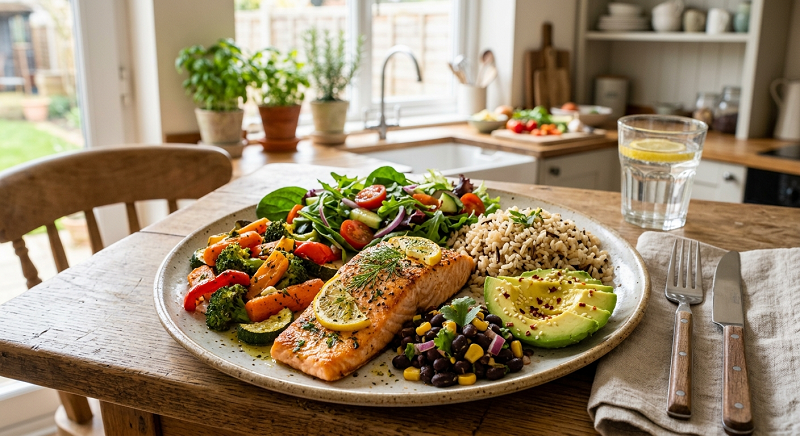
A simple approach is to build meals around four elements:
1. Vegetables or fruit: Make these a regular part of your meal.
2. Protein: Add fish, eggs, chicken, beans, lentils, tofu, yogurt, or another protein source.
3. High-fiber carbohydrates: Choose oats, brown rice, quinoa, potatoes, sweet potatoes, or whole-grain bread.
4. Healthy fat: Add nuts, seeds, avocado, or a small amount of olive oil.
For example, a healthy lunch could be grilled fish with brown rice, steamed vegetables, and avocado.
A simple breakfast could be oatmeal topped with berries, walnuts, and plain yogurt.
You do not need complicated recipes. Simple meals are often easier to maintain.
What Foods Should You Limit?
A healthy diet is not about labeling every food as “good” or “bad.”
However, some foods are better kept as occasional choices because they can be high in added sugar, sodium, unhealthy fats, or calories while providing fewer nutrients.
Consider limiting:
- Sugary drinks
- Candy and sweets
- Highly processed snack foods
- Deep-fried foods
- Processed meats
- Foods high in added sugar
- Foods very high in sodium
- Refined grain products eaten in large amounts
Highly processed foods can be convenient, but many are high in sodium, free sugars, or unhealthy fats.
This does not mean you can never eat them. A healthy eating pattern can include occasional treats.
What matters most is what you eat most of the time.
How Many Fruits and Vegetables Should You Eat?
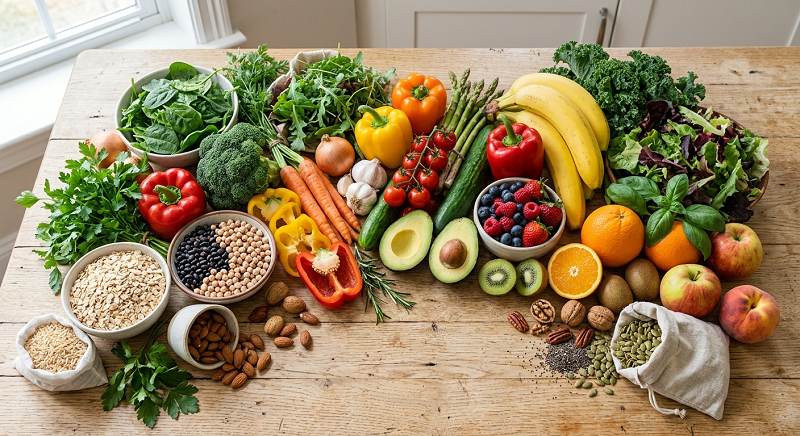
One useful goal is to increase the amount and variety of fruits and vegetables in your diet.
WHO recommends that people over age 10 aim for at least 400 grams of fruits and vegetables per day, which is about five portions.
You do not have to reach this goal overnight.
Start by adding one extra serving to your day.
For example:
- Add a banana to breakfast.
- Eat vegetables with lunch.
- Have fruit as an afternoon snack.
- Add leafy greens to dinner.
Small habits can become automatic when you repeat them.
Healthy Eating on a Budget
Eating healthy does not always require expensive foods.
Some affordable nutritious choices include:
- Oats
- Bananas
- Eggs
- Beans
- Lentils
- Mung beans
- Canned fish
- Seasonal vegetables
- Frozen vegetables
- Brown or regular rice
- Peanuts
- Sweet potatoes
Frozen and canned fruits and vegetables can also be useful choices when they contain little added sugar and are low in sodium.
Buying seasonal produce, cooking at home, and planning meals before shopping can also help reduce food waste and costs.
A Simple Healthy Food List for Your Grocery Trip
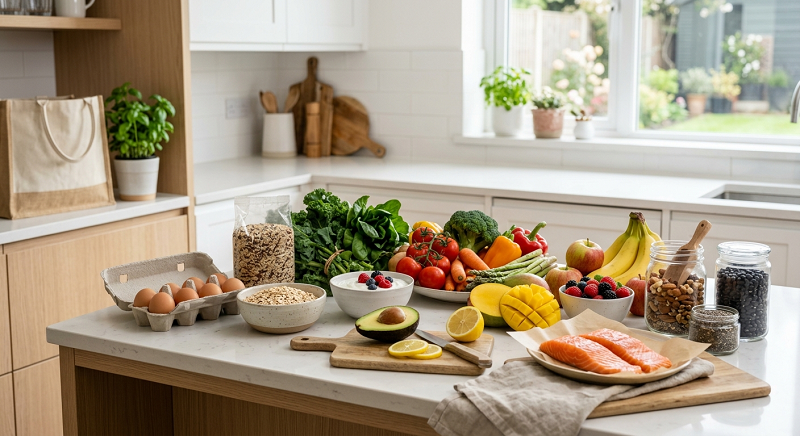
If you are not sure where to start, use this basic shopping list:
Vegetables
- Spinach or pechay
- Broccoli
- Carrots
- Tomatoes
- Bell peppers
- Cabbage
Fruits
- Bananas
- Apples
- Oranges
- Papaya
- Berries when available
Protein
- Eggs
- Fish
- Chicken
- Beans
- Lentils
- Tofu
- Plain Greek yogurt
Whole Grains
- Oats
- Brown rice
- Whole-grain bread
- Quinoa
Healthy Fats
- Avocados
- Nuts
- Seeds
- Olive oil
You do not need to buy everything on the list. Pick the foods you enjoy and can realistically afford.
Healthy Eating Is About Your Overall Pattern
One healthy meal will not transform your health, just as one less-healthy meal will not ruin your diet.
Your overall eating pattern matters more.
Instead of asking, “Is this food healthy?” try asking:
“Does this food help me build a balanced diet?”
That small change in thinking can make healthy eating less stressful.
You can enjoy pizza with vegetables and a salad. You can eat rice with fish and vegetables. You can have dessert after a healthy meal.
There is room for flexibility.
The goal is to make nutritious foods the foundation of your diet rather than trying to eat perfectly every day.
Healthy eating becomes easier when you turn good food choices into daily habits. For more practical ideas, check out our guide to 10 Simple Healthy Habits to Practice Every Day.
Final Thoughts: Make Healthy Food Your Everyday Choice
The best foods for a healthy diet are not exotic or complicated. They include everyday foods such as vegetables, fruits, whole grains, beans, fish, eggs, yogurt, nuts, seeds, and healthy oils.
A healthy diet is about variety, balance, and consistency.
Start with one simple change today. Add vegetables to your lunch. Replace a sugary drink with water. Choose fruit for a snack. Add beans to dinner. Try a whole grain you have never eaten before.
You do not need to change everything at once.
For more evidence-based guidance, explore the World Health Organization’s healthy diet guidance, the CDC’s healthy eating tips, and the Dietary Guidelines for Americans.
What is your favorite healthy food? Share it in the comments, and tell us how you like to prepare it. Your simple idea could inspire someone else to make a healthier choice today.