


Protein is one of the most important nutrients your body needs every day. It helps build and repair muscles, supports your immune system, and plays a role in many important body processes.
But how much protein do you really need?
You may have heard that everyone needs a high-protein diet. You may also have seen fitness plans that recommend eating large amounts of protein each day. The truth is more balanced.
Your ideal protein intake depends on several factors. Your body weight, age, activity level, health goals, and overall health can all affect how much protein you need.
For many healthy adults, the basic recommendation is about 0.8 grams of protein per kilogram of body weight per day. However, people who exercise regularly, older adults, and some people with special nutrition needs may benefit from more.
Protein can help you feel full after meals and make healthy eating easier. For more ideas on satisfying foods, read our guide to Healthy Foods That Keep You Full Longer.
So, instead of asking, “What is the perfect amount of protein?” it is better to ask, “How much protein is right for me?”
Let’s break it down.
Why Does Your Body Need Protein?
Protein is often called a building block of the body.
Your body uses protein to make and repair muscles, skin, bones, blood, enzymes, hormones, and other tissues. Protein also supplies amino acids, which your body needs for many important functions.
Protein is especially important when your body is repairing itself or adapting to physical activity.
For example, after strength training, your muscles need protein and other nutrients to repair and rebuild. Regular exercise can increase the need for protein compared with a sedentary lifestyle.
Protein can also help you feel full after eating. This can make it easier to manage hunger and build healthy eating habits.
However, more protein is not always better.
The goal is to eat enough protein to meet your body’s needs while also eating plenty of vegetables, fruits, whole grains, healthy fats, and other nutrient-rich foods.
How Much Protein Do You Need Per Day?
For most healthy adults, the basic protein recommendation is around 0.8 grams per kilogram of body weight each day.
This is a general starting point, not a rule that applies perfectly to every person.
The National Institutes of Health notes that the Recommended Dietary Allowance is designed to meet the needs of nearly all healthy people in a specific population. Individual needs can still be higher or lower.
A Simple Protein Calculation
You can estimate your basic daily protein needs with this formula:
Body weight in kilograms × 0.8 = grams of protein per day
If you know your weight in pounds, divide your weight by 2.2 first.
For example:
150 pounds ÷ 2.2 = about 68 kilograms
Then:
68 × 0.8 = about 54 grams of protein per day
So, a 150-pound adult would need roughly 54 grams of protein per day as a basic reference point.
This does not mean that 54 grams is the perfect target for everyone at that weight.
If you exercise often, are older, are trying to preserve muscle, or have other specific needs, your target may be higher.
Protein Needs by Activity Level
Your activity level is one of the biggest factors that can change your protein needs.
Someone who spends most of the day sitting may not need the same amount of protein as someone who strength trains several times per week.
If You Are Mostly Sedentary
If you do little structured exercise, the basic recommendation of around 0.8 grams per kilogram may be a useful starting point.
Focus on getting protein from a variety of nutritious foods instead of relying on protein shakes or bars.
Good choices include:
- Eggs
- Fish
- Chicken
- Beans
- Lentils
- Greek yogurt
- Milk
- Tofu
- Nuts and seeds
If You Exercise Regularly
People who exercise regularly may need more protein.
According to the NIH Office of Dietary Supplements, research and sports nutrition recommendations commonly place protein needs for athletes around 1.2 to 2.0 grams per kilogram of body weight per day, depending on the type and intensity of training.
For someone who lifts weights, runs regularly, or participates in demanding sports, protein becomes especially important for muscle repair and adaptation.
You do not need to eat huge amounts, though.
A balanced diet with enough total calories and protein can support most recreational exercisers.
If You Strength Train
Strength training creates a strong reason to pay attention to protein intake.
Resistance exercise stimulates muscle protein building. Protein provides the amino acids needed for this process.
If building or maintaining muscle is your goal, spreading protein across your meals can be a practical strategy.
For example, instead of eating almost all your protein at dinner, you could include a protein source at:
- Breakfast
- Lunch
- An afternoon snack
- Dinner
This approach can make it easier to reach your daily target.
Do Older Adults Need More Protein?
Protein becomes especially important as we get older.
Aging can make it harder to maintain muscle mass and strength. This is one reason older adults may benefit from a higher protein intake than the basic adult recommendation.
The European Society for Clinical Nutrition and Metabolism recommends that healthy older adults generally consume at least 1.0 to 1.2 grams of protein per kilogram of body weight per day, with individual needs adjusted based on health, activity, and nutrition status.
For some older adults with illness or other health concerns, protein needs may be even higher.
However, people with medical conditions should not increase protein intake on their own. A doctor or registered dietitian can help determine the right amount.
How Much Protein Do You Need to Build Muscle?
If your goal is to build muscle, simply eating more protein is not enough.

You also need resistance training, enough calories, adequate sleep, and a well-balanced diet.
For people who train regularly, protein needs may fall within the higher range of approximately 1.2 to 2.0 grams per kilogram per day, depending on training and individual goals.
For example, a 70-kilogram person who exercises regularly might have a protein target somewhere between:
- 70 × 1.2 = 84 grams
- 70 × 2.0 = 140 grams
That is a wide range because protein needs are personal.
You do not automatically need the upper end.
Your training style, body composition, calorie intake, age, and goals all matter.
How Much Protein Do You Need for Weight Loss?
Protein can be useful when you are trying to lose weight.
One reason is that protein can help you feel full after meals. It can also help support muscle while you lose body weight.
However, protein is not a magic weight-loss food.
Your overall eating pattern and calorie intake still matter.
If you are trying to lose weight, build meals around nutritious protein sources and combine them with vegetables, fruits, whole grains, and healthy fats.
For example, instead of building a meal around highly processed foods and adding a protein shake, try building the meal around a whole-food protein source.
A simple plate might include:
- Grilled chicken or tofu
- Brown rice or another whole grain
- A large serving of vegetables
- A small amount of healthy fat
This gives you protein along with fiber, vitamins, minerals, and other nutrients.
Best High-Protein Foods to Add to Your Diet
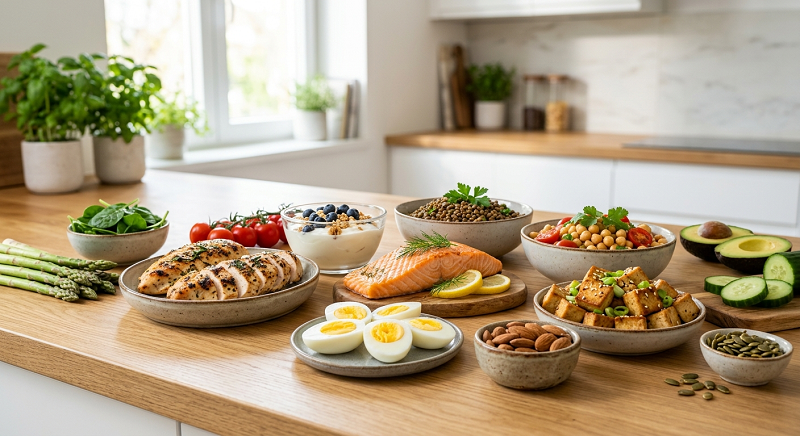
You do not need expensive supplements to get enough protein.
Many everyday foods provide protein.
Animal-Based Protein Foods
Good choices include:
- Eggs
- Chicken
- Turkey
- Fish
- Seafood
- Lean beef
- Milk
- Greek yogurt
- Cottage cheese
The Dietary Guidelines emphasize choosing a variety of nutrient-dense protein foods, including seafood, poultry, eggs, beans, peas, lentils, nuts, seeds, and soy products.
Plant-Based Protein Foods
You can also get plenty of protein from plant foods.
Try:
- Lentils
- Beans
- Chickpeas
- Tofu
- Tempeh
- Soy foods
- Peanuts
- Almonds
- Pumpkin seeds
- Chia seeds
- Quinoa
Plant-based eating does not automatically mean low protein.
The key is variety and eating enough total food to meet your nutritional needs.
The Dietary Guidelines recognize beans, peas, lentils, nuts, seeds, and soy products as important protein food choices.
How Much Protein Is in Common Foods?
Knowing roughly how much protein foods contain can make meal planning easier.
Protein amounts vary by brand, serving size, and preparation, but common foods can provide useful amounts.
Examples include:
- 1 large egg: about 6 grams
- 1 cup of milk: about 8 grams
- Greek yogurt: often 15–20+ grams per serving
- Chicken breast: often 25–30+ grams per cooked serving
- Fish: often 20–30+ grams per serving
- Tofu: often 10–20 grams per serving
- Lentils: about 15–18 grams per cooked cup
- Beans: about 14–16 grams per cooked cup
- Nuts: about 5–7 grams per small handful
These numbers are estimates. Always check the nutrition label when exact amounts matter.
Should You Eat Protein at Every Meal?
For many people, spreading protein throughout the day is a simple way to meet their needs.
Instead of eating very little protein during the day and then having a huge serving at dinner, try adding a protein source to each main meal.
For example:
Breakfast:
Eggs with whole-grain toast and fruit
Lunch:
Chicken or tofu with vegetables and brown rice
Snack:
Greek yogurt with fruit and nuts
Dinner:
Fish, beans, or lean meat with vegetables and potatoes
This approach can make your daily protein target much easier to reach.
It also helps create balanced meals instead of focusing on one nutrient alone.
Do You Need Protein Powder?
Not necessarily.
Protein powder can be convenient, especially if you have trouble getting enough protein from regular foods.
However, it is a supplement to your diet, not a requirement for a healthy diet.
The NIH notes that athletes can often get enough protein from food, while protein supplements may be useful when food alone does not meet their needs.
Before buying a protein powder, ask yourself:
- Am I actually struggling to get enough protein?
- Can I meet my needs with normal meals?
- Does the product fit my dietary needs?
- Does it contain ingredients I want to avoid?
- Am I using it as a supplement rather than a meal replacement?
For most people, whole foods should remain the foundation of their diet.
Can You Eat Too Much Protein?
Protein is important, but more is not automatically better.
The body has no need for extremely high protein intake when it already has enough to meet its needs.
The NIH reports that the Food and Nutrition Board has not established a Tolerable Upper Intake Level for protein. It also notes that high-protein diets have not been shown to cause several problems in healthy adults over the periods studied, but there are limited data about potential long-term effects of very high intakes.
There is also another issue: eating huge amounts of protein may push other nutritious foods out of your diet.
For example, if you fill most of your plate with meat or protein products, you may eat fewer vegetables, fruits, whole grains, or healthy fats.
A healthy diet needs balance.
What About Protein and Kidney Health?
Protein and kidney health are often discussed together.
For healthy people, higher-protein diets have not been shown to cause several kidney-related problems in the studies reviewed by the NIH. However, this does not mean that everyone should eat a very high-protein diet.
If you have kidney disease or another medical condition that affects your diet, your protein needs may be different.
Talk with your doctor or registered dietitian before making major changes to your protein intake.
What Is the Best Time to Eat Protein?
You do not need to obsess over a narrow “protein window.”
For people who exercise, the NIH notes that the period during which exercise and protein can support muscle recovery is not limited to only a few minutes after training.
A better strategy is to eat enough protein across the entire day.
If you exercise regularly, consider having a protein-rich meal or snack within a few hours around your workout.
For example:
- Yogurt and fruit
- Eggs and toast
- Chicken and rice
- Milk and oats
- Tofu and vegetables
- A protein smoothie
The most important thing is your total daily intake and overall diet.
Simple Ways to Get More Protein
If you think you are not getting enough protein, you do not need to completely change your diet.
Start with small changes.
Try these ideas:
- Add eggs to breakfast.
- Choose Greek yogurt for a snack.
- Add beans to soups and salads.
- Include lentils in rice dishes.
- Add tofu to stir-fries.
- Eat fish a few times when practical.
- Add nuts or seeds to oatmeal.
- Choose milk or fortified alternatives with meals.
- Add chicken, fish, tofu, or beans to salads.
- Keep a simple protein-rich snack available.
Small changes can add up.
Protein Is About Quality, Not Just Quantity
When thinking about protein, do not focus only on grams.
Think about the whole food.
A protein source can also provide fiber, vitamins, minerals, healthy fats, or other nutrients.
For example, beans provide protein and fiber. Fish can provide protein along with beneficial fats. Nuts and seeds provide protein along with healthy fats and minerals.
On the other hand, some processed protein foods can be high in sodium, saturated fat, or added ingredients.
The Dietary Guidelines encourage a variety of nutrient-dense protein foods and emphasize choices across both animal and plant sources.
You can learn more about healthy dietary patterns through the Dietary Guidelines for Americans.
A Simple Daily Protein Plan
You do not need to count every gram forever.
Instead, start by making protein a regular part of your meals.
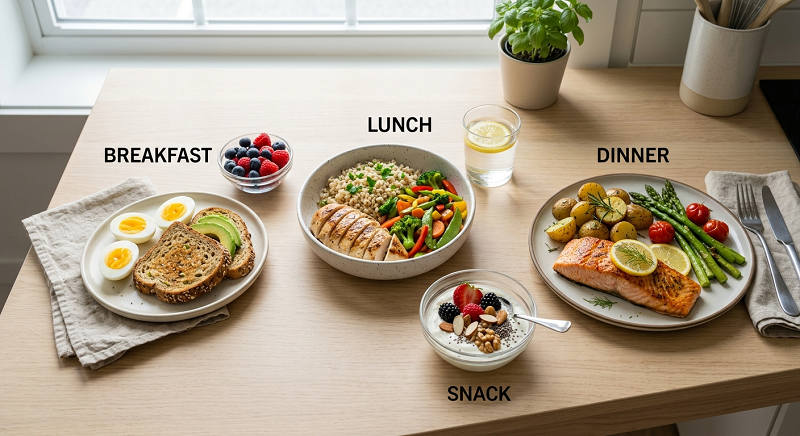
A simple day might look like this:
Breakfast:
Two eggs, whole-grain toast, and fruit.
Lunch:
Chicken, tofu, or beans with vegetables and brown rice.
Snack:
Greek yogurt with berries and a few nuts.
Dinner:
Fish, chicken, lentils, or tofu with vegetables and a whole-grain or starchy side.
This type of eating pattern can provide protein while also giving you a wide range of other nutrients.
When Should You Talk to a Health Professional?
General protein recommendations are useful, but some people need a more personalized plan.
Consider speaking with a doctor or registered dietitian if you:
- Have kidney disease
- Have liver disease
- Are pregnant or breastfeeding
- Are recovering from a major illness or injury
- Are significantly underweight
- Are older and losing muscle or strength
- Follow a very restrictive diet
- Are training for competitive sports
- Are considering a very high-protein diet
Your health history can change your nutrition needs.
Do not assume that a diet that works for someone else will work for you.
The Bottom Line: How Much Protein Do You Really Need?
So, how much protein do you really need every day?
For a healthy adult, 0.8 grams per kilogram of body weight per day is a useful basic reference. People who exercise regularly may need more, often around 1.2 to 2.0 grams per kilogram, depending on their training and goals. Older adults may also benefit from higher protein intake, with expert guidance commonly suggesting at least 1.0 to 1.2 grams per kilogram per day for healthy older adults.
But protein is only one part of good nutrition.
Your body also needs fiber, healthy fats, carbohydrates, vitamins, minerals, and enough total calories.
The best approach is not to chase the highest possible protein number. Instead, choose a reasonable target for your needs and get that protein from a wide variety of nutritious foods.
Ready to Improve Your Diet?
Start today by looking at your next meal.
Ask yourself:
“Where is my protein?”
Then add a nutritious source such as eggs, fish, chicken, beans, lentils, tofu, yogurt, nuts, or seeds.
You do not have to make your diet perfect overnight. Small, consistent choices can create lasting results.
What is your favorite high-protein food? Share it in the comments and tell us how you like to prepare it.