

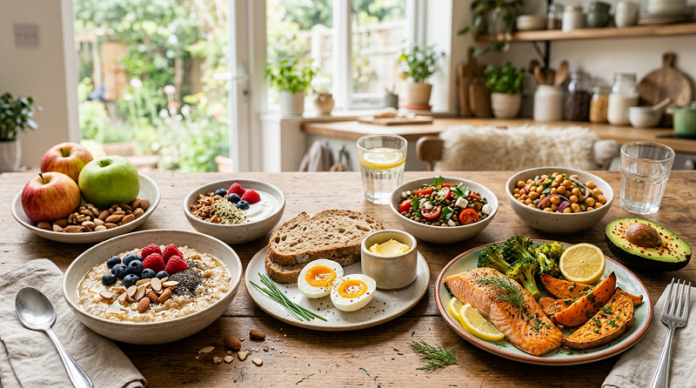
Feeling hungry soon after eating can make healthy eating harder than it needs to be. You may finish a meal and feel satisfied for a short time, only to start looking for another snack an hour or two later.
The good news is that what you eat can make a big difference in how long you stay full.
Foods rich in protein, fiber, water, and healthy fats tend to provide more lasting satisfaction. They can help slow digestion, add volume to meals, and make it easier to manage hunger between meals. Harvard nutrition experts also note that meals containing both protein and fiber can provide longer-lasting satisfaction.
This does not mean you need to follow a strict diet or stop eating your favorite foods. Instead, you can build meals around nutritious foods that help you feel satisfied.
In this guide, we will look at 15 healthy foods that keep you full longer, plus simple ways to add them to your daily meals.
Why Do Some Foods Keep You Full Longer?
Not all foods affect hunger in the same way.
A meal made mostly of refined carbohydrates and added sugar may be easy to digest. You might feel satisfied at first, but hunger can return quickly.
Foods with protein and fiber tend to work differently.
Protein Helps Control Hunger
Protein is an important nutrient for your muscles, bones, skin, and other tissues. It can also help you feel full after eating.
Research discussed by Harvard’s Nutrition Source notes that protein-rich foods can slow stomach emptying, which may help you feel full for longer.
Good protein choices include:
- Eggs
- Fish
- Chicken
- Greek yogurt
- Beans
- Lentils
- Tofu
- Nuts and seeds
Fiber Adds Staying Power
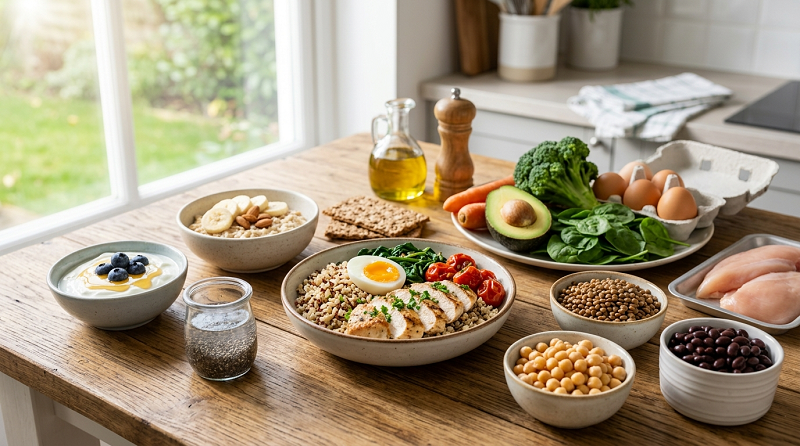
Fiber is a type of carbohydrate that your body does not fully digest.
It can add bulk to meals and slow digestion. Soluble fiber can also form a gel-like substance in the digestive tract, which may slow the movement of food and help reduce hunger.
Good sources include:
- Oats
- Beans
- Lentils
- Apples
- Berries
- Vegetables
- Chia seeds
- Whole grains
The best approach is often to combine protein + fiber + healthy fats in the same meal.
15 Healthy Foods That Keep You Full Longer
Here are some of the best foods to include when you want satisfying meals and snacks.
1. Eggs
Eggs are a simple and affordable source of protein.
A breakfast built around eggs may be more satisfying than one based mainly on sugary cereal or pastries.
Try:
- Scrambled eggs with vegetables
- Boiled eggs with whole-grain toast
- Vegetable omelets
- Eggs with avocado
- Egg and bean breakfast bowls
For a more balanced meal, pair eggs with vegetables and a high-fiber carbohydrate such as oatmeal or whole-grain toast.
2. Oatmeal
Oatmeal is one of the best high-fiber foods for fullness.
Oats contain soluble fiber, including beta-glucan. Fiber-rich foods can slow digestion and help you stay satisfied.
Instead of loading your oatmeal with sugar, make it more filling with:
- Berries
- Chia seeds
- Walnuts
- Peanut butter
- Greek yogurt
- Sliced banana
A bowl of oatmeal with protein and healthy fats can make a much more satisfying breakfast.
3. Greek Yogurt
Greek yogurt is rich in protein and can be an easy snack or breakfast option.
Choose plain Greek yogurt when possible. You can add natural sweetness with fruit.
Try this simple combination:
Greek yogurt + berries + chia seeds + a small handful of nuts
This gives you protein, fiber, and healthy fats in one bowl.
If you buy flavored yogurt, check the nutrition label for added sugars.
4. Beans
Beans are inexpensive, versatile, and highly nutritious.
They contain both protein and fiber, making them one of the best foods for staying full.
Examples include:
- Black beans
- Kidney beans
- Pinto beans
- White beans
- Mung beans
- Navy beans
Harvard notes that legumes can promote fullness because of their protein and fiber content.
Add beans to soups, salads, rice bowls, tacos, or vegetable dishes.
5. Lentils
Lentils deserve a special place on any list of healthy foods that keep you full longer.
They provide both protein and fiber without requiring much preparation.
Harvard’s Nutrition Source lists a cup of cooked lentils as providing about 18 grams of protein and 15 grams of fiber.
Try lentils in:
- Soups
- Curries
- Salads
- Vegetable bowls
- Stews
They are also an excellent option if you want to eat more plant-based meals.
6. Chickpeas
Chickpeas, also called garbanzo beans, are another excellent choice.
Their combination of protein and fiber can help increase fullness and may support healthy weight management.
You can use chickpeas in many ways:
- Hummus
- Salads
- Soups
- Curries
- Roasted chickpea snacks
- Grain bowls
For a quick lunch, combine chickpeas with vegetables, brown rice, and a simple olive-oil dressing.
7. Avocado
Avocados are rich in healthy unsaturated fats and also provide fiber.
Healthy fats can add satisfaction to a meal, while fiber helps support fullness.
Try adding avocado to:
- Eggs
- Whole-grain toast
- Salads
- Grain bowls
- Bean dishes
- Sandwiches
Because avocado is calorie-dense, portion size still matters. You do not need a large amount to add flavor and satisfaction.
8. Apples
Apples are a convenient fruit that can help satisfy hunger.
They contain water and fiber, especially when you eat the skin.
Instead of drinking apple juice, choose a whole apple. Whole fruit provides more fiber and requires more chewing than juice.
For an even more satisfying snack, pair an apple with:
- Peanut butter
- Almond butter
- Greek yogurt
- A small handful of nuts
This adds protein or healthy fats to the snack.
9. Berries
Berries are another smart choice when you want something sweet but nutritious.
Strawberries, blueberries, blackberries, and raspberries provide fiber and water.
You can add berries to:
- Oatmeal
- Greek yogurt
- Smoothies
- Cottage cheese
- Whole-grain cereal
Frozen berries can also be a convenient and budget-friendly option.
10. Potatoes
Potatoes often get a bad reputation, but the potato itself is not the problem.
How you prepare it matters.
A boiled, baked, or roasted potato can be part of a balanced meal. Deep-frying potatoes or covering them with large amounts of high-calorie toppings creates a very different meal.
For a filling plate, try:
Baked potato + grilled fish + steamed vegetables
This gives you carbohydrates, protein, and fiber-rich vegetables.
11. Vegetables
Vegetables can help you build larger, more satisfying meals without relying heavily on calorie-dense foods.
Many vegetables contain lots of water and fiber.
Good options include:
- Broccoli
- Carrots
- Spinach
- Cabbage
- Cauliflower
- Green beans
- Bell peppers
- Cucumbers
- Tomatoes
Try filling about half your plate with vegetables, then add a protein source and a healthy carbohydrate.
The USDA’s MyPlate guidance encourages people to eat a variety of vegetables, fruits, grains, and protein foods as part of a healthy eating routine.
12. Nuts
Nuts are small but satisfying.
Almonds, walnuts, pistachios, and other nuts provide protein, fiber, and healthy fats.
A small serving can make a good snack between meals.
Try:
- Almonds with an apple
- Walnuts with Greek yogurt
- Pistachios with fruit
- Peanut butter with banana
Choose unsalted or lightly salted nuts when possible.
Since nuts are energy-dense, a small handful is usually enough.
13. Chia Seeds
Chia seeds are tiny, but they provide fiber and can be easy to add to meals.
Try adding them to:
- Oatmeal
- Yogurt
- Smoothies
- Overnight oats
- Chia pudding
When mixed with liquid, chia seeds absorb water and form a thick texture.
For a simple breakfast, mix chia seeds with milk or unsweetened soy milk and let the mixture sit overnight. Add berries in the morning.
14. Fish
Fish is a nutritious source of protein.
Salmon, tuna, sardines, trout, and other fish can be used to create satisfying meals.
Protein can help you stay full, while fatty fish such as salmon also provides omega-3 fats.
Harvard recommends fish and other healthy protein foods as part of a balanced eating pattern.
Try pairing fish with:
- Brown rice
- Sweet potatoes
- Vegetables
- Beans
- Salad
15. Whole Grains
Whole grains can be more filling than refined grains because they retain more fiber and nutrients.
Examples include:
- Brown rice
- Oats
- Quinoa
- Barley
- Whole-wheat bread
- Whole-grain pasta
- Bulgur
Fiber-rich whole grains can help promote fullness.
You do not have to remove carbohydrates from your diet. Instead, choose better-quality carbohydrate sources and pair them with protein and vegetables.
How to Build Meals That Keep You Full
Knowing which foods are filling is helpful. Knowing how to combine them is even better.
A simple formula is:
Protein + Fiber + Healthy Fat + Produce
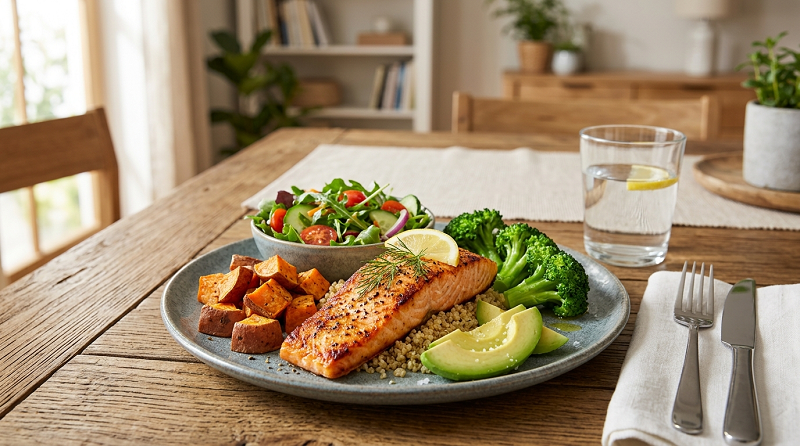
For example:
Breakfast:
Eggs + oatmeal + berries + nuts
Lunch:
Chicken + brown rice + vegetables + avocado
Dinner:
Salmon + sweet potato + broccoli + olive oil
Snack:
Apple + peanut butter
These combinations can help you create meals that are both nutritious and satisfying.
Harvard’s Healthy Eating Plate also recommends focusing on vegetables, fruits, whole grains, healthy fats, and healthy protein sources.
Healthy Snacks That Keep You Full
If you often get hungry between meals, plan snacks that contain more than one type of nutrient.
Instead of eating something that is mostly sugar, try combinations such as:
- Apple + peanut butter
- Greek yogurt + berries
- Carrots + hummus
- Boiled egg + fruit
- Cottage cheese + berries
- Nuts + banana
- Whole-grain toast + avocado
- Chickpeas + vegetables
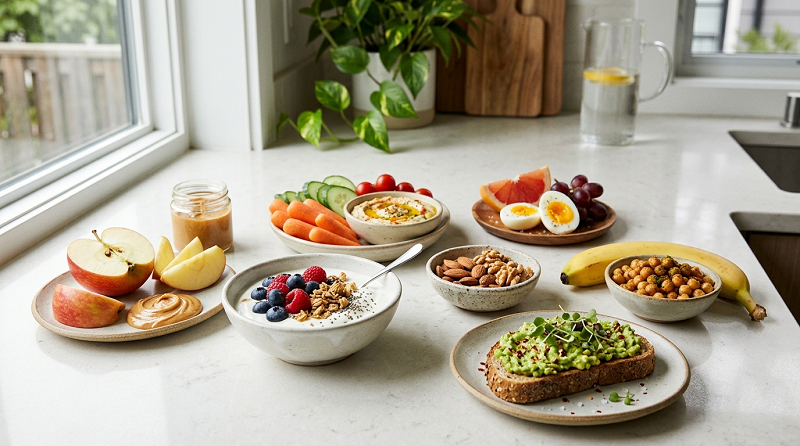
The goal is not to avoid snacks. The goal is to choose snacks that provide real nourishment.
Foods That May Leave You Hungry Soon
Some foods can be enjoyable but may not provide much lasting satisfaction when eaten alone.
These include foods that are:
- High in added sugar
- Highly refined
- Low in protein
- Low in fiber
- Easy to eat very quickly
- Mostly liquid calories
Examples include sugary drinks, candy, sweet pastries, and some highly processed snack foods.
This does not mean you can never eat them.
Instead, try pairing less filling foods with more nutritious choices.
For example, instead of having a sweet pastry alone, you could have a smaller portion alongside Greek yogurt and fruit.
Does Drinking Water Help With Hunger?
Staying hydrated is important for overall health.
Water is also a better everyday drink choice than sugary beverages. Harvard’s Healthy Eating Plate recommends water instead of sugary drinks.
Try keeping a water bottle nearby throughout the day.
You can also get water from foods such as:
- Cucumbers
- Watermelon
- Oranges
- Strawberries
- Tomatoes
- Soups
However, remember that water should not replace food when you are truly hungry.
For more ideas, check out our guide to foods that can help you stay full longer, including hydrating foods that may support healthy eating and weight management.
How to Eat More Mindfully
The foods you choose matter, but how you eat can matter too.
Eating very quickly may make it harder to notice when you are becoming full.
Try these simple habits:
- Eat without rushing.
- Put your fork down between bites.
- Chew your food well.
- Avoid eating directly from large packages.
- Sit down for meals when possible.
- Pay attention to your hunger and fullness.
- Avoid distractions when eating.
These small changes can help you become more aware of your body’s signals.
A Simple Fullness-Focused Meal Plan
Here is an easy example of how you can use these foods during the day.
Breakfast
Oatmeal with berries, chia seeds, and Greek yogurt
This combines fiber, protein, and healthy fats.
Lunch
Chicken and vegetable brown rice bowl
Add avocado for healthy fats and extra flavor.
Afternoon Snack
Apple with a small serving of peanut butter
This gives you fruit plus protein and healthy fats.
Dinner
Grilled salmon with sweet potato and broccoli
This provides protein, carbohydrates, fiber, and healthy fats.
Evening
If you are genuinely hungry later, try a small serving of plain Greek yogurt with berries rather than a sugary snack.
Remember that your ideal food intake depends on your individual needs, activity level, age, and health goals.
Make Fullness Part of Your Healthy Eating Strategy
You do not need to count every calorie or follow a complicated meal plan to eat better.
Start with simple changes.
At your next meal, ask:
Where is my protein?
Where is my fiber?
Where are my vegetables or fruit?
Do I have a source of healthy fat?
If you can answer those questions, you are already building a more satisfying meal.
The goal is not to eat as little as possible.
The goal is to eat foods that give your body the nutrients and satisfaction it needs.
Final Thoughts: Choose Foods That Work With Your Hunger
The best healthy foods that keep you full longer are not exotic or difficult to find.
Eggs, oatmeal, beans, lentils, chickpeas, Greek yogurt, vegetables, fruits, nuts, seeds, fish, potatoes, avocados, and whole grains can all have a place in a balanced diet.
The key is to combine foods wisely.
Choose more protein and fiber. Add vegetables and fruit. Include healthy fats in sensible portions. Pick whole grains more often. Drink water instead of sugary drinks.
Most importantly, find healthy foods that you actually enjoy eating.
What is your favorite food that keeps you full for hours? Share your go-to breakfast, lunch, dinner, or snack in the comments. Your idea may help someone else build a healthier and more satisfying meal.
For more evidence-based healthy eating guidance, explore resources from USDA MyPlate and Harvard T.H. Chan School of Public Health’s Nutrition Source.
Start today: choose one filling food from this list and add it to your next meal. Small choices, repeated often, can make healthy eating much easier.