


Losing weight can feel confusing.
There are countless diets, workout plans, supplements, and quick fixes online. One plan tells you to avoid carbs. Another tells you to eat only certain foods. Some promise fast results with little effort.
But better health does not need to be complicated.
The best approach is one you can follow for months and years—not just for a few weeks.
Sustainable weight loss is about building healthy habits that fit your life. It means eating nourishing foods, moving your body, getting enough sleep, managing stress, and staying consistent.
You do not need to change everything at once.
Small steps can lead to big changes when you repeat them often.
The Centers for Disease Control and Prevention (CDC) notes that healthy weight management includes healthy eating, regular physical activity, enough sleep, and stress management. Gradual weight loss is also more likely to stay off than very rapid weight loss.
So, where should you begin?
Let’s build a simple roadmap.
Why Sustainable Weight Loss Matters
Many people start a weight-loss journey with one goal: see a lower number on the scale.
That goal is understandable. But your health is about much more than weight.
A healthier lifestyle can help you:
- Have more daily energy
- Improve fitness and strength
- Support heart health
- Improve blood sugar control
- Build better eating habits
- Sleep better
- Feel more confident
- Reduce the risk of some chronic diseases
- Maintain a healthier weight over time
Even modest weight loss can provide health benefits for people who are above a healthy weight. The CDC reports that losing about 5% of body weight may improve measures such as blood pressure, cholesterol, and blood sugar.
This is important because you do not need to reach a “perfect” weight to make progress.
Your first goal should be better health—not perfection.
Step 1: Set Realistic Health and Weight Loss Goals
Before changing your diet or exercise routine, decide what you want to achieve.
Avoid vague goals such as:
“I want to lose weight.”
Instead, make your goal specific.
For example:
- “I will walk for 20 minutes five days a week.”
- “I will eat vegetables with lunch and dinner.”
- “I will drink water instead of sugary drinks most days.”
- “I will prepare healthy meals at home four times a week.”
- “I will aim for steady weight loss instead of quick results.”
Small goals are easier to follow.
They also give you a sense of progress.
Focus on Habits, Not Just the Scale
Your weight can change from day to day because of water, food, hormones, and other factors.
That is why the scale should not be your only measure of success.
Also look at:
- Your energy levels
- Your strength
- Your walking ability
- Your sleep
- Your food choices
- Your waist measurement
- How your clothes fit
- Your mood
- Your consistency
NIDDK recommends realistic weight-loss goals and notes that successful programs should also include strategies for maintaining weight loss.
Step 2: Build a Healthy Eating Plan
Food plays a major role in both health and weight management.
But healthy eating does not mean eating tiny meals or avoiding all your favorite foods.
Instead, build meals around nutritious foods that keep you satisfied.
The World Health Organization recommends a varied diet that includes foods such as fruits, vegetables, whole grains, legumes, nuts, and other nutrient-rich foods.
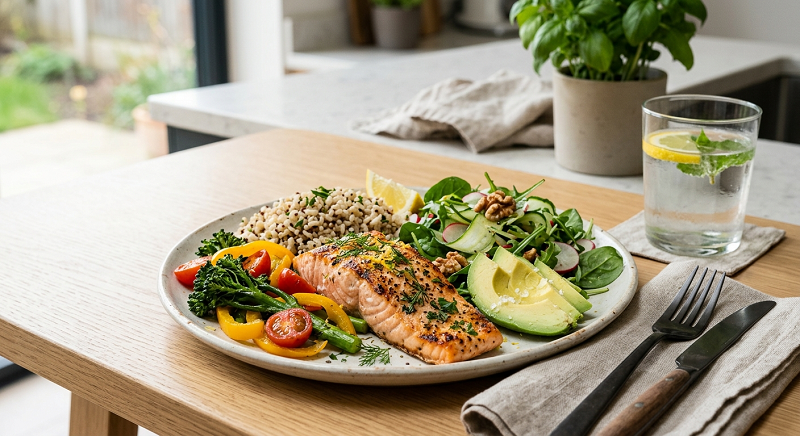
Fill Your Plate With Nutrient-Rich Foods
Try to include a mix of:
Vegetables:
Broccoli, carrots, leafy greens, tomatoes, squash, cabbage, and other vegetables.
Fruits:
Apples, bananas, oranges, berries, mangoes, papaya, and other whole fruits.
Protein:
Eggs, fish, chicken, beans, lentils, tofu, yogurt, nuts, and seeds.
Whole grains:
Oats, brown rice, whole-grain bread, corn, and other whole grains.
Healthy fats:
Avocado, nuts, seeds, olive oil, and fatty fish.
You do not need every food at every meal.
The goal is variety over time.
Choose Whole Foods More Often
Highly processed foods can be easy to overeat because they may be high in calories, added sugar, salt, or unhealthy fats.
This does not mean you must never eat them.
Instead, try making whole or minimally processed foods the foundation of your meals.
For example, choose:
- Whole fruit instead of fruit drinks
- Oatmeal instead of sugary breakfast cereals
- Grilled chicken instead of heavily fried chicken
- Water instead of sugary soda
- Plain yogurt with fruit instead of a high-sugar dessert
Simple swaps can add up.
Step 3: Learn Portion Control
Healthy food can still provide too many calories if portions are very large.
You do not have to weigh every food or count every calorie to practice portion control.
Start by becoming more aware of how much you serve.
Simple Portion Control Tips
Try these habits:
- Use a smaller plate when helpful.
- Eat slowly.
- Start with a reasonable portion.
- Add vegetables to make meals more filling.
- Avoid eating directly from large packages.
- Pay attention to hunger and fullness.
- Stop eating when you feel comfortably satisfied.
Portion control is not about starving yourself.
It is about learning how much food your body needs.
A healthy weight-loss plan should provide enough nutrition while helping you manage your overall calorie intake.
Step 4: Eat More Protein and Fiber
If you often feel hungry soon after eating, look at the balance of your meals.
Protein and fiber can help make meals more satisfying.
Protein
Protein foods include:
- Eggs
- Fish
- Chicken
- Lean meat
- Beans
- Lentils
- Tofu
- Greek yogurt
- Nuts and seeds
Try adding a protein source to each main meal.
Fiber
Fiber is found in foods such as:
- Vegetables
- Fruits
- Beans
- Lentils
- Whole grains
- Nuts
- Seeds
Fiber-rich foods can help you feel full while also adding important nutrients to your diet.
A meal such as grilled fish, vegetables, and brown rice can be more satisfying than a meal built mostly around refined carbohydrates.
The goal is not to remove carbohydrates.
Instead, choose nutritious carbohydrate sources more often.
Step 5: Drink More Water
Drinks can add a surprising amount of sugar and calories to your day.
Soda, sweetened coffee, energy drinks, sweet tea, and other sugary beverages can make weight management harder.
Water is a simple choice.
Try:
- Drinking water when you wake up
- Carrying a water bottle
- Drinking water with meals
- Choosing water instead of sugary drinks
- Adding lemon or fruit for flavor if you prefer
You do not need to make every drink perfect.
Start by replacing one sugary drink each day.
Then build from there.
Step 6: Make Physical Activity Part of Your Day
Exercise is important for better health, but you do not need to become a gym expert.
Walking counts.
Dancing counts.
Cycling counts.
Gardening counts.
Playing with your children counts.
The key is to move more and sit less.
The CDC recommends that adults work toward at least 150 minutes of moderate-intensity physical activity each week, although individual needs can vary.

Start With Walking
Walking is one of the easiest ways to begin.
Try:
- A 10-minute walk after breakfast
- A short walk during lunch
- Walking after dinner
- Taking the stairs when possible
- Parking farther away
- Walking while talking on the phone
You can divide activity into smaller sessions.
You do not have to complete your entire weekly goal in one workout.
Add Strength Training
Strength training can also be useful.
You can start with simple exercises such as:
- Squats
- Wall push-ups
- Lunges
- Glute bridges
- Light resistance-band exercises
- Lifting light weights
Start at a level that feels safe and manageable.
If you have a health condition, injury, or other concern, speak with a health professional before starting a new exercise program.
Step 7: Improve Your Sleep
Sleep is often forgotten during a weight-loss journey.
But it is an important part of a healthy lifestyle.

When you are tired, it may be harder to make good food choices, stay active, or manage stress.
Create a simple sleep routine.
Better Sleep Habits
Try to:
- Go to bed at a regular time.
- Wake up at a regular time.
- Keep your bedroom comfortable and quiet.
- Reduce screen use before bed.
- Avoid large meals close to bedtime.
- Create a relaxing bedtime routine.
Better sleep may not cause weight loss by itself.
But it can support the habits that make healthy weight management easier.
The CDC includes adequate sleep as part of a healthy lifestyle for weight management.
Step 8: Manage Stress Without Turning to Food
Stress is part of life.
Work, family responsibilities, money, relationships, and other challenges can affect your eating habits.
Some people eat more when they feel stressed.
Others skip meals and then become very hungry later.
Finding healthier ways to manage stress can help.
Try:
- Going for a walk
- Listening to music
- Reading
- Talking with someone you trust
- Practicing deep breathing
- Spending time outdoors
- Doing a hobby
- Taking a short break from work
You do not need to eliminate stress.
Instead, learn healthier ways to respond to it.
Step 9: Create an Environment That Supports You
Willpower is not everything.
Your surroundings can influence your choices.
If your kitchen is filled with highly tempting foods, it may be harder to stick with your goals.
Make healthy choices easier.
Try These Simple Changes
Keep these foods easy to reach:
- Fresh fruit
- Washed vegetables
- Yogurt
- Nuts
- Whole-grain foods
- Eggs
- Lean protein
You can also prepare meals in advance.
For example, cook a batch of chicken, vegetables, and rice for several meals.
When healthy food is ready, you are less likely to depend on fast food when you are busy.
Step 10: Stop Chasing Quick-Fix Diets
A diet that promises dramatic results in a few days may sound exciting.
But extreme plans are often hard to maintain.
Be careful with programs that promise:
- Huge weight loss in a very short time
- Weight loss without changing your habits
- No exercise or healthy eating required
- A special product that “melts fat”
- Permanent results without long-term effort
NIDDK warns consumers to be cautious about weight-loss programs that make unrealistic promises, such as losing very large amounts of weight in a short period.
A better question is:
“Can I live this way for the next year?”
If the answer is no, the plan may not be sustainable.
Step 11: Learn From Setbacks
Almost everyone has difficult days.
You may eat too much at dinner.
You may skip a workout.
You may have a weekend filled with treats.
That does not mean you failed.
One meal does not ruin your progress.
One missed workout does not erase your work.
The important thing is what you do next.
Instead of saying:
“I ruined my diet.”
Say:
“That choice did not support my goal. I can make a better choice at my next meal.”
This mindset helps you move forward.
Use the “Next Choice” Rule
If you make a choice you regret, do not wait until Monday.
Return to your healthy habits at the next meal, next walk, or next day.
Progress is built from repeated choices.
Step 12: Track Your Progress
Tracking can help you understand what is working.
You can keep a simple journal or use an app.
Track things such as:
- Meals
- Water intake
- Physical activity
- Sleep
- Weight
- Steps
- Mood
- Weekly goals
You do not need to track everything forever.
Even a few days of tracking can help you notice patterns.
For example, you may discover that you snack more when you sleep poorly or that you eat more takeout when you do not prepare meals ahead of time.
Once you understand the pattern, you can work on the cause.
A Simple 7-Day Healthy Lifestyle Roadmap
You do not need to transform your entire life tomorrow.
Start with one week.
Day 1: Drink More Water
Replace one sugary drink with water.
Day 2: Add Vegetables
Add vegetables to lunch and dinner.
Day 3: Take a Walk
Walk for 20 minutes at a comfortable pace.
Day 4: Improve Breakfast
Choose a breakfast with protein and fiber.
For example, try eggs with vegetables or oatmeal with fruit and nuts.
Day 5: Prepare Food
Prepare at least one healthy meal ahead of time.
Day 6: Move More
Take several short walking breaks during the day.
Day 7: Review Your Week
Ask yourself:
- What went well?
- What was difficult?
- What habit felt easiest?
- What should I change next week?
Then repeat the habits that worked.
How to Make Healthy Habits Last
The secret to sustainable weight loss is not perfection.
It is consistency.
A healthy habit should fit your real life.
If you’re looking for simple ways to turn healthy choices into daily routines, check out our guide to 10 Simple Healthy Habits to Practice Every Day.
If you work long hours, create short workouts.
If you enjoy rice, learn how to manage portions instead of banning rice.
If you enjoy dessert, have it occasionally and in a reasonable portion.
If you dislike gyms, find another way to move.
Your plan should work with your life, not against it.
NIDDK notes that a successful eating plan should fit a person’s health needs, preferences, culture, and values so it can be followed over time.
That is one of the most important ideas in sustainable weight management.
Your Sustainable Weight Loss Checklist
Use this checklist as a simple reminder:
☐ Eat more vegetables and whole foods
☐ Include a healthy protein source in meals
☐ Choose high-fiber foods
☐ Watch portion sizes
☐ Drink more water
☐ Limit sugary drinks
☐ Move your body every day
☐ Add strength exercises when appropriate
☐ Get enough sleep
☐ Manage stress in healthy ways
☐ Plan meals ahead
☐ Track your progress
☐ Expect setbacks
☐ Return to your routine after difficult days
☐ Focus on long-term habits
You do not need to check every box today.
Start with one.
Then add another.
When to Talk With a Health Professional
Weight management is not the same for everyone.
Your age, health, medications, hormones, genetics, sleep, stress, and other factors can affect your weight.
If you have a medical condition, take medications, are pregnant, or have concerns about your weight, talk with a qualified health professional before making major changes.
A doctor or registered dietitian can help you create a plan that fits your needs.
NIDDK also recommends talking with a health professional about safe and effective ways to manage weight, especially when choosing a structured weight-loss program.
The Bottom Line: Better Health Starts With Small Steps
You do not need a perfect diet.
You do not need an expensive gym membership.
You do not need a complicated meal plan.
And you do not need to change your entire life overnight.
Sustainable weight loss starts with simple habits that you can repeat.
Eat more nutritious foods.
Watch your portions.
Drink more water.
Walk more.
Build strength.
Sleep well.
Manage stress.
Learn from setbacks.
Then keep going.
Healthy eating and regular physical activity work together to support weight management and overall health.
Most importantly, remember that progress does not always happen quickly.
Your goal is not to be perfect.
Your goal is to become a little healthier than you were yesterday.
Ready to Start Your Healthier Journey?
Choose one habit from this roadmap today.
Maybe it is a 20-minute walk.
Maybe it is drinking water instead of soda.
Maybe it is adding vegetables to dinner.
Maybe it is going to bed earlier.
Whatever you choose, start small and stay consistent.
What healthy habit are you going to start today? Share your goal in the comments and encourage someone else to begin their own journey. Your small step could inspire another person to take theirs.