

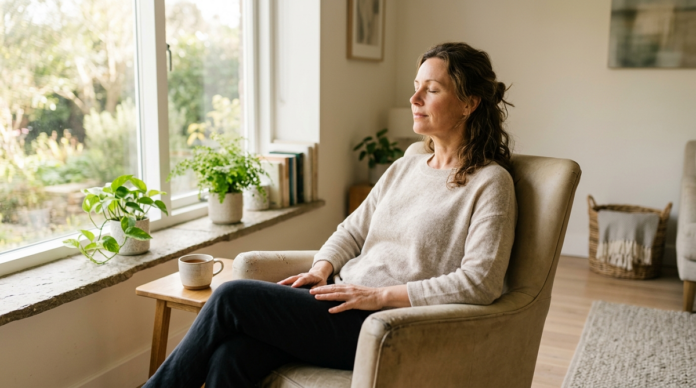
Stress can show up at any time.
Maybe you wake up already thinking about your to-do list. Maybe work feels overwhelming. You may have family duties, money worries, or too many things happening at once.
When stress builds up, even small problems can feel much bigger.
The good news is that you do not always need an hour of free time to feel better. A few simple actions can help you pause, slow down, and reset your mind.
A 5-minute stress relief routine can be done at your desk, in your home, in your car before you drive, or outside. These quick habits will not remove every source of stress. But they can help you respond to stress in a calmer and more focused way.
The Centers for Disease Control and Prevention (CDC) notes that stress is a normal part of life, but long-term stress can affect health. Daily stress management can help you cope better.
Let’s look at five simple ways to reset your mind in just five minutes.
What Is 5-Minute Stress Relief?
Five-minute stress relief means using a short period of time to calm your body and bring your attention back to the present.
It does not have to be complicated.
You do not need special equipment. You do not need a gym membership. You may not even need to leave your chair.
Simple techniques such as slow breathing, stretching, mindfulness, walking, and gratitude can give you a quick mental break.
The goal is not to make every problem disappear.
Instead, the goal is to create enough calm so you can think more clearly and decide what to do next.
Relaxation techniques may help slow your heart rate and breathing, ease muscle tension, improve focus, and reduce feelings of stress.
Why Taking a 5-Minute Break Matters
When you are stressed, your body can move into a “fight-or-flight” response.
Your heart may beat faster. Your muscles may become tense. Your breathing may change. Your thoughts may start moving quickly.
Staying in this state for too long can leave you feeling tired and overwhelmed.
A short break gives you a chance to interrupt that cycle.
It can help you:
- Slow down racing thoughts
- Relax tense muscles
- Improve your focus
- Become more aware of your emotions
- Feel more in control
- Return to a task with a clearer mind
- Create a healthier response to daily pressure
The National Institute of Mental Health (NIMH) recommends learning your stress triggers and finding healthy coping techniques that work for you.
The key is to find simple methods you can actually use.
1. Try 5 Minutes of Deep Breathing
One of the easiest forms of quick stress relief is deep breathing.
You always have access to your breath. You can use it almost anywhere.
When people feel stressed, they may breathe faster or hold their breath without noticing. Slowing your breathing can help your body move toward a more relaxed state.
Mayo Clinic recommends deep breathing as a simple relaxation method that can help reduce the body’s stress response.
A Simple 5-Minute Breathing Exercise
Try this:
- Sit in a comfortable position.
- Relax your shoulders.
- Breathe in slowly through your nose.
- Let your belly expand as you breathe in.
- Slowly breathe out.
- Repeat for several minutes.
- Keep your attention on the movement of your breath.
Do not worry about doing it perfectly.
If counting helps, try breathing in for about four seconds and breathing out for about four seconds. You can adjust the pace so it feels comfortable.
Some people find a slightly longer exhale relaxing. For example, breathe in for three seconds and breathe out for four or five seconds.
The goal is slow, smooth breathing rather than forcing a large breath.
If you feel dizzy or uncomfortable, stop and return to your normal breathing.
Why Deep Breathing Can Help
Deep breathing gives your attention something simple to focus on.
Instead of thinking about everything that could go wrong, you focus on one action: breathing in and breathing out.
This can make it easier to step away from stressful thoughts.
With regular practice, breathing exercises may also become easier to use when stress appears.
2. Use a 5-Minute Mindfulness Reset
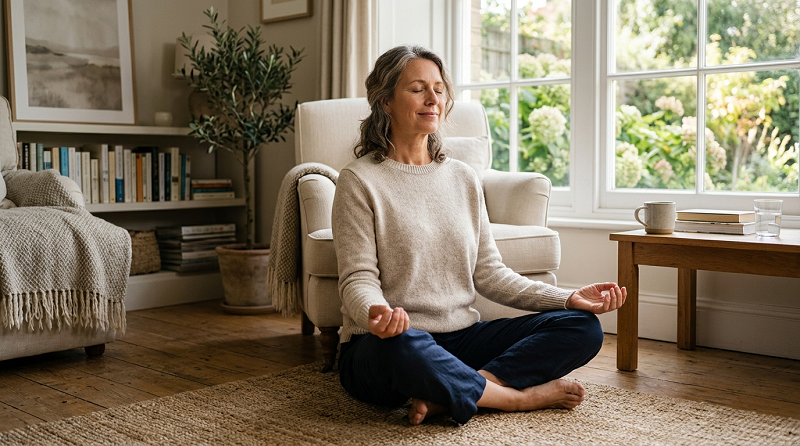
You do not need to sit for 30 minutes to practice mindfulness.
Even a short mindfulness exercise can help bring your attention back to the present moment.
Mindfulness means paying attention to what is happening right now without judging it.
Your mind may still produce thoughts.
That is normal.
The goal is not to stop thinking. The goal is to notice your thoughts and gently return your attention to the present.
Mayo Clinic describes focused breathing and other short mindfulness exercises as useful ways to improve clarity and manage stress.
Try the 5-4-3-2-1 Reset
Take a moment to notice:
- 5 things you can see
- 4 things you can touch or feel
- 3 things you can hear
- 2 things you can smell
- 1 thing you can taste
Move slowly through each step.
You can do this while sitting at your desk, standing outside, or relaxing at home.
This exercise shifts your attention away from stressful thoughts and toward your surroundings.
Another Simple Mindfulness Exercise
Close your eyes if you feel comfortable.
Take a slow breath.
Notice your feet.
Then notice your legs, stomach, shoulders, arms, neck, and face.
Do not try to change anything.
Simply notice where you feel tension.
Then relax your shoulders and take another slow breath.
This type of quick body check can help you notice how stress affects your body.
3. Move Your Body for Five Minutes
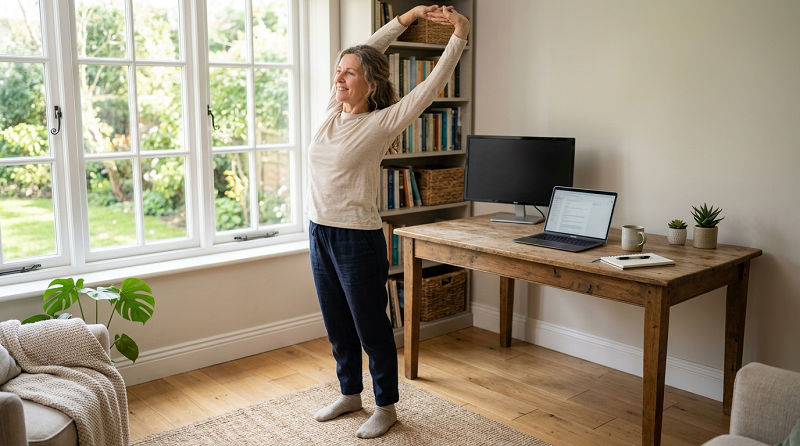
You do not need a full workout to benefit from movement.
A five-minute walk can give your mind a break and get your body moving.
Stand up.
Walk around your home.
Walk down the hallway.
Take a quick walk outside.
Stretch your arms and shoulders.
Even a short movement break can help you shift your attention.
The CDC recommends physical activity, outdoor time, deep breathing, stretching, and other relaxing activities as ways to support emotional well-being.
Try This 5-Minute Movement Break
Minute 1: Walk around the room.
Minute 2: Roll your shoulders slowly.
Minute 3: Stretch your arms overhead.
Minute 4: Walk at a comfortable pace.
Minute 5: Slow down and take a few deep breaths.
Keep the movement gentle.
You do not need to push yourself.
The goal is to change your state, not complete a workout.
Why Movement Can Help With Stress
When you stay in one position for a long time, your body can feel stiff and tired.
A short movement break can help you feel more awake.
It can also give your brain a break from the task that is causing stress.
If you work at a computer, try setting a reminder to stand and move several times during the day.
4. Practice a Quick Gratitude Reset
When you are stressed, your attention often moves toward problems.
You may think:
“How will I finish everything?”
“What if something goes wrong?”
“Why is this happening?”
These thoughts can make stress feel even stronger.
A short gratitude exercise can help you shift your attention toward something positive.
The CDC recommends practicing gratitude as part of emotional well-being and suggests writing down specific things you are grateful for.
Try the 3-Thing Gratitude Exercise
Take a piece of paper or open a note on your phone.
Write down three things you appreciate today.
They can be very simple:
- A good cup of coffee
- A supportive friend
- A comfortable home
- A beautiful sunset
- A healthy meal
- Time with your family
- A funny conversation
- A quiet morning
There is no need to find something extraordinary.
Small things count.
Spend the last minute thinking about one item on your list.
Why are you grateful for it?
How does it make your life better?
This simple exercise can help create a mental pause when your thoughts feel negative or overwhelming.
5. Give Your Mind a Screen-Free Break
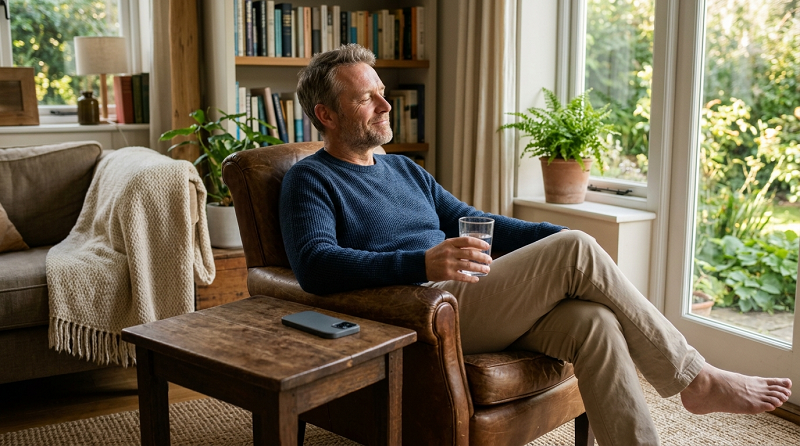
Sometimes your brain needs less information, not more.
When you feel stressed, it can be tempting to scroll through social media, check messages, read the news, or watch short videos.
But constant information can make it harder to slow down.
Try taking five minutes away from your screens.
Put your phone down.
Turn off notifications.
Step away from your computer.
Sit somewhere quiet.
Look outside.
Drink a glass of water.
Take a few slow breaths.
You can also spend those five minutes listening to calming music or simply sitting in silence.
Mayo Clinic includes spending time outside, meditation, relaxation techniques, and other calming activities among useful stress-management practices.
The important part is giving your brain a short break from constant input.
A Simple 5-Minute Stress Relief Routine
Not sure which method to choose?
Try combining several techniques.
Here is a simple routine you can use almost anywhere.
Minute 1: Stop
Pause what you are doing.
Put down your phone.
Relax your shoulders.
Take one slow breath.
Minute 2: Breathe
Take slow, comfortable breaths.
Focus on the feeling of the air moving in and out.
Minute 3: Move
Stand up.
Stretch your arms.
Roll your shoulders.
Walk around for a minute.
Minute 4: Notice
Look around you.
Notice what you see, hear, and feel.
Bring your attention back to the present.
Minute 5: Choose
Ask yourself:
“What is the one thing I need to do next?”
Choose one small action.
Then return to your day.
This final step is important.
Stress can make every task feel urgent.
Choosing one next step can make the situation feel more manageable.
Quick Stress Relief at Work
Work is one of the most common places for stress to build.
Deadlines, emails, meetings, difficult conversations, and long hours can quickly drain your energy.
You may not be able to take a long break.
But you can take five minutes.
Try this at work:
- Close your email for five minutes.
- Take five slow breaths.
- Stand up and stretch.
- Drink some water.
- Look away from your screen.
- Write down your top priority.
- Return to work with one clear task.
You can also take a short walk during lunch or another break.
A small pause may help you return with more focus.
Quick Stress Relief Before Bed
Stress does not always end when the workday ends.
Sometimes your body is tired, but your mind keeps working.
You may replay conversations or think about tomorrow’s tasks.
A short evening routine can help create a transition from a busy day to a calmer night.
Try:
- Put your phone away.
- Dim bright lights.
- Take slow breaths.
- Stretch gently.
- Write down tomorrow’s top tasks.
- Think of one thing you are grateful for.
- Let yourself rest.
Meditation and relaxation exercises may help reduce stress and promote relaxation, although they work best when practiced regularly.
How to Make 5-Minute Stress Relief a Habit
Knowing what to do is one thing.
Remembering to do it is another.
The easiest way to make stress relief part of your routine is to connect it to something you already do.
For example:
- Breathe for five minutes after your morning coffee.
- Stretch after every long work session.
- Take a short walk after lunch.
- Practice gratitude before bed.
- Do one minute of mindfulness when you feel overwhelmed.
You can also create a simple reminder on your phone.
The goal is consistency.
You do not need to practice every technique.
Choose one or two that feel natural.
Mayo Clinic notes that relaxation techniques are skills that improve with practice. If one technique does not work well for you, another may be a better fit.
Stress relief works best when it becomes part of a healthy daily routine. For more simple habits that can support your physical and mental well-being, check out our guide to 10 Simple Healthy Habits to Practice Every Day.
What If Five Minutes Is Not Enough?
A five-minute reset can be helpful, but it is not a cure for severe or ongoing stress.
If stress is constant, affects your daily life, causes you to avoid normal activities, or feels impossible to manage, consider talking with a qualified health professional.
The NIMH advises seeking help when stress becomes difficult to manage or starts interfering with everyday life.
Long-term stress may need more than quick relaxation techniques.
You may benefit from:
- Regular exercise
- Better sleep habits
- Healthy meals
- Time with supportive people
- Counseling or therapy
- Better time management
- Learning healthy coping skills
- Professional mental health support
Asking for help is not a weakness.
It is a healthy step toward taking care of yourself.
The Best 5-Minute Stress Relief Technique Is the One You Will Use
There is no single stress relief method that works for everyone.
Some people feel better after walking.
Others prefer breathing exercises.
Some enjoy meditation, music, prayer, stretching, or writing.
Experiment.
Try one method for a few days.
Then try another.
Pay attention to how you feel before and after.
Over time, you may discover your own personal stress-relief toolkit.
The important thing is to start.
You do not need to wait until you feel completely overwhelmed.
A short reset can become part of your daily routine.
Your 5-Minute Stress Relief Checklist
Save this simple checklist for the next time stress starts to build.
Stop.
Pause what you are doing.
Breathe.
Take several slow, comfortable breaths.
Move.
Stand, stretch, or walk for a few minutes.
Notice.
Pay attention to your surroundings and your body.
Reset.
Choose one small action and continue your day.
You can also use this quick question:
“What can I control right now?”
Focus your energy on that.
Final Thoughts: Give Yourself Five Minutes
Life will always bring challenges.
There will be busy days, difficult conversations, long to-do lists, and unexpected problems.
You cannot control everything that happens.
But you can learn how to pause.
A five-minute stress relief routine gives you a simple way to step away from the pressure and reconnect with the present moment.
Try deep breathing.
Take a short walk.
Stretch your body.
Practice mindfulness.
Write down three things you are grateful for.
Or simply put your phone away and enjoy a few quiet minutes.
Small actions can become powerful habits when you repeat them.
So, why not start today? Take five minutes, choose one technique, and give your mind a chance to reset.
Then tell us: Which 5-minute stress relief technique works best for you—deep breathing, walking, mindfulness, stretching, gratitude, or something else? Share your favorite strategy and help inspire someone else to take a much-needed pause.