
Healthy living can sound like a full-time job.
Plan every meal. Count every calorie. Work out for an hour. Drink more water. Sleep eight hours. Avoid sugar. Track your steps. Meditate. Repeat.
No wonder many people give up.
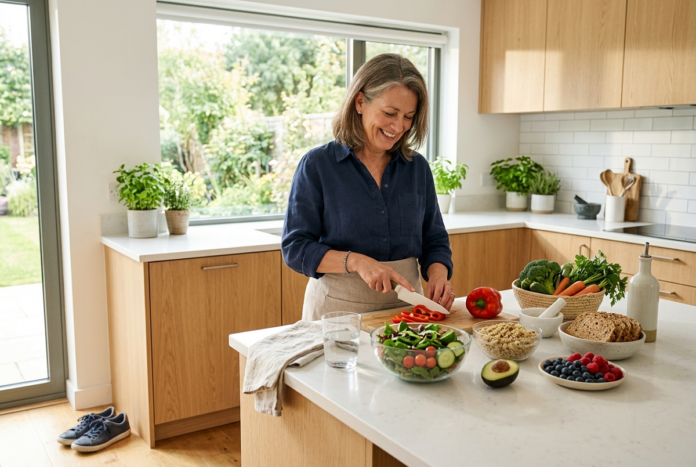
The good news is that healthy living does not have to feel like a chore. You do not need a perfect diet or a strict workout plan to build a healthier life. The goal is to create simple habits that fit your real life.
A healthy lifestyle is built through small choices that you can repeat. Over time, those choices can become part of your normal routine.
In this guide, you will learn how to make healthy living a lifestyle instead of something you force yourself to do.
What Does Healthy Living Really Mean?
Healthy living is not about being perfect.
It means taking care of your body and mind in ways that support your health over time. This includes eating nutritious foods, staying active, getting enough sleep, managing stress, and making choices that support your overall well-being.
The Centers for Disease Control and Prevention (CDC) notes that healthy weight and overall health are linked with healthy eating, physical activity, enough sleep, and stress management.
That means healthy living is much bigger than weight loss.
It can help you:
- Have more daily energy
- Sleep better
- Support heart health
- Maintain stronger muscles and bones
- Improve mood
- Manage stress
- Support a healthy weight
- Reduce the risk of some chronic diseases
- Feel better during everyday activities
Most importantly, healthy living should be sustainable.
If a routine is so strict that you cannot enjoy your life or maintain it for more than a few weeks, it may not be the right routine for you.
Stop Thinking of Health as an All-or-Nothing Goal
One of the biggest barriers to a healthy lifestyle is the idea that you must do everything perfectly.
You might think:
“If I cannot exercise for an hour, there is no point.”
Or:
“I ate something unhealthy, so my whole day is ruined.”
This type of thinking can make healthy habits feel stressful.
Instead, focus on progress.
If you planned to walk for 30 minutes but only have 10 minutes, walk for 10 minutes.
If you planned a healthy dinner but ended up ordering takeout, make a healthier choice at your next meal.
If you missed your workout yesterday, start again today.
One imperfect choice does not erase all your healthy choices.
A lifestyle is built from what you do most of the time, not from what you do perfectly every day.
Start With Small Healthy Habits
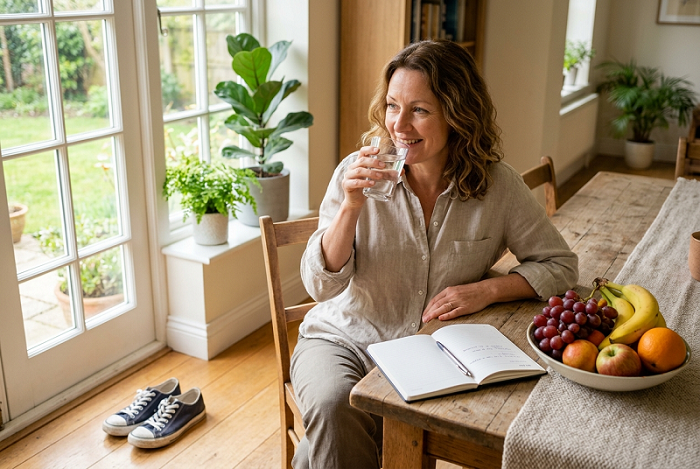
One of the easiest ways to make healthy living feel natural is to start small. Instead of trying to change everything at once, choose one or two simple habits that fit your daily routine. For more practical ideas, check out our guide to 10 Simple Healthy Habits to Practice Every Day.
Trying to change everything at once can leave you tired and frustrated.
Instead, choose one or two habits.
For example:
- Drink water with your lunch.
- Add one serving of vegetables to dinner.
- Take a 10-minute walk after work.
- Go to bed 15 minutes earlier.
- Eat breakfast without looking at your phone.
- Stand up and move during work breaks.
Once a habit becomes easier, add another one.
This approach takes pressure off you. It also gives your brain time to adjust to the new routine.
Make Your Habits Easy to Repeat
A healthy habit should be simple enough to do on a busy day.
For example, keeping fruit where you can see it makes it easier to choose fruit when you want a snack.
Keeping walking shoes near the door can make going for a walk easier.
Preparing healthy foods ahead of time can make nutritious meals more convenient.
The goal is to remove friction.
Make healthy choices easier and less healthy choices less convenient.
Build a Healthy Eating Routine You Enjoy
Healthy eating does not have to mean eating boring food.
You do not need to remove every food you enjoy. Instead, aim for a balanced eating pattern that includes a variety of nutritious foods.
The CDC recommends eating a variety of healthy foods rather than completely eliminating entire food groups.
Try building meals around:
- Vegetables
- Fruits
- Whole grains
- Beans and legumes
- Eggs
- Fish or lean meats
- Nuts and seeds
- Yogurt or other nutritious dairy foods
- Healthy fats
You can still enjoy your favorite foods.
The key is balance.
Make Healthy Food Convenient
Your environment can influence what you eat.
If healthy food is easy to grab, you are more likely to choose it when you are hungry.
Try keeping these foods available:
- Bananas or apples
- Berries
- Boiled eggs
- Yogurt
- Nuts
- Cut vegetables
- Whole-grain crackers
- Beans
- Leftover cooked vegetables
You can also prepare a few basic ingredients in advance.
For example, cook some vegetables, prepare a protein source, and make a batch of whole grains. Then you can combine them into quick meals during the week.
Healthy eating becomes much easier when you do not have to start from zero every day.
Find Physical Activities You Actually Enjoy

Exercise should not feel like punishment.
If you hate running, you do not have to run.
If you dislike crowded gyms, you can exercise at home.
If you enjoy dancing, dance.
If you like walking outdoors, walk.
The best exercise is often the type you enjoy enough to keep doing.
Regular physical activity has many benefits. The CDC reports that it can support heart health, brain health, sleep, mood, bone health, and healthy weight.
For adults, current U.S. guidance recommends at least 150 minutes of moderate-intensity physical activity each week, along with muscle-strengthening activities at least two days a week.
But do not let that number discourage you.
You can build toward it gradually.
Turn Movement Into Part of Your Day
Exercise does not always need to be a formal workout.
You can add movement by:
- Walking while talking on the phone
- Taking the stairs
- Gardening
- Cleaning your home
- Playing with your children
- Walking during lunch
- Stretching while watching television
- Doing short home workouts
- Dancing to your favorite music
The World Health Organization also emphasizes that physical activity can include movement from work, transportation, leisure, sports, and everyday tasks.
Think of movement as something you do throughout the day, not something you have to “get over with.”
Create a Sleep Routine That Feels Relaxing
Sleep is one of the easiest parts of healthy living to overlook.
Many people try to improve their diet and exercise while ignoring their sleep schedule.
But sleep is an important part of overall health.
A healthy lifestyle includes getting enough sleep and creating habits that support good sleep quality.
Try creating a simple nighttime routine.
For example:
9:00 p.m. — Finish demanding tasks
9:15 p.m. — Prepare for tomorrow
9:30 p.m. — Dim the lights and reduce screen time
9:45 p.m. — Read, stretch, or relax
10:00 p.m. — Get ready for bed
Your schedule does not need to look exactly like this.
The important part is creating a pattern your body can recognize.
Protect Your Bedtime
Try to avoid turning bedtime into another stressful task.
Instead of thinking, “I must fall asleep now,” focus on creating a calm environment.
You can:
- Keep your bedroom comfortable
- Follow a regular sleep schedule
- Reduce bright light before bed
- Limit stimulating activities late at night
- Give yourself time to relax
Small changes can make your nighttime routine feel more natural.
Make Stress Management Part of Your Lifestyle
Stress is a normal part of life.
Work, family, money, relationships, and daily responsibilities can all create pressure.
The goal is not to eliminate every source of stress.
Instead, learn healthy ways to respond to it.
Try simple stress-relief habits such as:
- Taking a slow walk
- Practicing deep breathing
- Listening to calming music
- Spending time outside
- Talking with someone you trust
- Writing in a journal
- Stretching
- Reading
- Taking short breaks during busy days
You do not need an hour of meditation to care for your mental well-being.
Even a few quiet minutes can give you a chance to slow down and reset.
Make Healthy Living Fit Your Real Life
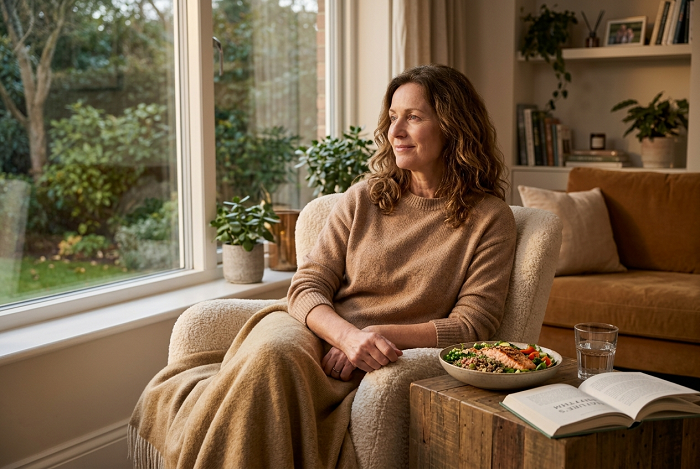
A healthy routine should work on both your best days and your difficult days.
This is where flexibility becomes important.
Imagine you normally prepare healthy meals at home.
One evening, you have a long day at work and do not have the energy to cook.
Instead of thinking, “I failed,” choose the best available option.
Maybe that means:
- Ordering a meal with vegetables and a protein source
- Eating a simple sandwich with fruit
- Having leftovers
- Making a quick egg and vegetable meal
That is still healthy living.
Create a “Busy Day” Version of Your Routine
Your normal routine might include a 30-minute workout.
Your busy-day version might be a 10-minute walk.
Your normal dinner might be a home-cooked meal.
Your busy-day version might be a simple meal made from foods you already have.
Your normal relaxation routine might be 30 minutes.
Your busy-day version might be five minutes of deep breathing.
This gives you a way to stay consistent without demanding perfection.
Focus on Consistency, Not Motivation
Motivation comes and goes.
You may feel excited about healthy living on Monday and exhausted by Thursday.
That is normal.
Instead of depending on motivation, create routines.
For example:
After waking up: Drink water.
After breakfast: Take a short walk.
At lunch: Add a fruit or vegetable.
After work: Move for 10–30 minutes.
Before bed: Spend a few quiet minutes away from screens.
When a habit is connected to something you already do, it becomes easier to remember.
Over time, the action can become automatic.
Use the “Better, Not Perfect” Rule
You do not need to make the perfect choice.
Look for the better choice available to you.
Instead of:
No vegetables → vegetables with dinner
Instead of:
No movement → 10-minute walk
Instead of:
Sugary drink every meal → water with one meal
Instead of:
Very late bedtime → slightly earlier bedtime
These small improvements may not seem impressive.
But repeated over weeks and months, they can create meaningful change.
The CDC also notes that even people who cannot meet recommended activity levels should be as active as they can be.
That is an important message:
Something is better than nothing.
Make Your Environment Work for You
Your surroundings can either support your healthy habits or make them harder.
Look around your home.
What do you see first when you are hungry?
What do you see when you want to relax?
Where are your walking shoes?
Where do you keep your water bottle?
Small changes can make healthy choices easier.
Try:
- Keeping fruit on the counter
- Putting a water bottle beside your desk
- Keeping workout clothes ready
- Preparing healthy snacks in advance
- Keeping tempting foods out of immediate reach
- Putting reminders where you will see them
- Making your kitchen easier to use
You are not relying only on willpower.
You are designing your environment to support your goals.
Stop Comparing Your Health Journey to Other People
Social media can make healthy living look perfect.
You may see people exercising every morning, preparing beautiful meals, drinking green smoothies, and following strict routines.
Remember that you are seeing a small part of their life.
Your health journey is your own.
Your schedule, budget, preferences, responsibilities, fitness level, and needs are different.
Instead of asking:
“Why can’t I live like them?”
Ask:
“What healthy habit can fit my life?”
That question is much more useful.
Build a Simple Weekly Healthy Living Plan
You do not need a complicated schedule.
Try creating a simple weekly plan.
Food
Choose a few healthy meals you enjoy and repeat them.
Movement
Plan several short periods of activity instead of waiting for a perfect workout window.
Sleep
Choose a regular bedtime and wake time when possible.
Stress
Schedule small periods of relaxation.
Preparation
Spend a little time preparing food, clothes, or your schedule for the week.
For example:
Monday: 20-minute walk
Tuesday: Strength workout
Wednesday: Walk and stretch
Thursday: Strength workout
Friday: Fun activity
Saturday: Longer outdoor activity
Sunday: Rest and prepare for the week
The exact plan does not matter as much as finding a routine you can maintain.
Track Habits Without Obsessing Over Them
Tracking can help you see progress.
But it should not become another source of stress.
Instead of tracking everything, choose a few simple measures.
You could track:
- Days you moved
- Servings of fruits and vegetables
- Water intake
- Bedtime
- How you felt
- Energy levels
- Mood
- Weekly activity
You can also use a simple calendar.
Put an X on each day you complete your chosen habit.
Seeing several Xs in a row can be motivating.
If you miss a day, simply start again.
Give Yourself Credit for Small Wins
Healthy living becomes easier when you recognize progress.
Maybe you walked three times this week.
Maybe you cooked dinner instead of ordering food.
Maybe you went to bed earlier.
Maybe you drank more water.
Maybe you took a break when you felt overwhelmed.
Those choices count.
Do not wait for a dramatic transformation before celebrating progress.
Your goal is not to become a completely different person overnight.
Your goal is to become a little healthier through the choices you make each day.
What to Do When You Lose Your Routine
Everyone gets off track.
You may get sick, travel, work long hours, attend celebrations, or simply have a difficult week.
The mistake is believing that one bad week means you have failed.
It does not.
Start again with one simple action.
Drink some water.
Take a walk.
Prepare a healthy meal.
Go to bed earlier.
Then repeat it tomorrow.
The CDC recommends gradual, sustainable lifestyle changes rather than relying on short-term approaches.
Think of your healthy lifestyle as something you can always return to.
A Simple Healthy Living Checklist
Use this checklist to keep your routine simple.
Every day
- Eat a variety of nutritious foods.
- Drink water regularly.
- Move your body.
- Take short breaks from sitting.
- Spend some time relaxing.
- Get enough sleep.
- Be kind to yourself.
Every week
- Plan a few healthy meals.
- Include regular physical activity.
- Do some muscle-strengthening activity.
- Make time for people you enjoy.
- Review what worked well.
- Adjust what did not work.
You do not have to check every box every day.
Use the list as a guide, not a test.
Start Making Healthy Living a Lifestyle Today
The best time to create healthier habits is not next Monday.
It is today.
But you do not need to change your entire life today.
Choose one small action.
Take a 10-minute walk.
Add vegetables to your next meal.
Drink water instead of a sugary drink.
Go to bed a little earlier.
Spend five quiet minutes away from your phone.
Then do it again tomorrow.
Healthy living becomes a lifestyle when healthy choices stop feeling like temporary projects and start becoming normal parts of your day.
The goal is not perfection.
The goal is consistency, flexibility, and progress.
Final Thoughts: Make Health Part of Your Life
Healthy living should give you more from life, not make life feel harder.
You do not need an extreme diet, exhausting workouts, or a perfect daily routine.
Start small.
Choose foods that nourish you. Find movement you enjoy. Protect your sleep. Manage stress. Create an environment that supports your goals. And when life gets messy, adjust instead of giving up.
Remember: you are not trying to complete a health challenge. You are building a life that supports your health.
What is one healthy habit you could start today?
Share your goal in the comments. It might inspire someone else to take their first step, too.
Your healthier lifestyle does not have to start with a huge change. It can start with one small choice today.