

Life can get busy fast. Work, family, errands, appointments, and personal responsibilities can fill your day before you even have time to think about yourself.
When your schedule is packed, healthy habits are often the first things to go. You may skip breakfast, grab fast food, sit for hours, sleep too little, or put off exercise until “someday.”
But staying healthy does not have to mean spending hours at the gym or cooking complicated meals every day.
The key is to make small, realistic choices that fit into your existing routine.
You do not need a perfect schedule. You need habits that are easy enough to repeat.
In this guide, you will learn how to stay healthy when you have a busy schedule, including simple ways to eat better, move more, sleep well, manage stress, and make time for yourself.
Why Is It Hard to Stay Healthy With a Busy Schedule?
A busy schedule can make healthy choices feel like extra work.
When you are tired or rushed, convenience often wins. It is easier to order takeout than prepare a meal. It may seem easier to sit down after work than go for a walk.
This does not mean you lack discipline.
Your environment and daily routine have a major effect on your choices. When healthy options are easy to access, you are more likely to choose them.
The good news is that you can change your routine without completely changing your life.
Instead of trying to become healthier overnight, focus on small habits that save time and reduce stress.
1. Start With Simple Healthy Meals
Healthy eating is one of the best places to start.
You do not need to prepare gourmet meals every day. A simple meal with protein, vegetables, whole grains, fruit, and healthy fats can provide a strong nutritional base.
The CDC recommends emphasizing nutrient-dense foods such as vegetables, fruits, protein foods, healthy fats, and whole grains while limiting highly processed foods, added sugars, and excess sodium.
Keep Easy Foods Ready
A busy schedule becomes easier when healthy food is already available.
Keep quick options in your kitchen, such as:
- Eggs
- Greek yogurt
- Fresh or frozen fruit
- Pre-cut vegetables
- Oatmeal
- Beans and lentils
- Canned tuna or salmon
- Nuts and seeds
- Whole-grain bread
- Rotisserie chicken
- Frozen vegetables
Frozen fruits and vegetables can also be useful when fresh produce is not practical.
The goal is simple: make the healthy choice the easy choice.
Try the Simple Plate Method
When you do not have time to count calories or plan every nutrient, use a simple plate method.
Aim for:
- Plenty of vegetables or fruit
- A source of protein
- A whole grain or other carbohydrate
- A small amount of healthy fat
This approach can make meal planning much easier.
2. Plan Your Meals Before the Week Gets Busy
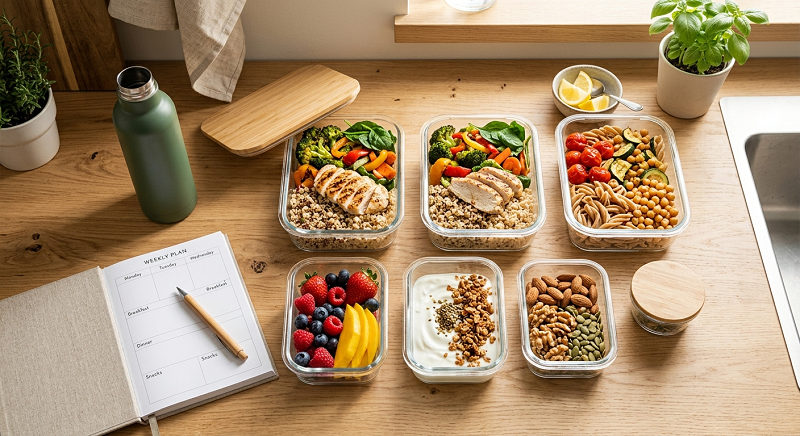
Meal planning can save both time and stress.
You do not need to plan every meal seven days in advance. Even planning three or four main meals can make a difference.
Choose meals that use similar ingredients.
For example, grilled chicken can become:
- A salad for lunch
- A rice bowl for dinner
- A wrap the next day
This reduces cooking time and food waste.
The CDC also recommends planning meals at home as one way to make healthier food choices and avoid relying on less healthy drive-through meals.
Use a 15-Minute Meal Strategy
When time is short, choose meals that can be prepared in about 15 minutes.
For example:
Breakfast: Greek yogurt, berries, and nuts
Lunch: Whole-grain wrap with chicken and vegetables
Dinner: Eggs, vegetables, and whole-grain toast
Snack: Apple with peanut butter
Healthy eating does not have to be complicated.
3. Make Physical Activity Part of Your Day
You do not need a two-hour workout to be active.
Small amounts of movement can add up throughout the day.
The CDC recommends that adults get at least 150 minutes of moderate-intensity physical activity each week, along with muscle-strengthening activities on at least two days each week.
That may sound like a lot when you are busy, but you can break it into smaller periods.
For example:
- Take a 10-minute walk in the morning.
- Walk during your lunch break.
- Take the stairs when possible.
- Do a short workout after work.
- Walk while talking on the phone.
- Stretch during work breaks.
You do not have to complete your activity all at once.
Try the 10-Minute Workout
When you have almost no free time, try a quick workout.
For example:
- 10 squats
- 10 wall push-ups
- 20 jumping jacks or marching steps
- 10 lunges
- 20-second plank
Repeat the routine a few times based on your fitness level.
Even short movement breaks can help you become less sedentary.
Regular physical activity can also support sleep, reduce anxiety, and lower the risk of several chronic diseases.
4. Walk Whenever You Can

Walking is one of the easiest forms of exercise for busy people.
You do not need special equipment or a gym membership.
Look for natural opportunities to walk.
Try:
- Walking during lunch
- Parking farther away
- Taking the stairs
- Walking after dinner
- Walking while making phone calls
- Taking short walking breaks during work
If you work at a desk, set a reminder to stand up and move every so often.
The World Health Organization notes that some physical activity is better than none, and increasing movement during the day can help people reach recommended activity levels.
5. Protect Your Sleep
Sleep is often sacrificed when life gets busy.
You may stay up late to finish work, answer messages, watch television, or catch up on chores.
But regularly cutting sleep short can make the next day harder.
Most adults need around 7 to 9 hours of sleep each night.
Sleep supports your physical health, brain function, mood, and daily performance.
Create a Simple Bedtime Routine
You do not need a complicated sleep routine.
Try:
- Going to bed at about the same time each night
- Turning off work notifications
- Limiting screen time before bed
- Keeping your bedroom comfortable and dark
- Avoiding large meals close to bedtime
- Giving yourself time to relax
Think of sleep as part of your health routine, not wasted time.
If your schedule is busy, protecting sleep may actually help you function better during the day.
6. Drink More Water
It is easy to forget about hydration when you are busy.
You may spend hours working before realizing you have barely had anything to drink.
Keep a reusable water bottle near you.
Put one:
- On your desk
- In your car
- In your work bag
- Beside your bed
You can also connect drinking water with daily habits.
For example, drink some water:
- When you wake up
- Before meals
- During work breaks
- After exercise
- When you return home
A simple visual reminder can make the habit easier.
7. Take Short Breaks From Work
Being busy does not mean you should work nonstop.
Long periods without breaks can leave you feeling mentally drained.
A short break can help you reset.
During a break, try:
- Standing up
- Stretching
- Walking
- Taking several slow breaths
- Looking away from your screen
- Drinking water
- Stepping outside
Even five minutes can give you a chance to pause.
If possible, avoid using every break to check social media or work messages. Give your mind a real change of activity.
8. Learn Simple Ways to Manage Stress
Stress is a normal part of life. But constant stress can make it harder to care for yourself.
When you are stressed, you may eat without thinking, sleep poorly, skip exercise, or feel too tired to do anything.
That is why stress management belongs in a healthy lifestyle.
Try the 5-Minute Reset
When you feel overwhelmed, stop for five minutes.
Try this:
Step 1: Put your phone down.
Step 2: Take slow, comfortable breaths.
Step 3: Relax your shoulders.
Step 4: Think about what needs your attention now.
Step 5: Choose one small next step.
You do not have to solve your entire day at once.
Focus on the next useful action.

9. Avoid the “All or Nothing” Mindset
One of the biggest mistakes busy people make is believing that healthy habits must be perfect.
For example:
“I missed my workout, so the whole week is ruined.”
“I ate fast food today, so I might as well eat badly all weekend.”
“I did not get eight hours of sleep, so there is no point trying tonight.”
This mindset can make one imperfect choice turn into several.
Instead, think:
Something is better than nothing.
If you cannot do a 45-minute workout, walk for 10 minutes.
If you cannot cook a full meal, choose a healthier convenience option.
If you had an unhealthy lunch, make dinner more balanced.
One choice does not define your entire day.
10. Keep Healthy Snacks With You
Hunger can make healthy choices harder.
If you wait until you are extremely hungry, you may choose whatever food is fastest.
Keep simple snacks nearby.
Good options include:
- Fruit
- Unsalted nuts
- Yogurt
- Boiled eggs
- Whole-grain crackers
- Vegetable sticks
- Hummus
- Seeds
Having food available before hunger becomes intense can help you make better choices.
11. Make Your Workday More Active
Many busy adults spend most of their day sitting.
If you work at a desk, look for ways to add movement without disrupting your work.
Try:
- Standing during phone calls
- Walking during meetings when possible
- Stretching between tasks
- Using stairs
- Walking to speak with a coworker instead of sending a message
- Taking a short walk during lunch
You do not need to turn your workplace into a gym.
You simply need to reduce long periods of inactivity.
12. Set Health Priorities on Your Calendar
Your calendar probably includes meetings, appointments, deadlines, and family activities.
Why not schedule your health too?
Add time for:
- Exercise
- Meal preparation
- Grocery shopping
- Sleep
- Rest
- Outdoor walks
- Medical appointments
When something is on your calendar, it is easier to remember.
Treat these activities as important commitments rather than optional extras.
13. Build a Morning Routine That Works for You
Your morning does not need to begin at 5 a.m.
You do not need a long meditation session, a one-hour workout, and a complicated breakfast.
Keep your morning routine realistic.
For example:
Wake up → Drink water → Eat a simple breakfast → Stretch for 5 minutes → Start your day
A routine like this can take only a short amount of time.
The best morning routine is one you can actually maintain.
14. Make Healthy Choices Easier at Home
Your surroundings can influence your habits.
If healthy food is easy to see and grab, you are more likely to eat it.
Try placing:
- Fruit on the counter
- Water bottles in the refrigerator
- Healthy snacks at eye level
- Pre-cut vegetables in clear containers
At the same time, keep highly processed snacks less visible.
You are not banning them.
You are simply making your healthier options easier to reach.
15. Do Not Forget Your Mental Health
Being healthy is about more than food and exercise.
Your mental and emotional well-being matter too.
Make time for things that help you recharge.
That might include:
- Talking with a friend
- Spending time with family
- Reading
- Listening to music
- Spending time outdoors
- Practicing a hobby
- Taking quiet time alone
You do not need hours of free time.
Even a few minutes can help you reconnect with yourself.
16. Make Health a Family Habit
If you have a family, healthy habits can become easier when everyone joins in.
Instead of exercising alone, take a family walk.
Instead of ordering takeout every night, prepare a simple meal together.
Instead of spending the whole evening on screens, play outside or talk after dinner.
Healthy living becomes much easier when it is part of the household routine.
17. Focus on Consistency, Not Perfection
The most important lesson is simple:
You do not need to do everything. You need to keep doing something.
A healthy lifestyle is built from repeated actions.
One walk does not transform your health.
One healthy meal does not change everything.
One good night of sleep does not fix months of poor sleep.
But repeated healthy choices can create meaningful change over time.
The CDC emphasizes that healthy living involves several areas, including healthy eating, physical activity, sleep, and stress reduction.
Think about your health as a long-term investment.
Small actions count.
If you want more practical ideas for building healthy routines, check out our guide to 10 Simple Healthy Habits to Practice Every Day.
A Simple Healthy Schedule for Busy People
Here is an example of how you can fit healthy habits into a busy day.
Morning
- Drink water after waking.
- Eat a simple protein-rich breakfast.
- Stretch or walk for 5–10 minutes.
During Work
- Keep water nearby.
- Take short movement breaks.
- Choose a balanced lunch.
- Walk during part of your break.
Afternoon
- Choose a healthy snack if hungry.
- Stand and move between tasks.
- Take a few minutes to breathe and reset.
Evening
- Eat a balanced dinner.
- Take a short walk.
- Spend time with family or enjoy a relaxing activity.
- Reduce work and screen activity before bed.
Night
- Follow a regular bedtime.
- Aim for 7–9 hours of sleep.
You can adjust this routine to match your own schedule.
What If You Really Have No Time?
There will be days when your schedule is packed from morning to night.
On those days, lower the goal instead of giving up.
Ask yourself:
What is the smallest healthy action I can take right now?
Maybe it is:
- Drinking a glass of water
- Walking for five minutes
- Eating a piece of fruit
- Going to bed 30 minutes earlier
- Taking five slow breaths
- Stretching for two minutes
- Choosing a healthier meal
Small actions may seem insignificant, but they help keep your healthy routine alive.
Your Busy Schedule Does Not Have to Control Your Health
A busy life does not automatically mean an unhealthy life.
You can eat well without spending hours in the kitchen.
You can exercise without spending hours at the gym.
You can manage stress without taking an entire day off.
You can improve your sleep by protecting your bedtime.
Most importantly, you can build health habits that fit your real life.
The goal is not to create a perfect schedule.
The goal is to create a healthy schedule you can actually live with.
Final Thoughts: Start With One Small Change Today
Learning how to stay healthy when you have a busy schedule is not about doing more.
It is about making better use of the time you already have.
Choose one habit today.
Drink more water. Take a short walk. Prepare tomorrow’s lunch. Go to bed earlier. Add vegetables to dinner. Take a five-minute break.
Then repeat it tomorrow.
Over time, these small actions can become part of your normal routine.
Your health deserves a place on your schedule, even when life gets busy.
What healthy habit is hardest for you to maintain when your schedule gets busy? Share your answer in the comments, and tell us which small change you plan to start this week.