

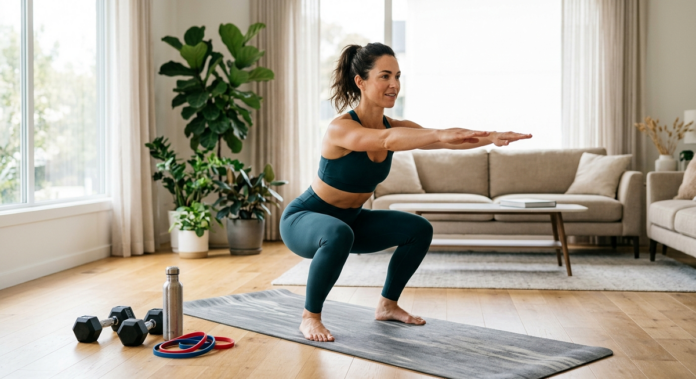
If you want to lose weight, you may think you need a gym membership, expensive equipment, or hours on a treadmill.
You don’t.
Home workouts can support healthy weight loss when they are part of a consistent routine. You can exercise in your living room, bedroom, garage, or even a small outdoor space.
The biggest advantage is simple: home workouts are easy to fit into your day.
You can train before work, during a lunch break, or after dinner. You can also choose exercises that match your fitness level.
But what types of home workouts are best for weight loss? How often should you exercise? And can short workouts really make a difference?
Let’s take a practical look at how to make home workouts work for you.
Can You Really Lose Weight With Home Workouts?
Yes, you can lose weight with home workouts.
You don’t need a gym to improve your fitness or become more active. Many useful exercises require little or no equipment.
You can start with:
- Squats
- Lunges
- Push-ups
- Glute bridges
- Planks
- Step-ups
- Marching in place
- Jumping jacks
- Dancing
- Indoor walking
You can also add simple equipment later, such as resistance bands, dumbbells, or a jump rope.
The Centers for Disease Control and Prevention (CDC) recommends that adults get at least 150 minutes of moderate-intensity aerobic activity each week, plus muscle-strengthening activity on at least two days. You can spread this activity across the week and break it into smaller sessions.
The important point is that your home can be your workout space.
You don’t need perfect equipment or a complicated routine. You need a plan you can follow.
Why Home Workouts Can Be Good for Weight Loss
Home workouts offer several benefits that can make it easier to stay active.
1. They Are Convenient
One of the biggest barriers to exercise is finding the time.
A home workout removes many common obstacles.
You don’t have to:
- Drive to the gym
- Wait for equipment
- Find parking
- Follow gym opening hours
- Spend money on a membership
When your workout is only a few steps away, it can be easier to get started.
Even a short session can help you build the habit of moving regularly.
2. You Can Choose Your Own Pace
A gym may feel intimidating if you’re new to exercise.
At home, you can work at your own pace.
You can pause when you need to. You can choose easier versions of exercises. You can repeat movements until you feel comfortable.
This is especially useful for beginners.
3. You Can Combine Cardio and Strength
A good home workout plan does not need to focus on just one type of exercise.
You can combine cardio with strength training.
For example:
- Walk or march for 10 minutes
- Do squats and lunges for 10 minutes
- Finish with stretching for 5 minutes
This creates a simple full-body workout without complicated equipment.
4. You Can Build Muscle and Strength
Strength training is an important part of a balanced fitness routine.
Exercises such as squats, push-ups, lunges, planks, and glute bridges can challenge major muscle groups.
NIDDK notes that strength exercises can help maintain muscle mass and can be done with body weight, resistance bands, hand weights, or household items.
That means you don’t need a full home gym to start strength training.
What Are the Best Home Workouts for Weight Loss?
There is no single workout that works best for everyone.
The best choice is one that matches your fitness level and that you can do regularly.
Here are several good options.
Cardio Home Workouts
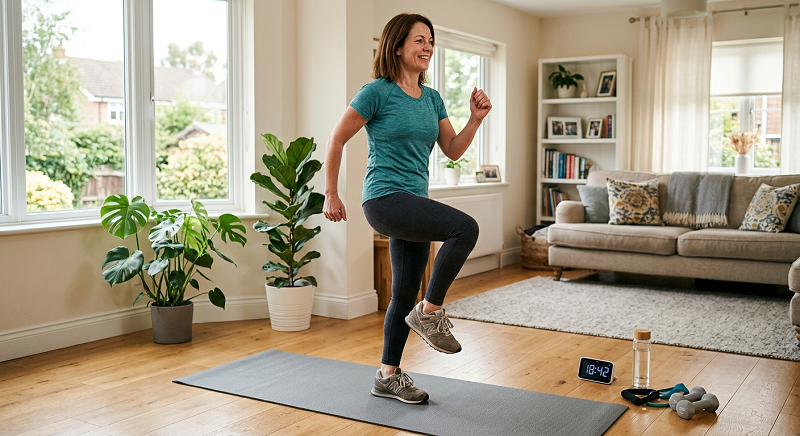
Cardio raises your heart rate and makes you breathe faster.
You can do cardio at home with little or no equipment.
Try:
- Dancing
- Marching in place
- Jogging in place
- Step-ups
- Jumping jacks
- Stair climbing
- Low-impact aerobics
- Follow-along cardio workouts
If jumping feels uncomfortable, choose low-impact movements.
For example, replace jumping jacks with step jacks. Replace running in place with brisk marching.
NIDDK lists activities such as brisk walking, jogging, dancing, and other aerobic exercises as ways to increase physical activity.
Strength Training at Home
Strength training does not have to be complicated.
Start with basic movements that work several muscle groups.
Try this beginner circuit:
- 10–15 squats
- 8–12 wall push-ups
- 8–10 lunges per leg
- 12 glute bridges
- 20–30 seconds of plank
- Rest for 30–60 seconds
- Repeat 2–3 times
If regular push-ups are too difficult, use a wall or sturdy raised surface.
If squats are challenging, use a chair for support.
The goal is to build strength gradually rather than trying to do advanced exercises right away.
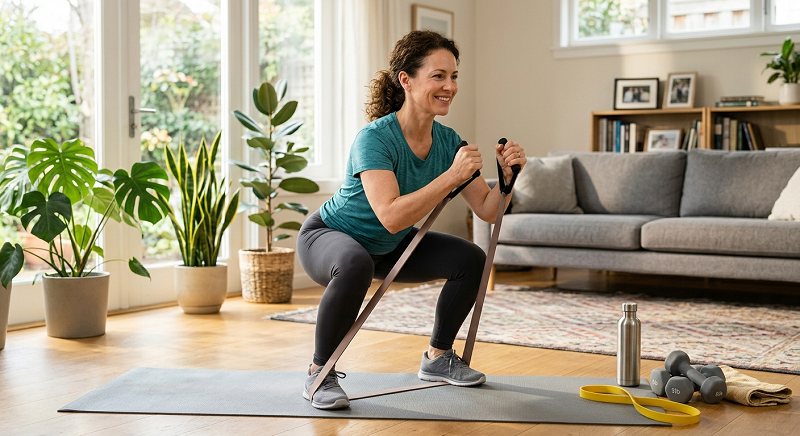
Low-Impact Home Workouts
You don’t need to jump, run, or perform high-impact exercises to get moving.
Low-impact workouts can be a good choice for beginners.
Try:
- Marching in place
- Chair squats
- Wall push-ups
- Standing leg raises
- Glute bridges
- Step-touch movements
- Gentle dancing
- Indoor walking
Start slowly and increase the challenge as your fitness improves.
How Much Exercise Do You Need?
For general health, adults should aim for at least 150 minutes of moderate-intensity aerobic activity each week and muscle-strengthening activities on at least two days each week.
If you’re unsure how to structure your weekly activity, read our guide on how much exercise you really need each day for a closer look at exercise recommendations and practical ways to fit movement into your routine.
That might mean:
- 30 minutes, 5 days a week
- 25 minutes on most days
- Several shorter sessions throughout the day
You don’t have to complete all your activity in one workout.
For example, you could walk for 10 minutes in the morning, exercise for 10 minutes at lunch, and take another 10-minute walk in the evening.
NIDDK notes that even short periods of activity can count, and people who are inactive can start with smaller amounts and build up over time.
If you’re currently inactive, don’t worry about reaching the full target on your first week.
Start where you are.
Can 30-Minute Home Workouts Help?
A 30-minute workout can be a useful part of a weight-management routine.
You can get a lot done in half an hour.
Try this simple format:
5 minutes: Warm-up
15 minutes: Strength exercises
5 minutes: Cardio
5 minutes: Cool-down and stretching
You could also spend the full 30 minutes walking indoors, dancing, doing a low-impact cardio workout, or completing a strength routine.
The goal is not to make every workout exhausting.
The goal is to create a routine that you can repeat.
How to Create a Home Workout Plan for Weight Loss
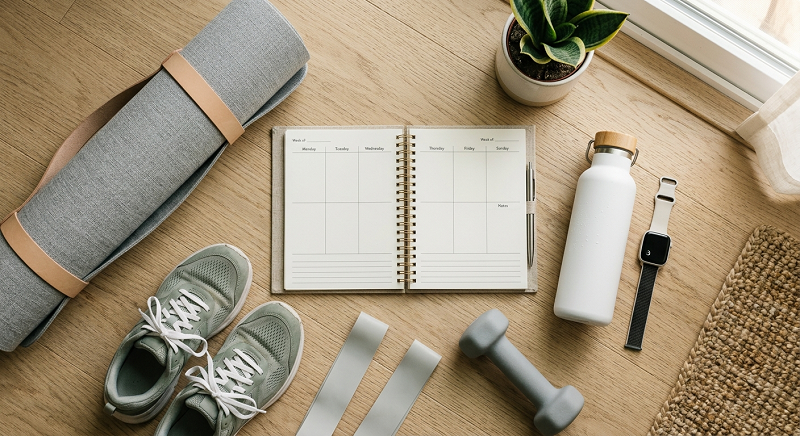
A weekly plan can help remove guesswork.
Here’s one simple example.
Monday: Full-Body Strength
Try:
- Squats
- Wall or modified push-ups
- Lunges
- Glute bridges
- Planks
Workout time: 20–30 minutes
Tuesday: Cardio
Choose an activity you enjoy.
For example:
- Brisk walking
- Dancing
- Indoor walking
- Low-impact aerobics
- Step-ups
Workout time: 25–40 minutes
Wednesday: Active Recovery
Take an easier day.
Try:
- Gentle stretching
- Easy walking
- Mobility exercises
- Light household activities
Thursday: Full-Body Strength
Repeat Monday’s workout or choose different exercises.
You can slowly increase repetitions as you become stronger.
Friday: Cardio
Choose another cardio workout.
You could dance, walk, climb stairs, or complete a beginner cardio routine.
Saturday: Fun Movement
Exercise does not always have to feel like exercise.
Try:
- Hiking
- Cycling
- Dancing
- Gardening
- Playing outside
- Walking with family or friends
Sunday: Rest
Give your body time to recover.
If you feel comfortable, gentle stretching or an easy walk is fine.
This is only an example. Adjust the plan to your schedule and fitness level.
How to Make Home Workouts More Effective
Once your workouts become easier, your body may need a new challenge.
You don’t have to completely change your routine.
Make small adjustments instead.
Increase Workout Time
If 15 minutes feels easy, try 20 minutes.
Later, you might move toward 25 or 30 minutes.
Add More Repetitions
If you can easily complete 10 squats, try 12.
Over time, you can increase the number while keeping good form.
Add Resistance
Resistance bands and dumbbells can make many exercises harder.
You can also use household items such as water bottles or cans if appropriate.
Increase Intensity
For cardio workouts, try:
- Walking faster
- Adding stairs
- Moving for longer
- Adding short periods of faster movement
- Taking shorter rest periods
NIDDK recommends starting slowly and building your activity over time.
Small improvements can add up.
What If You Are Completely New to Exercise?
You don’t need to be fit before you start exercising.
Start with movements that feel manageable.
For example:
Week 1: 10–15 minutes
Week 2: 15–20 minutes
Week 3: 20–25 minutes
Week 4: 25–30 minutes
You can also split your activity into smaller sessions.
For example:
- 10 minutes in the morning
- 10 minutes at lunch
- 10 minutes in the evening
This can be easier than trying to find one long block of free time.
NIDDK recommends starting slowly and building up when you have been inactive.
How Diet Fits Into Your Home Workout Plan
Exercise is only one part of a healthy weight-management plan.
Your everyday food choices matter too.
You don’t need to follow an extreme diet. Instead, focus on balanced meals that provide nutrients and help you feel satisfied.
Good choices include:
- Vegetables
- Whole fruits
- Whole grains
- Beans and lentils
- Fish
- Lean meats and poultry
- Eggs
- Nuts and seeds
- Low-fat or fat-free dairy
- Healthy sources of unsaturated fats
NIDDK recommends a healthy eating pattern that includes vegetables, whole fruits, whole grains, and a range of protein foods.
You also don’t have to completely avoid foods you enjoy.
A healthy eating pattern can include occasional treats.
The goal is to build habits that you can maintain rather than following a plan that feels impossible to live with.
How to Stay Motivated With Home Workouts
Knowing what to do is one thing.
Doing it week after week is another.
Here are simple ways to stay on track.
Put Workouts on Your Schedule
Pick specific times for exercise.
For example:
- Before work
- During your lunch break
- After work
- Before dinner
Treat your workout like an appointment.
Prepare the Night Before
Put your workout clothes and shoes somewhere easy to see.
If you use a mat or resistance bands, keep them ready.
Removing small barriers can make it easier to begin.
Track Your Activity
Keep a simple record of:
- Workout days
- Workout length
- Exercises
- Repetitions
- Walking time
- How you felt
Tracking can help you notice progress beyond the number on a scale.
NIDDK recommends tracking physical activity as one way to help stay motivated.
Choose Exercises You Enjoy
You don’t have to force yourself to do workouts you hate.
Try different activities until you find something you enjoy.
Dance. Walk. Stretch. Lift weights. Follow a workout video. Ride a bike.
Enjoyment can make it easier to stay active.
Common Home Workout Mistakes to Avoid
Home workouts are simple, but a few mistakes can make them harder than they need to be.
Doing Too Much Too Soon
Starting with a very hard workout may leave you sore and discouraged.
Instead, build your fitness step by step.
Ignoring Strength Training
Don’t make every workout cardio.
Strength exercises can help you build and maintain muscle.
Adults are advised to include muscle-strengthening activities at least two days each week.
Changing Your Plan Too Often
You don’t need a new workout every day.
Give yourself time to learn the movements and improve.
Once an exercise becomes easy, increase the challenge.
Expecting Overnight Results
Weight change does not happen at the same speed for everyone.
Your progress may also show up in ways that have nothing to do with the scale.
You may notice:
- Better stamina
- More strength
- Better movement
- More energy
- Improved confidence
- Better workout performance
Focus on the full picture.
Skipping Recovery
Rest is part of training.
Your body needs time to recover after challenging workouts.
Include easier days and avoid working the same muscles hard every day.
Can You Lose Belly Fat With Home Workouts?
This is one of the most common questions about home exercise.
The short answer is that you cannot choose exactly where your body loses fat first.
Exercises such as crunches and planks can strengthen your abdominal muscles, but they are not a special way to remove belly fat.
Instead, focus on your overall routine.
A balanced approach includes:
- Cardio
- Full-body strength training
- Healthy eating
- Regular daily movement
- Good sleep
- Stress management
Over time, these habits can support better overall health and weight management.
Do You Need Equipment to Lose Weight at Home?
No.
You can start with bodyweight exercises.
A simple beginner routine could include:
- Squats
- Wall push-ups
- Lunges
- Glute bridges
- Planks
- Marching
- Step-ups
As you become stronger, you can add resistance bands or weights.
NIDDK notes that strength training can use body weight, resistance bands, hand weights, or even suitable household items.
This makes home workouts an accessible option for many people.
How to Keep Making Progress
Once your routine becomes a habit, look for small ways to improve.
You could:
- Add five minutes to your workout
- Do a few more repetitions
- Use a resistance band
- Walk a little faster
- Add another active day
- Try a new exercise
- Reduce long periods of sitting
You don’t need to improve everything at once.
Choose one change and give yourself time to adjust.
This approach can make exercise feel more manageable and less overwhelming.
Home Workouts for Long-Term Weight Management
A short-term workout plan may help you get started.
A long-term routine is what helps you keep moving.
Regular physical activity has benefits beyond weight management. It can support heart health, mood, sleep, strength, and overall quality of life.
That is why your routine should fit your real life.
Ask yourself:
Can I realistically keep doing this three months from now?
If the answer is yes, you have a much better chance of turning exercise into a lasting habit.
You don’t need to exercise perfectly.
You need to keep showing up.
When Should You Talk to a Health Professional?
Most people can benefit from regular physical activity, but some people should talk with a health professional before starting a new exercise program.
This is especially important if you have a health condition, injury, significant joint problems, heart disease, high blood pressure, diabetes, or another concern that may affect exercise.
NIDDK recommends talking with a health care professional if a health condition could affect the type or amount of physical activity that is safe for you.
If you experience unusual chest pain, severe shortness of breath, dizziness, or another serious symptom during exercise, stop and seek appropriate medical help.
Start at a level that feels safe and suitable for you.
Your Simple Home Workout Plan
Ready to begin?
Keep your first plan simple.
Step 1: Pick Three Workout Days
Choose three days that fit your schedule.
Step 2: Start With 20 Minutes
You can increase the time later.
Step 3: Combine Cardio and Strength
For example:
- Monday: Full-body strength
- Wednesday: Cardio
- Friday: Full-body strength
Add easy walking or other movement on the days between workouts.
Step 4: Keep Meals Balanced
Choose nutritious foods most of the time and pay attention to portions.
Step 5: Progress Slowly
Increase time, repetitions, resistance, or intensity as your fitness improves.
Step 6: Track Your Routine
Write down your workouts so you can see your progress.
Step 7: Get Back on Track After Setbacks
Missed a workout?
Don’t start over.
Just continue with your next planned session.
One missed day does not erase your progress.
Final Thoughts: Can You Lose Weight With Home Workouts?
So, can you lose weight with home workouts? Yes.
You don’t need an expensive gym membership or a room full of equipment.
A small space, a simple plan, and regular movement can give you a strong starting point.
The best home workout is not necessarily the hardest one. It is the one that matches your ability, fits your schedule, and keeps you coming back.
Start with simple exercises. Mix cardio and strength training. Build your activity slowly. Choose foods that support your goals. And give yourself time to improve.
Most importantly, don’t wait for the perfect workout plan.
Start with what you can do today.
Take a 10-minute walk. Do a few squats. Try some wall push-ups. Dance to a few songs. Every small step can help you build a more active lifestyle.
Ready to Start?
Clear a small space in your home and choose your first workout.
Then make a commitment to yourself: show up again tomorrow.
And we’d love to hear from you.
What’s your favorite home workout, and what makes it easier for you to stay consistent? Share your experience in the comments and help inspire someone else to get moving.