

Starting an exercise routine can feel difficult, especially if you have been inactive for a while. You may worry about sore joints, getting out of breath, or simply not knowing where to begin.
The good news is that exercise does not have to mean running, jumping, or intense workouts.
Low-impact exercises for beginners can help you build fitness at a comfortable pace. These movements are often easier on the joints while still helping you improve strength, mobility, balance, and heart health.
You also do not need an expensive gym membership. Many beginner-friendly exercises can be done at home with little or no equipment.
The Centers for Disease Control and Prevention (CDC) recommends that adults work toward at least 150 minutes of moderate-intensity physical activity each week, plus muscle-strengthening activities on at least two days. However, you do not need to reach that goal on your first day. Some activity is better than none, and you can build up slowly.
Let’s look at 10 simple low-impact exercises that can help you get started.
What Are Low-Impact Exercises?
Low-impact exercises are movements that place less stress on your joints than activities such as running or jumping.
That does not mean they are ineffective.
Walking, cycling, swimming, gentle strength exercises, and certain types of yoga can all provide useful physical activity. Some exercises can also improve more than one area of fitness.
For example, strength exercises can help you become better at everyday activities such as standing from a chair, carrying groceries, or climbing stairs.
Low-impact exercise may be a good choice if you:
- Are new to exercise
- Have been inactive for some time
- Prefer gentle workouts
- Want to exercise at home
- Want to reduce high-impact movements
- Need to improve your mobility and balance
- Want an easy routine you can maintain
If you have a health condition, injury, severe pain, or concerns about starting exercise, speak with your health care professional first.
Benefits of Low-Impact Exercise for Beginners
A beginner workout does not need to leave you exhausted to be useful.
Regular physical activity can support physical and mental health. The CDC notes that physical activity can help improve sleep and reduce anxiety while lowering the risk of several chronic diseases.
Here are some potential benefits of regular low-impact exercise:
- Better cardiovascular fitness
- Stronger muscles
- Improved balance
- Greater flexibility
- Better mobility
- More energy for daily activities
- Improved mood
- Better sleep
- Support for maintaining a healthy weight
- Greater confidence with movement
The key is consistency.
A 10-minute walk that you actually do is more useful than a hard workout that you keep putting off.
10 Low-Impact Exercises for Beginners
Here are 10 exercises you can add to a simple beginner workout. Start slowly and focus on good form rather than speed.
1. Walking
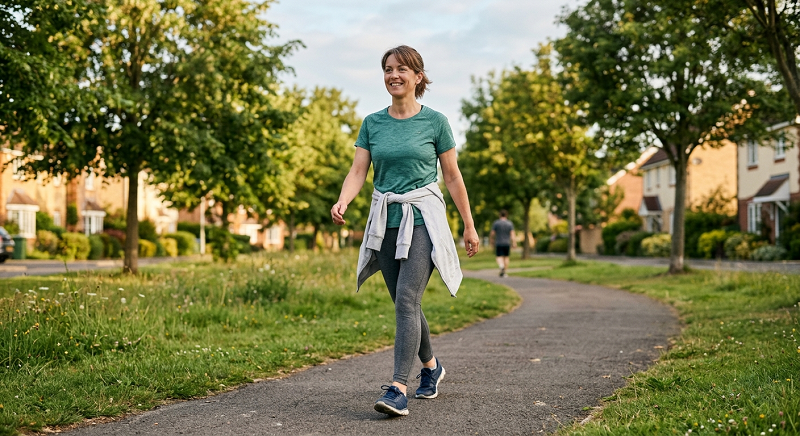
Walking is one of the easiest ways to begin exercising.
You can walk outside, around your neighborhood, in a park, or even inside your home. You do not need special equipment beyond comfortable shoes.
Start with 10 to 15 minutes at an easy pace. As your fitness improves, gradually increase the time or pace.
How to get started
- Stand tall with your shoulders relaxed.
- Look forward rather than down at your feet.
- Keep your arms relaxed.
- Walk at a comfortable pace.
- Gradually increase your speed when you feel ready.
A brisk walk can count as moderate-intensity activity for many adults.
If 30 minutes feels like too much, break your walking into smaller sessions throughout the day.
2. Marching in Place
Want a simple cardio exercise you can do at home?
Try marching in place.
This exercise raises your heart rate without requiring you to run or jump. It is also easy to adjust based on your fitness level.
How to do it
- Stand with your feet about hip-width apart.
- Lift one knee comfortably.
- Lower it and lift the other knee.
- Swing your arms naturally.
- Continue for 30 seconds to one minute.
Keep your movements controlled.
As you become fitter, march for longer periods or increase your pace slightly.
If balance is an issue, perform the movement near a sturdy counter or chair.
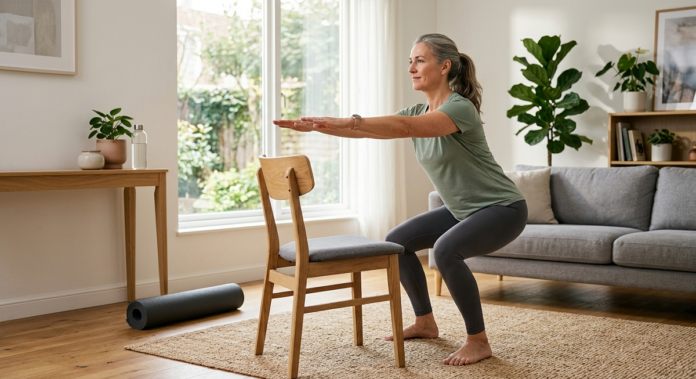
3. Chair Squats
Chair squats are a great beginner strength exercise.
They work the muscles in your legs and hips. They also practice a movement you use in everyday life: sitting down and standing up.
The National Institute on Aging notes that muscle-strengthening exercises can improve physical function and make everyday tasks easier.
How to do chair squats
- Place a sturdy chair behind you.
- Stand with your feet about hip-width apart.
- Push your hips back slowly.
- Bend your knees and lower toward the chair.
- Lightly touch the chair.
- Press through your feet to stand.
Do not rush the movement.
Start with 5 to 10 repetitions. As you become stronger, gradually work toward more repetitions.
4. Wall Push-Ups
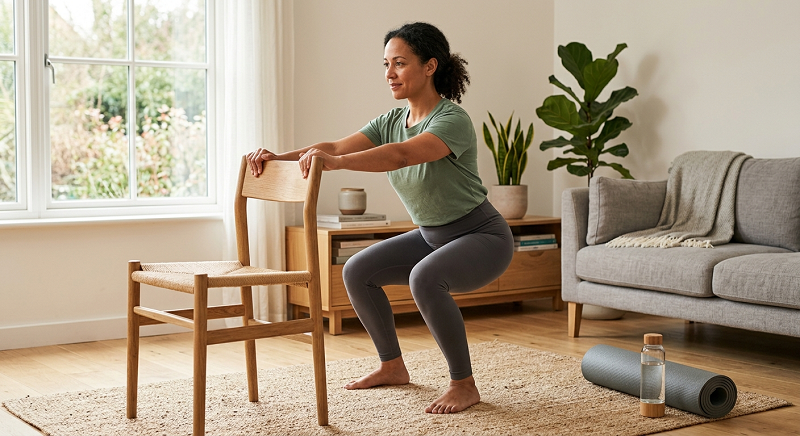
Traditional push-ups can be challenging for beginners.
Wall push-ups provide a gentler way to train your upper body.
They work muscles in your chest, shoulders, arms, and core.
How to do wall push-ups
- Stand about an arm’s length away from a wall.
- Place your palms against the wall.
- Keep your body straight.
- Bend your elbows and slowly move toward the wall.
- Push through your hands to return to the starting position.
Try 8 to 12 repetitions.
If the exercise feels too easy, move your feet slightly farther away from the wall.
5. Glute Bridges
Glute bridges are a simple floor exercise that targets the muscles around your hips and buttocks.
They can also help you practice controlled movement through your hips.
How to perform a glute bridge
- Lie on your back with your knees bent.
- Place your feet flat on the floor.
- Keep your arms beside your body.
- Tighten your abdominal muscles gently.
- Press through your feet.
- Lift your hips slowly.
- Pause briefly.
- Lower your hips with control.
Start with 8 to 12 repetitions.
Move slowly instead of trying to lift your hips as high as possible.
If lying on the floor is uncomfortable, choose another exercise that feels better for your body.
6. Step-Ups
Step-ups are another useful low-impact exercise for beginners.
You can use a low, stable step or the bottom step of a staircase if it is safe to do so.
This exercise works your legs and can also raise your heart rate.
How to do step-ups safely
- Stand in front of a low, stable step.
- Place one foot on the step.
- Bring the other foot up.
- Step back down carefully.
- Repeat with the other leg.
Hold a wall or sturdy railing if you need extra support.
Start with 5 to 10 repetitions per side.
Safety matters: Avoid using a high or unstable surface. If you feel unsteady, choose walking or marching in place instead.
7. Seated Leg Lifts
Seated leg lifts are a beginner-friendly exercise that can be done from a sturdy chair.
They are especially useful when standing exercises are difficult.
How to do seated leg lifts
- Sit tall in a sturdy chair.
- Keep both feet on the floor.
- Slowly straighten one leg.
- Hold for a moment.
- Lower it with control.
- Repeat on the other side.
Try 8 to 12 repetitions per leg.
Keep your movements smooth. You do not need to lift your leg very high.
You can also add ankle weights later if a health or fitness professional recommends them and the movement feels comfortable.
8. Standing Calf Raises
Standing calf raises are simple but useful for strengthening the lower legs.
They can also be included in a beginner balance routine.
The National Institute on Aging recommends balance exercises as part of a well-rounded activity plan, especially for older adults.
How to perform calf raises
- Stand behind a sturdy chair.
- Place your hands lightly on the chair for support.
- Slowly raise your heels.
- Balance on the balls of your feet.
- Pause briefly.
- Lower your heels slowly.
Try 8 to 12 repetitions.
If you feel unsteady, keep both hands on the chair.
Never sacrifice balance for more repetitions.
9. Gentle Yoga
Gentle yoga combines controlled movement, flexibility, balance, and breathing.
You can choose beginner-friendly poses and modify them to match your current ability.
Simple movements may include:
- Seated stretches
- Gentle standing poses
- Cat-cow movements
- Child’s pose
- Easy torso rotations
- Supported balance poses
You do not need to be flexible to start yoga.
In fact, improving flexibility can make everyday movements easier. NIA notes that stretching can help maintain and improve flexibility when performed safely.
Avoid forcing a stretch. You should feel gentle tension, not sharp pain.
10. Water Exercise or Swimming
If you have access to a pool, water exercise can be an excellent low-impact option.
Swimming and water-based activities allow you to move your body while placing less impact on your joints than many land-based activities.
You can start with:
- Easy water walking
- Gentle water aerobics
- Slow swimming
- Pool marching
- Simple leg movements
You do not have to swim fast.
The goal is to find a comfortable activity that you enjoy and can perform regularly.
How to Create a Beginner Low-Impact Workout
You do not need to perform all 10 exercises in one session.
Instead, start with a short routine.
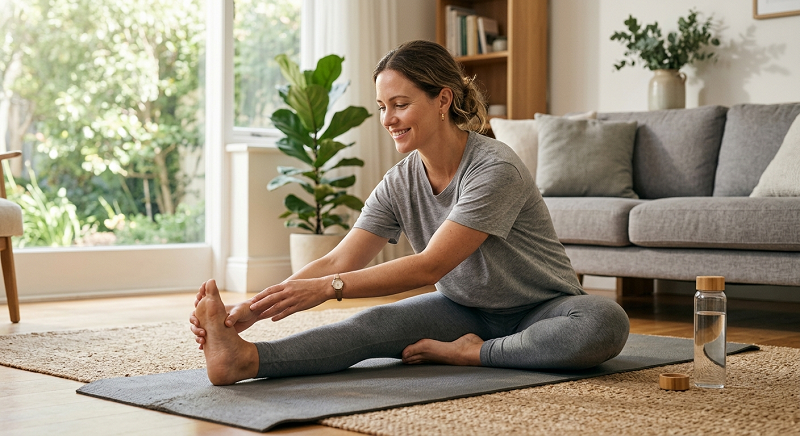
Before or after your workout, add a few gentle stretches to help improve flexibility and mobility. For more beginner-friendly ideas, check out our guide to 10 Simple Stretching Exercises for Better Flexibility.
Example 20-minute beginner workout
Warm-up — 5 minutes
- Easy walking
- Shoulder rolls
- Gentle arm movements
- Marching slowly in place
Main workout — 10 minutes
- Chair squats: 8–10 reps
- Wall push-ups: 8–10 reps
- Marching in place: 1 minute
- Glute bridges: 8–10 reps
- Calf raises: 8–10 reps
Repeat if you feel comfortable.
Cool-down — 5 minutes
- Slow walking
- Gentle leg stretches
- Gentle shoulder stretches
- Slow breathing
You can change the routine based on your fitness level.
How Often Should Beginners Exercise?
You do not need to exercise hard every day.
The CDC recommends that adults aim for at least 150 minutes of moderate-intensity activity each week, along with muscle-strengthening activities at least two days each week.
But beginners can build toward that goal gradually.
For example:
Week 1
- 10–15 minutes of movement, 3 days
- Gentle stretching on other days
Week 2
- 15–20 minutes, 3–4 days
- Add simple strength exercises
Week 3
- 20–25 minutes, 4 days
- Continue strength work twice a week
Week 4
- Slowly work toward longer sessions
- Add more walking or other enjoyable activities
Remember, these are examples rather than strict rules.
Your starting point should match your current fitness, health, and comfort level.
Tips for Making Low-Impact Exercise Easier
Starting is often harder than continuing.
These simple strategies can make exercise feel more manageable.
Start small
Do not wait until you have an hour of free time.
Start with 5 or 10 minutes.
You can build from there.
Choose activities you enjoy
If you hate an exercise, you may struggle to stay consistent.
Try walking, dancing, swimming, yoga, cycling, or simple home exercises until you find something you like.
Exercise with a friend
Having someone with you can make exercise more enjoyable and help you stay accountable.
Keep your equipment simple
You do not need a full home gym.
A sturdy chair, comfortable shoes, and enough floor space may be enough for many beginner exercises.
Focus on consistency
Your goal is not to have the hardest workout.
Your goal is to keep moving.
The CDC emphasizes that some physical activity is better than none, and activity can be broken into smaller periods throughout the week.
Common Beginner Exercise Mistakes to Avoid
Starting slowly can help you build a lasting routine.
Avoid these common mistakes.
Doing too much too soon
A long workout after months of inactivity can leave you very sore and discouraged.
Increase your activity gradually.
Ignoring pain
Muscles may feel challenged during exercise, but sharp or severe pain is a reason to stop.
Do not try to push through serious pain.
Forgetting balance and strength
Walking is excellent, but a well-rounded routine should include more than cardio.
Strength, balance, and flexibility are also useful parts of physical activity.
Comparing yourself with others
Your starting point is your own.
Focus on making small improvements over time.
Skipping rest
Rest helps your body recover.
If you are very tired or sore, choose gentle movement or take a rest day.
How to Exercise Safely as a Beginner
Safety should always come first.
Before starting a new routine, consider your current health and fitness level.
If you have a chronic health condition, disability, injury, or other health concern, talk with a health care professional about the activities that are right for you. The CDC specifically recommends professional guidance when needed for people with chronic conditions or disabilities.
During exercise:
- Warm up before harder activity.
- Use stable footwear.
- Keep water nearby.
- Exercise in a safe space.
- Use a sturdy chair or wall for balance when needed.
- Increase exercise time gradually.
- Stop if you feel severe pain, dizziness, or unusual symptoms.
If you are unsure whether an exercise is suitable for you, ask a qualified health professional.
Can Low-Impact Exercise Help With Weight Loss?
Low-impact exercise can support an active lifestyle and may contribute to weight management.
However, exercise is only one part of the picture.
The CDC explains that physical activity increases the energy your body uses, while food intake also plays an important role in weight loss. Regular physical activity is also important for maintaining weight loss.
Instead of focusing only on calories burned, think about the bigger benefits.
Exercise can help you:
- Move more during the day
- Build strength
- Improve fitness
- Support healthy habits
- Feel more confident
- Maintain physical function
A sustainable routine is usually more useful than a short period of extreme exercise.
A Simple 7-Day Low-Impact Exercise Plan
Here’s one way a beginner could organize the week:
Monday: 15–20 minute walk
Tuesday: Chair squats, wall push-ups, calf raises, and gentle stretching
Wednesday: Easy walk or marching in place
Thursday: Rest or gentle stretching
Friday: 20-minute low-impact workout
Saturday: Swimming, walking, gentle yoga, or another activity you enjoy
Sunday: Rest or an easy walk
You can change the schedule to fit your life.
The most important thing is to create a routine you can repeat.
Frequently Asked Questions About Low-Impact Exercises
Are low-impact exercises good for beginners?
Yes. Low-impact exercises can be a practical way for beginners to start moving. Walking, gentle strength exercises, water exercise, and yoga can help you build fitness without relying on jumping or running.
Can I do low-impact exercises at home?
Absolutely. Many beginner exercises require little or no equipment. Chair squats, wall push-ups, marching in place, calf raises, and gentle stretching can all be done at home.
How long should a beginner exercise?
Start with an amount you can manage comfortably. Even short sessions can be useful. As your fitness improves, gradually increase your exercise time.
Do low-impact exercises build strength?
Some do. Exercises such as chair squats, wall push-ups, glute bridges, and calf raises can help strengthen muscles. Adults are also advised to include muscle-strengthening activity at least two days per week.
Is walking enough exercise?
Walking is an excellent form of physical activity, but a balanced routine can include cardio, strength, balance, and flexibility exercises. Different types of movement provide different benefits.
Final Thoughts: Start Small and Keep Moving
You do not need to become an athlete to become more active.
The best exercise routine is one that fits your current ability, your schedule, and your life.
These 10 low-impact exercises for beginners give you plenty of ways to start:
- Walking
- Marching in place
- Chair squats
- Wall push-ups
- Glute bridges
- Step-ups
- Seated leg lifts
- Standing calf raises
- Gentle yoga
- Water exercise or swimming
Start with one or two exercises if that is all you can manage. Over time, add more movement and slowly increase the challenge.
Most importantly, do not wait for the “perfect” time to begin.
Choose one exercise today and give it 5–10 minutes.
Then keep going.
For more guidance on physical activity, see the CDC’s adult physical activity guidelines and the National Institute on Aging’s exercise and physical activity resources.
What low-impact exercise do you enjoy most? Have you tried any of these beginner exercises? Share your experience in the comments and inspire someone else to get moving today!