

Stress is a normal part of life. Work, family, money, health concerns, and daily responsibilities can all add pressure. A little stress can help you stay alert and get things done. But when stress becomes constant, it can affect your mood, sleep, energy, and overall well-being.
The good news is that you do not need to make huge changes to feel better. Small actions can help you manage stress and create more calm in your day.
In this guide, you will discover 15 simple stress relief techniques that you can try today. Most require little time, no special equipment, and very little money.
You do not need to try all 15 at once. Start with one or two that feel easy. Then build from there.
What Is Stress?
Stress is your body’s response to pressure or challenging situations. When you feel stressed, your body may enter a “fight-or-flight” state. Your heart rate and breathing may increase, your muscles can become tense, and you may feel worried or restless.
Short periods of stress are normal. However, long-term stress may affect both mental and physical health. The National Center for Complementary and Integrative Health explains that chronic stress may contribute to problems such as headaches, digestive issues, and sleep problems.
That is why learning healthy ways to manage daily stress matters.
1. Practice Deep Breathing
One of the easiest stress relief techniques is deep breathing.
When you feel stressed, your breathing may become fast and shallow. Slow, deep breathing can help your body move toward a more relaxed state.
Try this simple exercise:
- Sit in a comfortable position.
- Relax your shoulders.
- Breathe in slowly through your nose.
- Let your belly expand as you breathe in.
- Slowly breathe out through your mouth.
- Repeat for two to five minutes.
You can do this at your desk, in your car while parked, or before bed.
Research reviewed by the National Center for Complementary and Integrative Health suggests that slow, deep breathing may help reduce stress.
2. Take a Short Walk
You do not need a long workout to start feeling better.
A short walk can give you a break from work, screens, and stressful thoughts. It also gets your body moving.
Try taking a 10-minute walk around your neighborhood, office, or local park. Focus on your steps, breathing, and surroundings instead of your worries.
Physical activity can provide immediate benefits, including reduced feelings of anxiety and better sleep.
If you have more time, gradually work toward regular physical activity throughout the week.
3. Try a Five-Minute Mindfulness Break
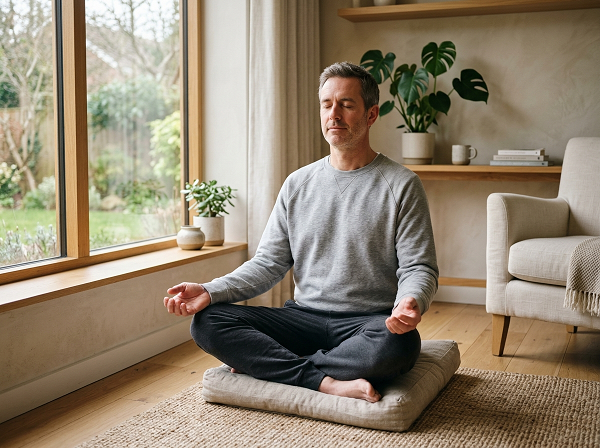
Mindfulness means paying attention to the present moment without judging it.
You can practice mindfulness almost anywhere.
For five minutes:
- Sit comfortably.
- Notice your breathing.
- Pay attention to sounds around you.
- Notice how your body feels.
- Bring your attention back whenever your mind wanders.
Your goal is not to empty your mind. It is simply to notice what is happening right now.
Mindfulness practices may help reduce symptoms of stress and anxiety and may also support better sleep.
4. Stretch Your Body
Stress can make your muscles tense, especially around your neck, shoulders, and back.
Gentle stretching can help you pause and release some of that tension.
Try simple movements such as:
- Shoulder rolls
- Neck stretches
- Arm stretches
- Gentle side bends
- Calf stretches
- A slow forward fold
Hold each comfortable stretch for a short time. Never force a movement or stretch into pain.
A few minutes of stretching can also serve as a useful break if you spend much of your day sitting.
5. Listen to Calming Music
Music can be a simple way to change the mood of your environment.
Choose music that helps you feel calm. This might be soft instrumental music, nature sounds, acoustic songs, or another type of music you enjoy.
Try creating a short “calm playlist” that you can use when your stress level starts to rise.
You can listen while preparing dinner, taking a walk, cleaning your home, or getting ready for bed.
The goal is simple: give your mind a short break from stressful thoughts.
6. Spend Time Outside

A change of environment can sometimes make a big difference.
Step outside for a few minutes. Sit on a balcony, walk through a park, spend time in your garden, or simply stand outside and get some fresh air.
Try paying attention to what you see and hear:
- Trees moving in the wind
- Birds
- Clouds
- Sunlight
- Fresh air
- Sounds around you
The CDC recommends spending time outdoors as one way to help manage stress.
You do not need a long outdoor adventure. Even a short break can help you step away from whatever is causing pressure.
7. Write Down What Is Bothering You
Sometimes stress feels worse because too many thoughts are running through your mind.
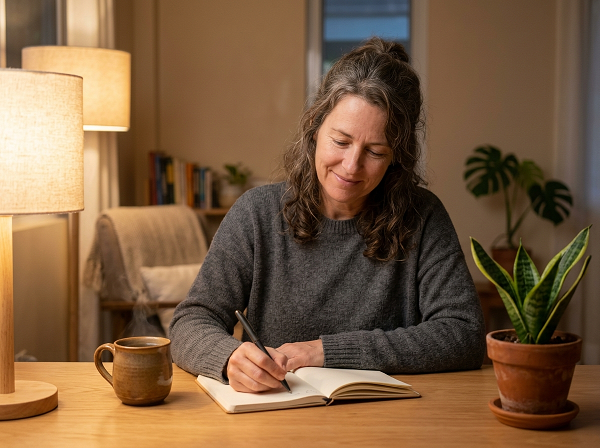
Journaling can help you put those thoughts on paper.
Take five to ten minutes and write down:
- What is stressing you?
- How does it make you feel?
- What can you control?
- What can wait?
- What is one small action you can take?
Do not worry about grammar or perfect sentences. This is for you.
The National Institute of Mental Health lists keeping a journal as one possible way to cope with stress and anxiety.
8. Practice Gratitude
When you are stressed, your mind may focus heavily on problems.
A simple gratitude practice can help shift your attention toward positive parts of your life.
Each evening, write down three things you are grateful for.
They can be very simple:
- A good meal
- A helpful friend
- A quiet morning
- A funny conversation
- A comfortable home
- A beautiful sunset
The CDC recommends practicing gratitude as part of healthy stress management.
You do not need to pretend that everything is perfect. Gratitude simply helps you notice that stressful moments are not the only parts of your life.
9. Get Enough Sleep
Poor sleep and stress can create a difficult cycle.
You feel stressed, so you have trouble sleeping. Then you wake up tired, which can make the next day feel even harder.
Adults generally need at least seven hours of sleep each night.
Try these simple sleep and stress relief tips:
- Go to bed around the same time each night.
- Wake up at a regular time.
- Create a relaxing bedtime routine.
- Keep your bedroom quiet and comfortable.
- Reduce bright screens before bed.
- Avoid too much caffeine late in the day.
Good sleep gives your body and mind time to recover.
10. Reduce Your Caffeine Intake
Coffee and other caffeinated drinks can be part of a healthy routine for many people. But too much caffeine may make some people feel more restless or anxious.
If you often feel tense, shaky, or unable to relax, consider looking at how much caffeine you consume.
You do not have to stop drinking coffee completely.
Instead, try:
- Having fewer cups.
- Choosing smaller servings.
- Avoiding caffeine late in the day.
- Switching one drink to water or a caffeine-free option.
The National Institute of Mental Health recommends avoiding excessive caffeine when dealing with stress and anxiety.
11. Talk to Someone You Trust
You do not have to handle every stressful situation alone.
Talking with someone you trust can help you feel supported. This could be a partner, friend, family member, coworker, mentor, or another person you feel comfortable with.
You do not always need advice.
Sometimes saying, “I’m having a hard day,” is enough to start a helpful conversation.
Social support is an important part of healthy stress management. NIH guidance recommends building a strong support network when dealing with stress.
12. Try Progressive Muscle Relaxation
Progressive muscle relaxation is another useful relaxation technique.
The basic idea is simple: gently tense one group of muscles, then relax them.
For example:
- Sit or lie down comfortably.
- Tighten your shoulders gently for a few seconds.
- Release them.
- Notice the difference.
- Move to another muscle group.
- Continue through your body.
This can help you notice where you are holding tension.
The National Center for Complementary and Integrative Health lists progressive muscle relaxation as one type of relaxation technique that may help with stress.
If any exercise causes pain or discomfort, stop.
13. Take a Break From Your Phone
Constant notifications can make it hard for your mind to rest.
Messages, emails, social media, news, and work alerts can keep your attention moving from one thing to another.
Try taking a short digital break.
For 15 to 30 minutes:
- Put your phone on silent.
- Turn off unnecessary notifications.
- Step away from social media.
- Avoid checking work messages.
- Do something relaxing instead.
Use that time to walk, stretch, read, talk with someone, or simply sit quietly.
You may be surprised by how refreshing a short break from your screen can feel.
14. Break Large Tasks Into Smaller Steps
A long to-do list can make stress feel even worse.
Instead of thinking about everything you need to finish, choose one small task.
For example, instead of saying:
“I need to clean the whole house.”
Try:
“I will clean the kitchen counter for 10 minutes.”
Small steps make large tasks feel more manageable.
NIH stress-management guidance recommends setting priorities, deciding what needs to be done now, and letting less urgent tasks wait.
Try making three lists:
Do now: Things that truly need attention today.
Do later: Things that can wait.
Let go: Things that do not need your energy right now.
This simple habit can reduce mental overload.
15. Make Time for Something You Enjoy
Stress relief does not always have to look like meditation or exercise.
Sometimes the best thing you can do is make time for an activity that brings you joy.
Try:
- Reading a book
- Cooking
- Gardening
- Drawing
- Watching a funny movie
- Playing with your pet
- Spending time with family
- Listening to music
- Doing a hobby
- Sitting outside with a cup of tea
Relaxing activities can give your mind a chance to slow down.
The CDC recommends making time to unwind and doing relaxing activities that you enjoy.
How to Choose the Best Stress Relief Technique for You
Not every technique works the same way for everyone.
The best approach is to experiment.
If your body feels tense, try:
- Deep breathing
- Stretching
- Progressive muscle relaxation
- A short walk
If your mind feels overloaded, try:
- Journaling
- Mindfulness
- A digital break
- Breaking tasks into smaller steps
If you feel lonely or emotionally drained, try:
- Calling a friend
- Spending time with family
- Joining a community group
- Talking with a professional
If you feel tired, focus on:
- Better sleep habits
- Less caffeine late in the day
- A relaxing evening routine
You may need to try several approaches before you find the ones that fit your lifestyle.
If you need quick techniques that can fit into a busy day, check out our guide to 5-minute stress relief techniques for simple ways to pause, breathe, and reset your mind.
Create a Simple Daily Stress Relief Routine
You do not need to spend an hour managing stress.
Try this simple routine:
Morning — 2 minutes
Take five slow breaths before starting your day.
Midday — 10 minutes
Take a short walk or stretch your body.
Afternoon — 5 minutes
Step away from your phone and take a quiet break.
Evening — 10 minutes
Write down three things you are grateful for and prepare for a relaxing bedtime.
This adds less than 30 minutes of intentional stress relief to your day.
More importantly, it creates regular moments when your mind can slow down.
NCCIH notes that relaxation techniques may work best when practiced regularly and combined with healthy habits such as physical activity, good nutrition, and social support.
When Should You Get Help for Stress?
Stress is common, but you should not feel that you have to handle severe or ongoing stress by yourself.
Consider talking with a doctor or mental health professional if stress:
- Feels overwhelming most of the time
- Interferes with your daily life
- Makes it hard to sleep
- Affects your relationships
- Makes it difficult to work or complete normal activities
- Leads you to rely on alcohol or drugs to cope
- Continues despite your efforts to manage it
The National Institute of Mental Health notes that stress may need more attention when symptoms interfere with everyday life, cause avoidance, or seem to be constantly present.
You can also learn more from the National Institute of Mental Health and the National Center for Complementary and Integrative Health.
If you are in immediate danger or thinking about harming yourself, seek emergency help or contact a crisis service in your country.
The Bottom Line: Small Steps Can Make Stress Easier to Manage
Stress may be part of life, but you do not have to let it control every part of your day.
Simple habits such as deep breathing, walking, stretching, mindfulness, journaling, better sleep, social connection, and taking regular breaks can help you build healthier ways to respond to stress.
You do not need to change everything today.
Pick one technique from this list and try it for five minutes.
Then notice how you feel.
If it helps, make it part of your daily routine. Over time, small habits can become powerful tools for managing everyday stress.
For more practical guidance, the CDC’s stress management guide offers additional ideas for healthy coping, including physical activity, sleep, gratitude, relaxation, and social connection.
What Stress Relief Technique Will You Try Today?
Maybe you will take a short walk. Maybe you will try five minutes of deep breathing. Or perhaps you will put your phone away and enjoy some quiet time.
Choose one small step today and make it your starting point.
And remember: you do not need a perfect stress-free life. You simply need healthy ways to pause, reset, and keep moving forward.