

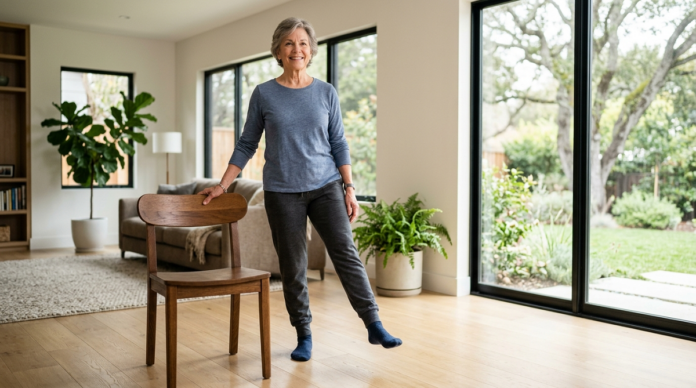
As we get older, staying steady on our feet becomes more important. Good balance helps us walk safely, climb stairs, get out of a chair, and move through daily life with confidence.
The good news is that balance is not something you simply lose with age. You can work on it.
Regular exercise can improve balance, strength, flexibility, and coordination. It can also help lower the risk of falls and support independent living. The Centers for Disease Control and Prevention (CDC) recommends that adults age 65 and older include balance activities along with aerobic and muscle-strengthening activities each week.
You do not need a gym or expensive equipment. Many of the best balance exercises for older adults can be done at home with a sturdy chair or wall nearby.
In this guide, you will learn about simple exercises that can help improve balance as you age, how often to do them, and how to make your routine safer and more effective.
Why Balance Matters as You Age
Balance is your ability to keep your body stable while standing, walking, turning, or changing position.
It depends on several parts of your body working together. Your muscles, joints, eyes, inner ear, brain, and nervous system all play a role.
As you age, changes in muscle strength, vision, flexibility, reaction time, and coordination may affect your balance.
Poor balance can make everyday tasks feel harder. It may also increase the chance of falling.
Falls are a major concern for older adults because they can lead to broken bones, loss of confidence, and a longer recovery. The CDC recommends strength and balance exercises as part of fall prevention.
The goal is not to move like you did when you were 20. The goal is to stay as strong, steady, and independent as possible.
Benefits of Balance Exercises for Older Adults
Adding balance exercises to your weekly routine can provide several benefits.
1. They May Help Reduce Fall Risk
Balance exercises train your body to stay stable when you shift your weight or change direction.
This can help with movements such as:
- Turning around
- Walking over uneven ground
- Stepping onto a curb
- Getting out of a chair
- Reaching for something
- Moving around your home
Balance training works even better when combined with strength exercises. The CDC notes that strengthening the legs, abdomen, and back can also support better balance.
2. They Support Independence
Strong balance can make daily activities easier.
You may find it easier to walk around the neighborhood, shop for groceries, use stairs, or complete household tasks.
The National Institute on Aging (NIA) notes that physical activity can improve physical function and make daily tasks easier, supporting independent living as people age.
3. They Build Confidence
A fear of falling can sometimes cause people to move less.
Moving less can lead to weaker muscles and lower fitness, which may make balance even harder.
Regular, safe exercise can help you feel more confident in your ability to move.
4. They Improve Overall Fitness
Balance is only one part of healthy aging.
Older adults also benefit from aerobic activity, muscle-strengthening exercises, and flexibility work. Combining different types of exercise creates a more complete fitness routine.
10 Best Exercises for Better Balance as You Age
You do not have to perform all 10 exercises in one session.
Start with a few that feel comfortable. As your strength and confidence improve, you can slowly add more.
1. Single-Leg Stand
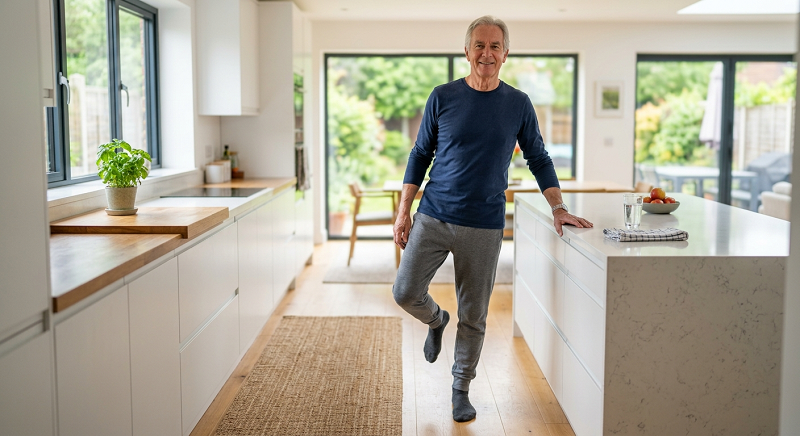
The single-leg stand is one of the simplest balance exercises for older adults.
How to do it:
- Stand behind a sturdy chair.
- Place your hands lightly on the chair.
- Slowly lift one foot off the floor.
- Hold the position for a few seconds.
- Lower your foot.
- Repeat with the other leg.
Try to keep your body upright rather than leaning to one side.
As your balance improves, you can reduce how much you rely on the chair.
Safety tip: Always have something stable nearby to hold.
2. Heel-to-Toe Walk
This exercise challenges your balance while you move.
How to do it:
- Stand tall near a wall or sturdy surface.
- Place one foot directly in front of the other.
- Try to keep your heel close to the toes of the opposite foot.
- Take several slow steps.
- Turn carefully and repeat.
Think of walking along an imaginary straight line.
Move slowly. The goal is control, not speed.
The NIA lists heel-to-toe walking as one example of a balance exercise for older adults.
3. Sit-to-Stand
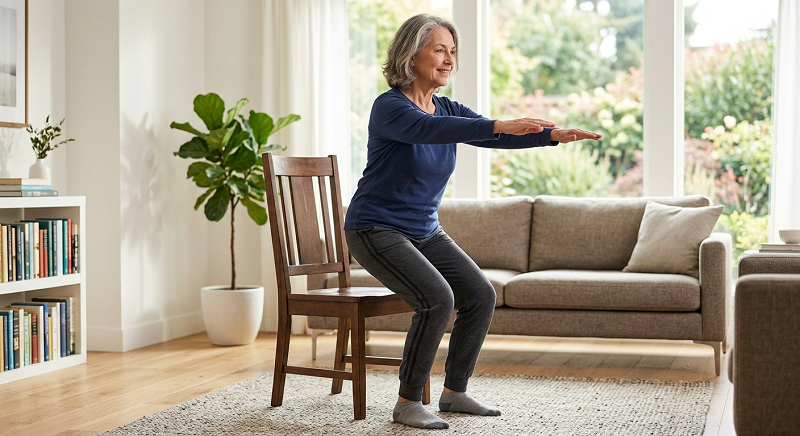
Sit-to-stand exercises help strengthen your legs and hips while also training your balance.
How to do it:
- Sit near the front of a sturdy chair.
- Place your feet flat on the floor.
- Lean forward slightly.
- Push through your feet and stand.
- Pause for a moment.
- Slowly sit back down.
Try not to drop into the chair.
If the exercise feels difficult, use your hands for support.
Strong legs can make many daily movements easier, including getting out of bed or standing from a chair.
4. Sideways Walking
Sideways walking helps train the muscles involved in moving from side to side.
How to do it:
- Stand near a counter or sturdy surface.
- Take a small step to the side.
- Bring your other foot toward it.
- Continue for several steps.
- Repeat in the opposite direction.
Keep your movements slow and controlled.
This simple exercise can be useful because everyday movement does not always happen in a straight line.
5. Backward Walking
Walking backward can challenge balance and coordination.
However, it requires extra care.
How to do it safely:
- Use a clear area.
- Stay near a wall or sturdy counter.
- Take very small steps.
- Look around before starting.
- Stop if you feel unstable.
You can begin with only a few steps.
The CDC includes walking backward among examples of balance activities for older adults.
6. Calf Raises
Calf raises strengthen the lower legs and ankles.
These muscles help you stay stable when standing and walking.
How to do it:
- Stand behind a sturdy chair.
- Hold the chair lightly.
- Slowly raise your heels.
- Rise onto your toes.
- Pause briefly.
- Lower your heels slowly.
Repeat 8 to 12 times if comfortable.
Focus on smooth movement instead of trying to rise as high as possible.
7. Toe Raises
Toe raises work the muscles at the front of your lower legs.
How to do it:
- Stand upright while holding a sturdy chair.
- Keep your heels on the floor.
- Lift your toes and the front of your feet.
- Pause.
- Slowly lower them.
Repeat several times.
This exercise is simple, but it can be a useful addition to a lower-body routine.
8. Standing Leg Lifts
Standing leg lifts can help strengthen the hips and improve control.
Side Leg Lift
- Stand behind a sturdy chair.
- Hold the chair with one or both hands.
- Slowly move one leg out to the side.
- Keep your upper body upright.
- Return the leg to the starting position.
- Repeat on both sides.
Avoid swinging the leg.
Controlled movement is more important than lifting the leg high.
9. Tai Chi
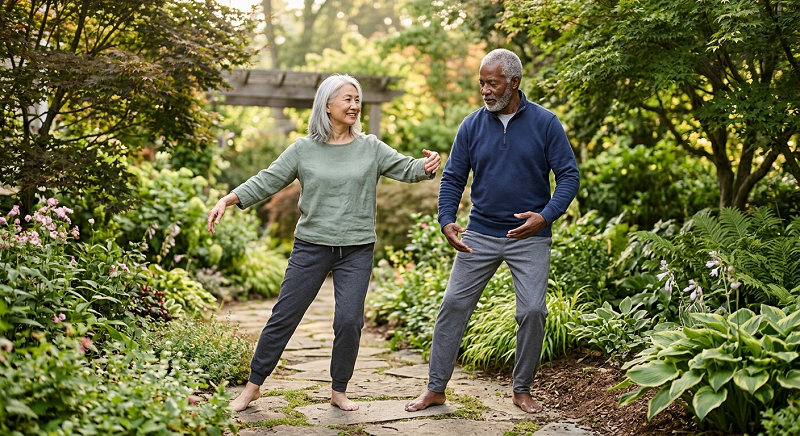
Tai chi is a gentle form of movement that combines slow, controlled motions with breathing and body awareness.
It is often recommended as an activity that can help older adults work on balance.
The NIA lists tai chi among balance exercises for older adults, while the CDC also includes it among activities that can combine balance and other forms of physical activity.
A class can be a good option if you enjoy exercising with other people.
You can also look for beginner programs designed specifically for older adults.
10. Yoga for Balance and Flexibility
Gentle yoga can combine balance, strength, flexibility, and body awareness.
Some yoga poses require you to stand on one leg or shift your weight in controlled ways.
If you are new to yoga, start with beginner movements.
Chair yoga can also be a useful option for people who are not comfortable with standing exercises.
The NIA notes that yoga can contribute to both balance and muscle strength.
How Often Should Older Adults Do Balance Exercises?
Consistency matters more than doing a long workout once in a while.
The NIA suggests aiming for about three balance exercise sessions each week.
The World Health Organization recommends that older adults include varied activities that emphasize functional balance and strength on three or more days per week, particularly to help maintain function and prevent falls.
A simple schedule might look like this:
- Monday: Balance exercises + strength
- Tuesday: Walking
- Wednesday: Balance exercises
- Thursday: Walking or another aerobic activity
- Friday: Balance exercises + strength
- Saturday: Gentle activity such as gardening or yoga
- Sunday: Rest or easy movement
You do not have to follow this exact plan.
Choose activities that fit your fitness level, schedule, and health needs.
How to Make Balance Exercises Safer
Balance training should challenge you without putting you in unnecessary danger.
Before exercising, clear the area around you.
Remove loose rugs, clutter, cords, and anything else that could cause you to trip.
Keep a sturdy chair, countertop, or wall nearby.
The NIA recommends having a sturdy chair, person, or wall available for support when doing balance exercises. It also advises moving slowly and stopping to steady yourself if you feel unsteady.
Other safety tips include:
- Wear stable, comfortable shoes.
- Exercise on a firm surface.
- Avoid rushing through movements.
- Keep your movements controlled.
- Start with support.
- Increase difficulty slowly.
- Stop if you feel dizzy or unwell.
- Keep water nearby.
- Do not exercise when you are extremely tired.
If you have a health condition, frequent falls, severe dizziness, or major balance problems, talk with your health care professional before starting a new exercise program.
The NIA notes that people with balance problems may benefit from exercises developed specifically for them by a physical therapist or other qualified professional.
How to Progress Your Balance Workout
You do not need to make exercises harder right away.
Start with movements that feel safe and controlled.
For example, you might begin a single-leg stand while holding a chair with both hands.
Later, you could use one hand.
Eventually, if appropriate and safe for you, you may be able to stand with less support.
You can also progress by:
- Holding a position slightly longer
- Adding a few more repetitions
- Moving more slowly
- Practicing controlled weight shifts
- Adding gentle strength exercises
- Trying a supervised balance class
The goal is gradual improvement.
Do not compare your balance with someone else’s. Your starting point may be different, and that is completely normal.
Why Strength Training Matters for Better Balance
Balance is not just about standing on one foot.
Your muscles need to be strong enough to control your body.
Weak legs and hips can make everyday movements more difficult.
That is why a good healthy aging exercise plan should include both balance and strength exercises.
The CDC recommends muscle-strengthening activities at least two days each week for adults 65 and older, along with balance activities and aerobic exercise.
Simple strength exercises include:
- Sit-to-stands
- Wall push-ups
- Calf raises
- Resistance-band exercises
- Light weights
- Leg lifts
You can begin with bodyweight exercises and add resistance as you become more comfortable.
Balance Exercises Are Only Part of Healthy Aging
It is easy to focus on one type of exercise.
But your body benefits from variety.
The CDC recommends that adults 65 and older include aerobic activity, muscle-strengthening activity, and balance activities each week.
For many people, brisk walking is a simple way to add aerobic activity.
Strength exercises help maintain muscle.
Balance exercises help improve stability.
Stretching and mobility work can help you move more comfortably.
Activities such as dancing, yoga, tai chi, and water exercise may combine several of these benefits.
Balance is only one part of healthy aging. Flexibility and mobility also help you move with greater ease. For simple stretches you can add to your routine, check out our guide to 10 Simple Stretching Exercises for Better Flexibility.
A Simple 10-Minute Balance Routine
Short workouts can be easier to fit into your day.
Try this simple routine:
1 minute: Gentle marching in place
1 minute: Sit-to-stands
1 minute: Calf raises
1 minute: Toe raises
2 minutes: Sideways walking
2 minutes: Heel-to-toe walking
1 minute: Supported single-leg stands
1 minute: Gentle stretching
Use a chair or countertop for support when needed.
If 10 minutes feels like too much, start with five minutes.
If it feels easy, gradually build up.
Remember, some activity is better than none. The CDC encourages older adults to be as active as their abilities and health conditions allow.
When Should You Talk to a Health Professional?
Exercise is helpful for healthy aging, but balance problems can sometimes have other causes.
Talk with a health professional if you:
- Fall often
- Feel dizzy when standing
- Have sudden balance changes
- Feel like the room is spinning
- Have trouble walking normally
- Have unexplained weakness
- Have new vision problems
- Feel unsafe exercising alone
A health professional can help identify possible causes and recommend the right type of exercise.
If you have already had a fall, it is especially important to discuss fall prevention with your health care provider. The CDC recommends talking with a doctor or other health professional about personal fall risk.
The Bottom Line: Better Balance Is Possible at Any Age
Getting older does not mean you have to stop working on your balance.
Simple exercises such as single-leg stands, heel-to-toe walks, sit-to-stands, calf raises, sideways walking, tai chi, and gentle yoga can become part of a healthy aging routine.
The key is consistency.
Start where you are.
Use support when you need it.
Move slowly.
Build strength.
And give your body time to adapt.
Regular physical activity can help support balance, strength, mobility, and independence as you age.
Start Improving Your Balance Today
You do not need a perfect workout plan to get started.
Stand up from your chair a few extra times. Take a short walk. Practice a supported single-leg stand. Try a gentle stretching routine.
Small steps can become lasting habits.
Which balance exercise would you like to try first? Have you noticed that your balance or stability has changed as you’ve gotten older? Share your experience in the comments and let us know what has helped you stay active and confident.
For more reliable information about physical activity and healthy aging, visit the CDC’s guidance for older adults, the National Institute on Aging’s exercise resources, and the World Health Organization’s physical activity guidance.