


Exercise can be one of the best things you do for your health. Yet knowing that exercise is good for you and actually doing it every day are two different things.
You may start the week feeling excited. You buy new workout clothes, make a fitness plan, and promise yourself that this time will be different. Then life gets busy. Work takes over. You feel tired. One missed workout becomes several.
If this sounds familiar, you are not alone.
The good news is that you do not need perfect motivation or hours at the gym to become more active. You simply need a routine that fits your real life.
Learning how to make exercise a daily habit is about making movement easier to start and easier to repeat. Small actions can grow into lasting habits. A short walk, a few stretches, or 10 minutes of exercise may be enough to help you build momentum.
Regular physical activity supports both physical and mental health. It can improve sleep, reduce anxiety, support heart health, strengthen bones and muscles, and lower the risk of several chronic diseases.
Regular exercise can also help support healthy blood sugar levels and improve overall well-being. You can learn more about this connection in our article on Signs and Symptoms of High Blood Sugar and Which Foods Reduce It.
In this guide, you will learn simple and realistic ways to make exercise part of your everyday life.
Why Is It So Hard to Make Exercise a Daily Habit?
Before you can build a healthy exercise habit, it helps to understand what gets in the way.
For many people, the problem is not laziness. The problem is trying to make exercise too difficult.
You may create a plan that requires:
- Waking up very early every day
- Exercising for an hour
- Going to a gym far from home
- Following a hard workout program
- Never missing a session
That kind of plan can work for some people. But for many, it creates pressure.
When exercise feels like a huge task, your brain may look for reasons to avoid it.
A better approach is to make exercise simple enough that you can do it even on busy days.
The goal is not to have the “perfect” workout. The goal is to become a person who moves regularly.
1. Start Small When Building an Exercise Habit
One of the best ways to make exercise a daily habit is to start with less than you think you need.
You do not need to begin with a hard 60-minute workout.
Start with:
- A 10-minute walk
- Five minutes of stretching
- A short beginner workout
- A few bodyweight exercises
- Walking around your home or neighborhood
Small workouts may not seem impressive. However, they are easier to repeat.
That matters because consistency comes before intensity.
Health guidelines recommend regular physical activity, and adults are generally encouraged to work toward 150 to 300 minutes of moderate activity per week or 75 to 150 minutes of vigorous activity, along with muscle-strengthening activity on two or more days each week. But you do not need to reach those levels on day one. Both the CDC and WHO emphasize that some physical activity is better than none and that people can start small and build up over time.
Make Your First Goal Almost Too Easy
Try setting a goal such as:
“I will walk for 10 minutes after lunch.”
This feels much easier than saying:
“I will get fit.”
The first goal tells you exactly what to do. The second goal is too broad.
When you complete small goals again and again, you build trust in yourself. Over time, you can increase the length or intensity of your workouts.

2. Choose an Exercise You Actually Enjoy
You are much more likely to continue exercising if you enjoy the activity.
You do not have to force yourself to run if you hate running.
There are many ways to move your body, including:
- Walking
- Dancing
- Cycling
- Swimming
- Yoga
- Strength training
- Hiking
- Playing sports
- Pilates
- Gardening
- Group fitness classes
Physical activity includes more than planned gym workouts. Walking, cycling, active recreation, sports, and movement during daily life can all contribute to being more active.
Think about what makes movement fun for you.
Do you like being outdoors? Try walking or hiking.
Do you enjoy music? Try dancing.
Do you like social activities? Join a class or play a sport with friends.
The best exercise routine is often the one you will keep doing.
3. Schedule Exercise Like an Important Appointment
If you only exercise when you “find the time,” you may wait a long time.
Life is busy. There will always be work, chores, messages, and other things competing for your attention.
Instead, put exercise on your schedule.
Choose a regular time, such as:
- Before breakfast
- During your lunch break
- Right after work
- After dinner
- Before your evening shower
For example:
Monday through Friday: 6:30 PM — 20-minute walk
A set time reduces the need to decide when you will exercise.
You do not need to use the same time every day if your schedule changes. The important thing is to plan your movement before the day becomes too busy.
Find Your Best Time to Exercise
Morning workouts work well for some people. Others have more energy in the afternoon or evening.
There is no single best time for everyone.
Ask yourself:
- When do I have the most energy?
- When am I least likely to be interrupted?
- What time can I repeat most often?
Choose a time that fits your life instead of copying someone else’s routine.
4. Connect Exercise to an Existing Daily Habit
A powerful way to build a new habit is to connect it to something you already do.
This can make exercise feel like a natural part of your day.
For example:
- After brushing your teeth, do five minutes of stretching.
- After lunch, take a 10-minute walk.
- After work, change into workout clothes.
- After dinner, walk around the neighborhood.
- Before taking a shower, do a short workout.
This creates a simple pattern:
Existing habit → Exercise
You no longer have to remember your workout from nothing. Your current routine becomes a reminder.
Example of a Simple Habit Chain
Try this:
After I finish my morning coffee, I will walk for 10 minutes.
Keep the action clear and easy.
As the habit becomes stronger, you can add more time if you want.
5. Make Your Exercise Routine Easy to Start
Many people do not skip exercise because they dislike the workout itself. They skip because getting started feels like too much work.
You can solve this by preparing ahead.
For example:
- Put your workout clothes where you can see them.
- Keep your walking shoes by the door.
- Prepare your gym bag the night before.
- Save your favorite workout video in advance.
- Keep resistance bands at home.
- Create a playlist that makes you want to move.
The fewer steps between you and your workout, the easier it becomes to begin.
Think about your common excuses.
If you often say, “I don’t have time to go to the gym,” have a short home workout ready.
If you say, “I forgot my shoes,” keep an extra pair in your car or bag.
Make the healthy choice the easy choice.
6. Set Clear and Realistic Exercise Goals
Vague goals are hard to follow.
Instead of saying:
“I want to exercise more.”
Try saying:
“I will walk for 20 minutes five days this week.”
A clear goal gives you something you can measure.
Good beginner goals may include:
- Walk 10 minutes every day.
- Exercise three days this week.
- Take the stairs once a day.
- Do strength exercises twice a week.
- Stretch for five minutes before bed.
The CDC recommends choosing activities that fit your abilities and preferences and using planning and tracking tools to help you stay on track.
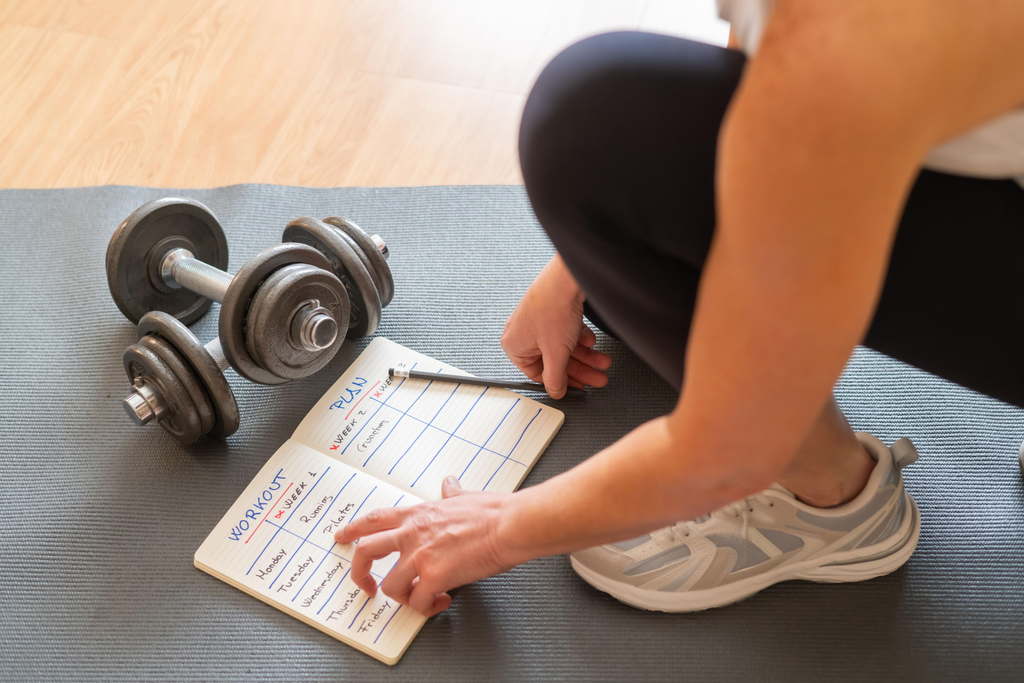
Do not choose a goal based only on what sounds impressive.
Choose one you can realistically do.
Success builds motivation. A goal that is too difficult may do the opposite.
7. Track Your Progress Without Obsessing Over Perfection
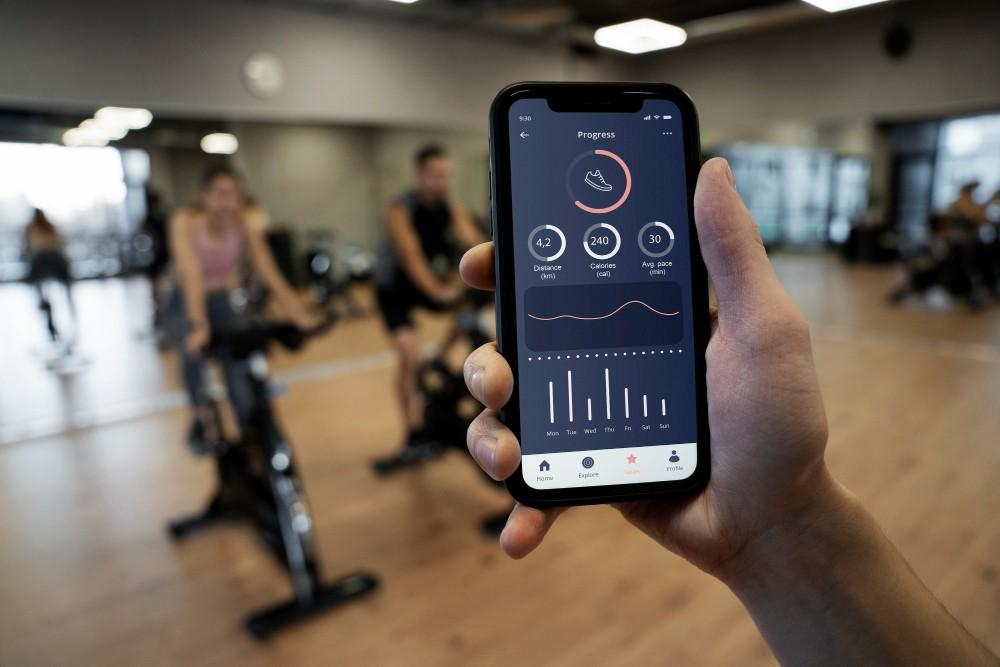
Tracking can help you see how far you have come.
You can use:
- A calendar
- A notebook
- A fitness app
- A simple checklist
- Your phone’s notes app
After each workout, mark it down.
Seeing a growing list of completed workouts can feel rewarding.
You may track:
- Days you exercised
- Minutes of activity
- Steps
- Workouts completed
- How you felt afterward
You do not need to track everything.
Keep it simple.
For example:
Monday: Walked 20 minutes ✓
Tuesday: Strength workout ✓
Wednesday: Rest day
Thursday: Walked 15 minutes ✓
Your goal is to learn, not judge yourself.
Tracking can also help you notice patterns. Maybe you exercise more often in the morning. Maybe Fridays are difficult. Once you see these patterns, you can adjust your routine.
8. Use the “Just Five Minutes” Rule
Some days, you will not feel motivated.
That is normal.
On those days, tell yourself that you only need to exercise for five minutes.
Walk for five minutes.
Stretch for five minutes.
Do a few squats, push-ups, or other simple movements.
After five minutes, you can stop if you still want to.
Often, starting is the hardest part. Once you begin moving, you may decide to continue.
Even if you stop after five minutes, you still kept the habit alive.
This approach can help you avoid the “all or nothing” mindset.
A short workout is not a failure.
It is still movement.
And regular movement matters. The CDC notes that even some activity is better than none, and adults can build activity into their lives in smaller amounts.
9. Make Exercise Part of Your Lifestyle
You do not have to depend only on formal workouts to become more active.
Look for ways to move during normal activities.
Try these ideas:
- Walk while talking on the phone.
- Take the stairs when possible.
- Park farther away.
- Walk during short breaks.
- Do light stretches while watching TV.
- Take a walk after meals.
- Stand up and move regularly during long periods of sitting.
- Play active games with your children or friends.
The WHO recommends reducing sedentary time and replacing sitting with physical activity of any intensity when possible.
These small actions add movement to your day without requiring a major change to your schedule.

10. Find an Exercise Partner for Motivation
Exercise can be easier when someone else is involved.
A workout partner can provide:
- Encouragement
- Accountability
- Support
- Friendly motivation
- More fun
Make a simple plan with a friend.
For example:
“Let’s walk together every Tuesday and Thursday after work.”
Knowing someone is waiting for you can make it harder to skip.
If you cannot exercise with someone in person, you can still share your goals with a friend or family member.
Send them a message after each workout.
You might say:
“I finished my 20-minute walk today!”
Small moments of support can help you stay committed.
11. Reward Yourself for Staying Consistent
Your brain likes rewards.
After reaching a goal, give yourself something positive.
Your reward does not need to cost money.
You could:
- Watch a favorite show
- Listen to your favorite podcast
- Enjoy a relaxing bath
- Spend time doing a hobby
- Buy a new book
- Celebrate your progress with a friend
You can also make the exercise itself more enjoyable.
Listen to music while walking. Watch a favorite show while using a stationary bike. Exercise outdoors when the weather is pleasant.
The goal is to create positive feelings around movement.
Over time, you may find that exercise becomes its own reward because of how it makes you feel.
Regular physical activity can support better sleep, reduce anxiety, improve mood and brain health, and provide many long-term health benefits.
12. Expect Missed Workouts and Start Again
You will miss workouts sometimes.
Everyone does.
You may get sick, travel, have a busy week, or simply need rest.
Missing one day does not destroy your progress.
The problem begins when you decide:
“I already failed, so I might as well quit.”
Do not let one missed workout turn into a reason to stop.
Instead, say:
“I missed today. I will start again tomorrow.”
This mindset is important for long-term success.
You do not need a perfect streak.
You need the ability to return to your routine.
Remember: Consistency Does Not Mean Perfection
A consistent person is not someone who exercises every day without fail.
A consistent person is someone who keeps coming back.
That is a big difference.
If you miss three days, you can still exercise on the fourth day.
Your next choice matters more than your last missed workout.
How Much Exercise Should You Aim For?
Your personal exercise needs may depend on your age, health, fitness level, and goals.
As a general guide, adults should work toward regular weekly activity. Current public health guidance recommends 150 to 300 minutes of moderate-intensity aerobic activity each week, or 75 to 150 minutes of vigorous activity, plus muscle-strengthening exercises involving major muscle groups on two or more days each week.
That may sound like a lot at first.
But you can break it into smaller sessions.
For example:
A Simple Weekly Exercise Plan
Monday: 30-minute brisk walk
Tuesday: 20-minute walk + strength exercises
Wednesday: 30-minute walk
Thursday: Light stretching or yoga
Friday: 30-minute walk
Saturday: Strength training
Sunday: Rest or an easy walk
You can adjust this plan to fit your needs.
Remember that you do not have to become active overnight. Start with what you can manage and slowly build your routine.
If you have a medical condition, injury, or other health concern, consider speaking with a qualified health professional about the type and amount of activity that is appropriate for you.
Common Problems That Stop People From Exercising
“I Don’t Have Enough Time”
Start with 10 minutes.
A short walk is easier to fit into your day than a long workout.
You can also divide activity into smaller sessions.
Try moving for 10 minutes in the morning, 10 minutes at lunch, and 10 minutes later in the day.
“I’m Too Tired”
Try gentle movement first.
A short walk or some stretching may feel more manageable than a hard workout.
Also consider your exercise timing. If evening workouts leave you too tired, try moving earlier in the day.
“I Get Bored”
Change your routine.
Try a new walking route, workout video, sport, or class.
Listen to music or a podcast.
Variety can make exercise feel fresh again.
“I Don’t See Results Fast Enough”
Focus on the habit, not only the scale or appearance of your body.
Exercise offers benefits beyond weight changes. Regular activity supports heart health, sleep, brain health, strength, balance, and overall well-being.
Some benefits may also be felt soon after activity, such as better sleep or reduced feelings of anxiety.
“I Don’t Know What Exercise to Do”
Keep it simple.
Walking is a great place to start for many people.
You can also try beginner strength exercises, cycling, swimming, or stretching.
Choose an activity that feels safe, enjoyable, and realistic for your current fitness level.
A 7-Day Plan to Start Making Exercise a Habit
If you are not sure where to begin, try this simple plan.
Day 1: Take a 10-Minute Walk
Do not worry about speed. Just move.
Day 2: Add Five Minutes of Stretching
Focus on creating the routine.
Day 3: Walk for 10 to 15 Minutes
If you feel good, add a few extra minutes.
Day 4: Try a Short Strength Workout
Use simple bodyweight movements based on your ability.
Day 5: Take Another Walk
Choose a different route if you want variety.
Day 6: Do Something Fun
Dance, cycle, play a sport, or take a longer walk.
Day 7: Review Your Week
Ask yourself:
- What did I enjoy?
- What was difficult?
- What time worked best?
- What can I repeat next week?
Then make your next week’s plan.
The key is not to make every week harder.
The key is to make the habit stronger.
The Secret to Long-Term Exercise Motivation
Motivation is helpful, but it does not always last.
Some mornings, you will wake up excited to exercise.
Other days, you will not.
That is why habits are so valuable.
When exercise becomes part of your routine, you do not have to depend on feeling motivated every time.
You simply follow the next step.
Put on your shoes.
Walk outside.
Start the video.
Do five minutes.
Small actions lead to bigger results over time.
Your future fitness does not depend on one perfect workout. It depends more on the small choices you repeat.
Final Thoughts: Make Movement a Part of Your Life
Learning how to make exercise a daily habit does not mean forcing yourself through exhausting workouts every day.
It means finding simple ways to move that fit your life.
Start small. Choose activities you enjoy. Schedule your workouts. Connect exercise to habits you already have. Prepare ahead and make it easy to begin.
Most importantly, stop expecting perfection.
You will have busy days. You will miss workouts. That is part of life.
Just start again.
A 10-minute walk may seem small today, but repeated actions can create a powerful routine. Over time, those small steps can help you become stronger, healthier, and more confident.
Your challenge starts now: Choose one simple activity you can do today. Maybe it is a 10-minute walk, five minutes of stretching, or a short workout at home. Put it on your schedule and do it before the day ends.
Then come back and share your answer: What is one exercise habit you are going to start today? Your comment could inspire someone else to take their first step too.