

Health advice can feel overwhelming.
One day, you hear that you need a special diet. The next day, someone says you need a new supplement, a hard workout plan, a strict fasting schedule, or a complicated morning routine.
It is easy to think that better health requires a complete life makeover.
It does not.
Some of the most useful health habits are simple things you can do each day. Eating more whole foods, moving your body, drinking enough water, getting good sleep, managing stress, and making time for people you care about can all support your health.
The goal is not to become perfect.
The goal is to build healthy habits that you can repeat.
If you have been trying to improve your health but feel stuck, it may be time to stop overcomplicating health and return to the basics.
Why We Make Health More Complicated Than It Needs to Be
There is no shortage of health advice online.
You may see posts promising fast weight loss, perfect energy, better sleep, a flatter stomach, or a healthier body in just a few days. Many of these ideas focus on one food, one workout, one supplement, or one rule.
But your health is not based on one choice.
It is shaped by many small actions repeated over time.
The World Health Organization notes that healthy diets are based on simple principles such as balance, moderation, adequacy, and variety. It also recommends diets built around a variety of nutritious foods, including fruits, vegetables, whole grains, and legumes.
The same idea applies to movement.
You do not need to become an athlete to become more active. The WHO says that some physical activity is better than none, and adults should work toward regular activity throughout the week.
In other words, simple does not mean ineffective.
1. Build Your Meals Around Real Food
One of the easiest healthy habits is to focus more on what you can add to your meals instead of constantly thinking about what you need to remove.
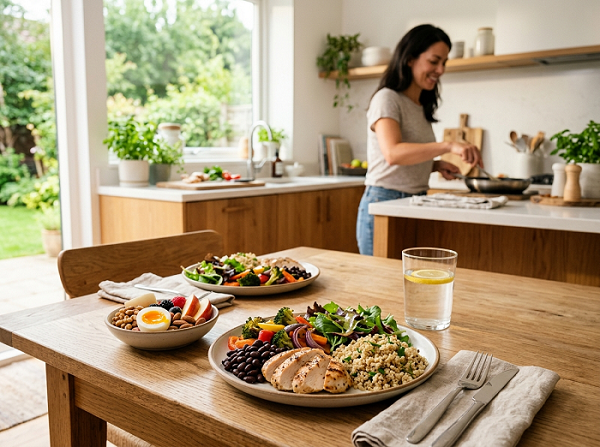
Start with foods that give your body useful nutrients.
Try to include:
- Vegetables
- Fruits
- Beans and other legumes
- Whole grains
- Eggs
- Fish
- Lean meats
- Nuts and seeds
- Yogurt or other nutritious dairy foods, when suitable for you
You do not need every meal to be perfect.
Instead, look at your overall eating pattern.
If most of your meals contain nutritious foods, an occasional dessert, takeout meal, or favorite snack does not ruin your progress.
Make Healthy Eating Easier
You can make better choices by making healthy foods easy to reach.
Keep fruit on the kitchen counter. Prepare vegetables ahead of time. Keep simple protein sources available. Choose water more often when you are thirsty.
You can also use a simple meal formula:
Protein + vegetables or fruit + whole-food carbohydrate + healthy fat
For example, you could have grilled chicken, vegetables, brown rice, and avocado.
You do not need to count every calorie or follow a complicated food rule unless a qualified health professional has given you a specific plan.
The CDC also notes that eating a variety of healthy foods can be more useful for long-term health than completely removing one food group.
2. Drink More Water
Hydration is another basic habit that is easy to overlook.
Your body needs water for many normal functions. Yet many people wait until they are very thirsty before drinking.
You can make hydration easier by keeping water nearby during the day.
Try these simple habits:
- Drink water when you wake up.
- Keep a bottle at your desk.
- Drink water with meals.
- Take water with you when you leave home.
- Choose water instead of sugary drinks more often.
You do not need to obsess over a perfect number of glasses every day. Your needs can change based on your activity, environment, diet, and health.
If you sweat heavily, exercise for long periods, or have a medical condition that affects fluid balance, ask a health professional about your individual needs.
The important point is simple: make water an easy choice.
3. Move Your Body Every Day
Exercise does not have to mean spending an hour at the gym.
Walking counts.
Dancing counts.
Gardening counts.
Household chores count as physical activity too.
The WHO defines physical activity as body movement that uses energy, including movement during work, transportation, household activities, recreation, and exercise.
For most adults, the general target is at least 150 minutes of moderate-intensity physical activity each week, along with muscle-strengthening activities on two or more days.
But do not let that number discourage you.
If you currently do very little activity, start smaller.
Try the 10-Minute Movement Rule
Take a 10-minute walk.
Stretch for 10 minutes.
Do a short bodyweight workout.
Walk around your home during a phone call.
Take the stairs when practical.
The CDC notes that adults who sit less and do any amount of moderate-to-vigorous physical activity can gain health benefits.
Your first goal does not have to be a perfect workout routine.
Your first goal can simply be moving more than you did yesterday.

4. Sit Less During the Day
You can exercise regularly and still spend much of your day sitting.
If you work at a desk, small movement breaks can help you avoid long periods of inactivity.
Try standing up every so often.
Walk while talking on the phone.
Stretch during work breaks.
Take a short walk after lunch.
Do a few household tasks between long periods of screen time.
These small actions may seem too easy to matter, but they can help you create a more active lifestyle.
The WHO recommends limiting sedentary behavior and notes that replacing sitting time with physical activity of any intensity can provide health benefits.
5. Make Sleep a Daily Priority
Sleep is not wasted time.
It is part of taking care of your body and mind.
Poor sleep can make daily life harder. You may feel tired, distracted, stressed, or less motivated to make healthy choices.
Instead of trying to create a complicated sleep routine, start with a few basic habits.
Simple Sleep Habits
Try to:
- Go to bed and wake up at similar times.
- Give yourself enough time to sleep.
- Keep your bedroom comfortable and quiet.
- Reduce stimulating screen use before bed.
- Avoid heavy meals close to bedtime if they disturb your sleep.
- Use a relaxing activity as part of your evening routine.
You do not need a perfect bedtime routine.
You need a routine that helps your body recognize when it is time to slow down.
If you regularly have trouble sleeping despite healthy habits, speak with a healthcare professional.
6. Manage Stress Before It Builds Up
Stress is part of life.
Work, family responsibilities, money, relationships, and unexpected problems can all create pressure.
You cannot remove every source of stress.
But you can create simple ways to reset.
Try:
- Taking five slow breaths.
- Going for a short walk.
- Spending time outside.
- Listening to calming music.
- Writing down your thoughts.
- Talking to someone you trust.
- Taking a short break from your phone.
- Doing something you enjoy.
You do not need a one-hour meditation session to care for your mental well-being.
Sometimes five quiet minutes can be a useful starting point.
The goal is to create small moments where your mind can slow down.
7. Spend Time With People You Care About
Health is not only about food and exercise.
Your relationships matter too.
Make time for family members, friends, or people who make you feel supported.
Have dinner together.
Call someone you have not spoken with recently.
Take a walk with a friend.
Share a laugh.
Ask someone how they are doing.
These moments may not look like a traditional “health habit,” but a healthy lifestyle should support your whole life, not just your physical body.
8. Create a Simple Morning Routine
You do not need a two-hour morning routine.
You do not need 15 different habits before breakfast.
Start with three or four simple actions.
For example:
- Wake up at a regular time.
- Drink some water.
- Eat a nutritious breakfast if you prefer breakfast.
- Get some natural light.
- Move your body for a few minutes.
- Review the most important task of the day.
Your routine should make your day easier, not add stress.
If a complicated routine makes you feel like you are failing, simplify it.
9. Make Healthy Choices More Convenient
One of the best ways to build healthy habits is to change your environment.
Do not rely on motivation alone.
Make good choices easier.
For example, put walking shoes near the door.
Keep fruit where you can see it.
Prepare simple meals ahead of time.
Keep water on your desk.
Put your phone away when you want to focus.
Keep workout equipment somewhere easy to reach.
This idea works because your environment influences your daily decisions.
When healthy actions are convenient, you are more likely to repeat them.
10. Stop Chasing Perfection
This may be the most important habit of all.
You will have days when you eat more than planned.
You will miss a workout.
You may stay up late.
You may feel stressed.
That does not mean you failed.
One unhealthy meal does not destroy a healthy lifestyle.
One missed workout does not erase your progress.
One poor night’s sleep does not define your health.
What matters is what you do most of the time.
Instead of asking:
“Did I do everything perfectly?”
Ask:
“What is one healthy thing I can do next?”
That question can help you keep moving forward.
11. Focus on Habits, Not Quick Results
Many people start a health plan because they want fast results.
But sustainable health is built over time.
You may not notice changes after one healthy meal or one walk.
That is normal.
Think about your habits as votes for the person you want to become.
One walk is a vote for being active.
One nutritious meal is a vote for nourishing your body.
Going to bed on time is a vote for better rest.
Taking a break when stressed is a vote for better balance.
Small actions become meaningful when you repeat them.
12. Use the “Better, Not Perfect” Approach
You do not have to change everything at once.
Instead, look for a slightly better option.
Instead of a sugary drink, choose water more often.
Instead of sitting through your entire lunch break, take a short walk.
Instead of staying up another hour scrolling, go to bed.
Instead of ordering fast food every day, prepare one simple meal at home.
Instead of doing no exercise because you cannot complete a full workout, take a 10-minute walk.
These choices may seem small.
But small choices are easier to repeat.
And repeated actions become habits.
A Simple Daily Health Checklist
If you want to stop overcomplicating health, use this simple checklist.
Every Day, Try to:
- Eat a variety of nutritious foods.
- Include fruits or vegetables in your meals.
- Drink water regularly.
- Move your body.
- Break up long periods of sitting.
- Get enough sleep.
- Spend time with people you care about.
- Take a few minutes to relax.
- Avoid smoking.
- Limit highly processed foods and sugary drinks.
- Give yourself room for flexibility.
You do not need to check every box every day.
Use this list as a guide, not a test.
What About Supplements and Health Trends?
Supplements can have a role in certain situations, but they should not replace basic healthy habits.
Before spending money on a long list of supplements, look at your daily routine.
Are you eating nutritious foods?
Are you moving regularly?
Are you sleeping well?
Are you managing stress?
Are you getting enough water?
These basics deserve attention first.
If you think you may need a supplement because of a deficiency, medical condition, medication, or special dietary need, talk with a qualified healthcare professional.
The same approach applies to health trends.
A new diet may be popular online, but popularity does not automatically make something healthy or right for you.
Ask simple questions:
- Is there good evidence behind it?
- Can I follow it long term?
- Does it provide enough nutrients?
- Does it fit my lifestyle?
- Does a qualified health professional recommend it for my needs?
If the answer to most of these questions is no, you may be better off keeping things simple.
Your Simple Health Plan for the Next 7 Days
You do not need to wait for Monday, next month, or the new year.
Start today.
For the next seven days, focus on these five actions:
1. Walk every day.
Even a short walk is a good start.
2. Add one more nutritious food.
Try a fruit, vegetable, whole grain, beans, nuts, or another nutritious choice.
3. Drink water more often.
Keep a bottle nearby.
4. Protect your sleep.
Create a regular bedtime and reduce distractions at night.
5. Take five minutes to reset.
Breathe, stretch, walk, pray, journal, or simply sit quietly.
After one week, ask yourself:
What felt easy? What helped me feel better? What can I keep doing?
Then build from there.
When Simple Habits Are Not Enough
Healthy habits are important, but they are not a substitute for medical care.
If you have ongoing symptoms, unexplained weight changes, severe fatigue, persistent pain, breathing problems, sleep problems, or other health concerns, talk with a healthcare professional.
People with certain health conditions may also need a more specific diet or activity plan.
Simple habits are a strong foundation, but your individual needs still matter.
Stop Overcomplicating Health and Start Small
Better health does not require you to follow every trend.
You do not need a perfect diet.
You do not need the newest workout.
You do not need a complicated morning routine.
You need habits you can actually live with.
Eat nourishing foods.
Drink water.
Move your body.
Sit less.
Sleep well.
Manage stress.
Stay connected.
Keep going when life gets messy.
These habits may sound basic, but basic habits can have a powerful effect when you practice them again and again. Regular physical activity is linked with benefits for physical and mental health, while healthy eating patterns help support health and reduce the risk of several chronic diseases.
The best health plan is often the one you can follow.
If you want more practical ideas for building simple routines, check out our guide to 10 Simple Healthy Habits to Practice Every Day. You can start with one or two habits and gradually build from there.
Your Turn
What is one simple health habit you can start today?
Maybe it is a 10-minute walk. Maybe it is drinking more water. Maybe it is going to bed earlier or adding vegetables to dinner.
Choose one.
Start small.
Repeat it tomorrow.
Then tell us in the comments: Which daily habit are you going to start first?