
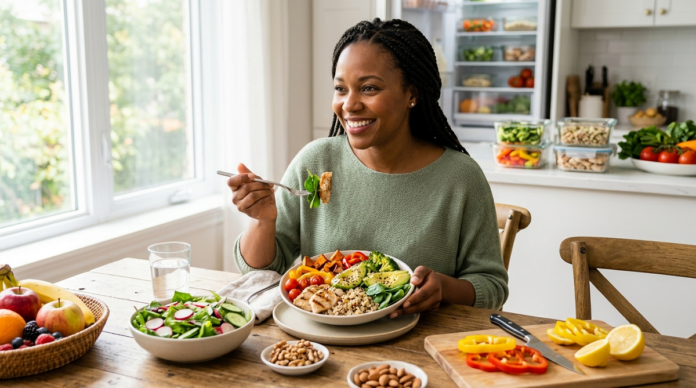
Changing the way you eat can feel hard at first. You may start with strong motivation, follow a strict diet for a few days, and then return to your old habits.
The problem is often not a lack of willpower. The problem is trying to change too much, too quickly.
The best healthy eating habits are simple enough to fit into your normal life. They should work on busy days, weekends, holidays, and even days when you do not feel motivated.
Healthy eating is not about being perfect. It is about making better choices more often.
A healthy eating pattern can include vegetables, fruits, whole grains, protein foods, healthy fats, and other nutrient-rich foods. Current U.S. dietary guidance also stresses whole, nutritious foods while limiting highly processed foods, added sugars, and refined carbohydrates.
The good news is that you do not need to change everything at once.
In this guide, you will learn how to build healthy eating habits that last and how to make those habits easier to maintain for years.
What Are Healthy Eating Habits?
Healthy eating habits are regular food choices that support your health and fit your lifestyle.
They are not based on a short-term diet. Instead, they create a pattern you can follow for months and years.
Examples include:
- Eating vegetables and fruits every day
- Choosing whole grains more often
- Including a source of protein in meals
- Drinking more water
- Eating fewer foods with added sugar
- Limiting highly processed foods
- Planning meals before you become very hungry
- Paying attention to portion sizes
- Eating slowly and enjoying your food
- Cooking more meals at home
Healthy eating does not mean you can never eat pizza, cake, ice cream, or your favorite snack.
It means these foods do not need to make up most of your diet.
The goal is to create a balanced eating pattern that works for you.
Why Healthy Eating Habits Matter
Your eating habits affect more than your weight.
A healthy eating pattern can help support heart health, healthy body weight, blood sugar control, and overall well-being. The CDC notes that healthy eating patterns are linked with a lower risk of several serious health problems.
Food also affects your daily life.
A balanced meal can give you the energy you need to work, exercise, think, and enjoy time with your family.
When you regularly choose foods that are rich in nutrients, you give your body important vitamins, minerals, protein, fiber, and other nutrients.
This is why healthy eating should not be viewed only as a weight-loss tool.
It is a way to care for your body every day.
Start Small Instead of Changing Everything
One of the biggest mistakes people make is trying to change their entire diet overnight.
You might decide to:
- Stop eating sugar
- Give up fast food
- Cook every meal
- Exercise every day
- Drink only water
- Eat only “clean” foods
That plan may sound good, but it can be difficult to maintain.
Instead, choose one or two small changes.
For example, start by adding one serving of vegetables to dinner. Once that feels normal, add another healthy habit.
The CDC recommends creating clear and realistic goals when building a new habit. Tracking your progress and getting support can also help you stay accountable.
Try the “One Change at a Time” Method
Pick one goal for the next two weeks.
For example:
Goal: Eat more fruit.
Action: Eat one piece of fruit with breakfast each morning.
This goal is simple and easy to measure.
After it becomes part of your routine, choose another habit.
Small changes may seem unimportant at first. But they can add up over time.
Build Your Meals Around Nutrient-Rich Foods
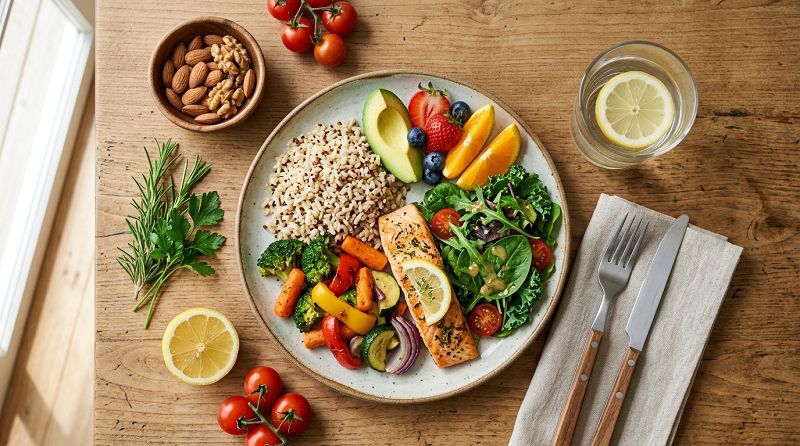
One of the easiest ways to improve your diet is to focus on what you can add.
Instead of thinking, “What foods must I stop eating?” ask:
“What healthy food can I add to this meal?”
Start with foods that provide plenty of nutrients.
These include:
- Vegetables
- Fruits
- Beans and lentils
- Whole grains
- Eggs
- Fish and seafood
- Lean meats and poultry
- Nuts and seeds
- Yogurt and other nutritious dairy foods
- Healthy fats such as olive oil
The CDC recommends eating a variety of vegetables, fruits, protein foods, whole grains, and healthy fats as part of a healthy eating pattern.
Building healthy eating habits starts with choosing nutritious foods you enjoy. Check out our guide to the best foods for a healthy diet for simple ideas you can add to your meals.
Make Half Your Plate Fruits and Vegetables
Fruits and vegetables are rich in vitamins, minerals, and fiber.
They can also help you feel full while adding color and flavor to your meals.
Try simple combinations such as:
- Eggs with tomatoes and spinach
- Chicken with broccoli and brown rice
- Fish with roasted vegetables
- Oatmeal with berries and nuts
- Yogurt with banana and seeds
- Beans with vegetables and whole-grain rice
Fresh produce is great, but it is not your only option.
Frozen and canned vegetables and fruits can also be useful. When buying canned products, look for options with little or no added sugar and lower sodium when possible.
Eat More Protein and Fiber
Protein and fiber can make meals more satisfying.
Protein helps support muscles and many important functions in the body. Good sources include eggs, fish, chicken, beans, lentils, tofu, nuts, seeds, and yogurt.
Fiber is found in foods such as vegetables, fruits, whole grains, beans, lentils, nuts, and seeds.
The CDC notes that fiber supports digestive health and can help you feel full for longer.
Try adding protein and fiber to each main meal.
For example:
Breakfast: Eggs + oatmeal + fruit
Lunch: Chicken + vegetables + brown rice
Dinner: Fish + beans + vegetables
Snack: Apple + handful of nuts
This simple approach can make healthy eating easier without requiring complicated recipes.
Make Healthy Food the Easy Choice
Your environment can strongly influence what you eat.
If cookies, chips, and candy are always within reach, you may eat them without thinking.
If washed fruit, vegetables, nuts, and yogurt are easy to grab, healthier choices become easier.
This is why your kitchen matters.
Try These Simple Kitchen Changes
Keep healthy foods where you can see them.
For example:
- Put fruit on the kitchen counter.
- Keep chopped vegetables in clear containers.
- Store healthy snacks at eye level.
- Keep water nearby.
- Prepare healthy foods ahead of time.
- Store less nutritious snacks somewhere less visible.
The CDC suggests keeping nutritious snacks available and putting healthier foods in easy-to-see places. It also recommends avoiding eating snacks straight from the package because it can make portion control harder.
You do not need more willpower when your environment supports your goals.
Plan Your Meals Before You Get Hungry
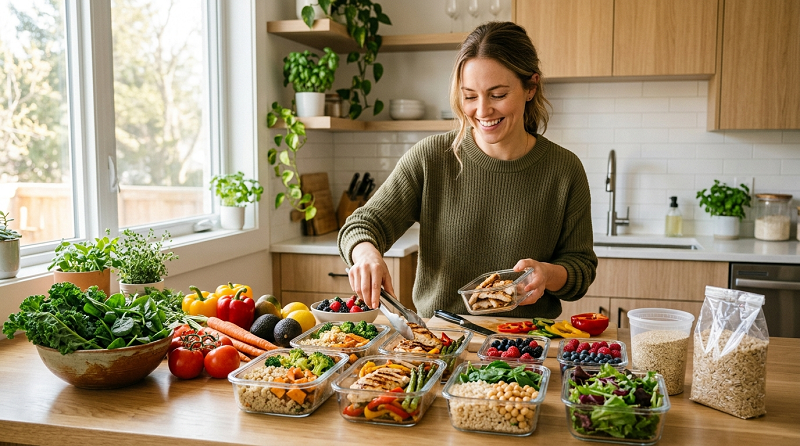
Meal planning is one of the most useful healthy eating habits you can build.
When you are very hungry and have no plan, it is easy to choose fast food or a highly processed snack.
A simple plan can prevent this.
You do not need to plan every meal for the entire month.
Start with three or four days.
Create a Simple Meal Plan
Choose:
2–3 breakfast options
- Eggs and whole-grain toast
- Oatmeal and fruit
- Yogurt, fruit, and nuts
2–3 lunch options
- Chicken and vegetable rice bowl
- Tuna and vegetable sandwich
- Bean and vegetable salad
2–3 dinner options
- Grilled fish and vegetables
- Chicken, brown rice, and broccoli
- Lean meat with vegetables and potatoes
Then make a shopping list.
Meal planning can also help you cook at home more often and avoid last-minute food choices.
Learn to Read Food Labels
You do not need to become a nutrition expert to understand food labels.
Start with a few basic details.
Look at:
- Serving size
- Calories
- Protein
- Fiber
- Added sugars
- Sodium
- Saturated fat
- Ingredient list
Pay special attention to serving size.
A package may look like one serving but actually contain two or more.
Also check the ingredient list. If added sugar, refined ingredients, or highly processed ingredients appear near the beginning, you may want to compare the product with another option.
The goal is not to find a “perfect” food.
The goal is to make informed choices.
Drink More Water
What you drink can have a major effect on your diet.
Sugary drinks can add a lot of added sugar without making you feel as satisfied as solid food.
The CDC recommends choosing water instead of sugary drinks as one way to reduce added sugar.
If plain water feels boring, try adding:
- Lemon
- Lime
- Cucumber
- Mint
- Berries
You can also choose unsweetened tea or sparkling water.
Make water easier to drink by carrying a reusable bottle with you.
Practice Mindful Eating
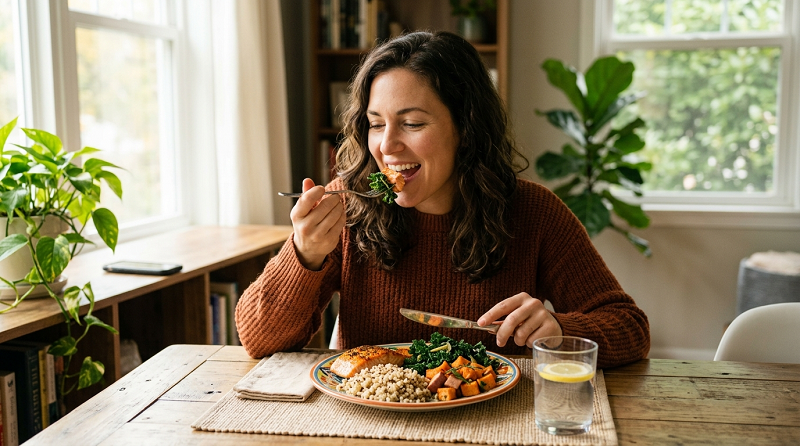
Healthy eating is not only about what you eat.
It is also about how you eat.
Mindful eating means paying attention to your food and your body’s signals.
Try to:
- Eat slowly.
- Put your phone away during meals.
- Notice the taste and texture of your food.
- Pause between bites.
- Pay attention to hunger and fullness.
- Avoid eating directly from large packages.
Eating more slowly can give you more time to notice when you are becoming full.
It can also help you enjoy your meals instead of eating without thinking.
You do not need to make every meal a perfect mindfulness exercise.
Start with one meal each day.
Do Not Label Foods as “Good” or “Bad”
Strict food rules can make healthy eating harder.
If you tell yourself that a certain food is completely forbidden, you may want it even more.
A more flexible approach is to think about balance.
For example, you can enjoy a dessert while still eating plenty of vegetables, fruits, whole grains, and protein throughout the day.
Healthy eating is about your overall pattern, not one meal.
The current Dietary Guidelines for Americans emphasize a flexible approach built around whole, nutritious foods and personal preferences.
This means your healthy eating habits can still include foods you enjoy.
Use the 80/20 Mindset
You do not need to eat perfectly every day.
Instead, aim to make healthy choices most of the time.
If you eat a large meal at a family celebration, do not decide that your diet is ruined.
Simply return to your normal routine at the next meal.
One meal does not determine your health.
The same is true in reverse. One healthy meal will not change everything overnight.
Consistency matters more than perfection.
Create Healthy Eating Habits for Busy Days
Your healthy habits should work when life gets busy.
Prepare a few foods ahead of time so you always have something easy to eat.
You could:
- Cook extra chicken for tomorrow’s lunch.
- Prepare vegetables in advance.
- Cook a batch of rice or whole grains.
- Boil eggs for quick breakfasts.
- Keep fruit ready to eat.
- Portion nuts into small containers.
- Keep healthy frozen foods available.
The goal is to reduce the number of decisions you need to make when you are tired or busy.
Keep Emergency Meals Ready
Sometimes you simply will not have time to cook.
Have a few quick options available.
For example:
- Eggs and whole-grain toast
- Canned tuna with vegetables
- Frozen vegetables with chicken
- Oatmeal with fruit and nuts
- Beans with rice and vegetables
- Plain yogurt with fruit
Healthy eating does not have to mean spending hours in the kitchen.
Get Back on Track After a Slip
Everyone has days when they eat more than planned.
Maybe you order fast food.
Maybe you eat too much dessert.
Maybe you skip your meal plan for several days.
That does not mean you failed.
One of the most important healthy eating habits is learning how to restart.
Do not wait until Monday.
Do not wait for a new month.
Start with your next meal.
Ask yourself:
“What is one healthy choice I can make right now?”
Then make that choice.
The CDC also notes that setbacks are normal when building new habits. Getting back on track instead of giving up is part of the process.
Make Healthy Eating Fit Your Lifestyle
There is no single perfect diet for everyone.
Your food choices may depend on your:
- Culture
- Budget
- Schedule
- Cooking skills
- Food preferences
- Family needs
- Activity level
A healthy eating pattern should fit your life.
If you dislike a certain vegetable, try another one.
If you cannot afford fresh berries, choose bananas or seasonal fruit.
If you are busy, use frozen vegetables.
If your family eats rice, you do not have to remove rice completely. Focus on balanced portions and add vegetables and protein.
Healthy eating should be realistic.
A Simple 7-Day Healthy Eating Habit Challenge
Want to start today?
Try this simple seven-day challenge.
Day 1: Drink More Water
Replace one sugary drink with water.
Day 2: Add a Vegetable
Add one vegetable to lunch or dinner.
Day 3: Eat a Fruit
Add one piece of fruit to breakfast or as a snack.
Day 4: Add Protein
Make sure your main meal includes a good protein source.
Day 5: Plan Tomorrow’s Meals
Spend 10 minutes planning what you will eat the next day.
Day 6: Eat Without Screens
Have one meal without watching TV or using your phone.
Day 7: Prepare for the Week
Wash fruit, prepare vegetables, cook a protein, or make a simple meal plan.
At the end of the week, choose the two or three habits that felt easiest.
Keep those habits going.
Then build from there.
Common Mistakes That Can Stop Healthy Eating Habits
Knowing what not to do can make your journey easier.
Trying to Be Perfect
Perfection is difficult to maintain.
Focus on progress.
Cutting Out Too Many Foods
Removing many foods at once can make your diet feel restrictive.
Focus on adding nutritious foods first.
Skipping Meals
Skipping meals may leave you very hungry later.
Create regular meals that work with your schedule.
Keeping Unhealthy Snacks Within Easy Reach
If something is always visible, it is easier to eat without thinking.
Make healthier foods more convenient.
Following Someone Else’s Diet
A diet that works for another person may not fit your lifestyle.
Choose habits you can actually maintain.
Giving Up After One Bad Meal
A setback is not the end.
Return to your normal routine with the next meal.
You do not need to completely eliminate ultra-processed foods, but eating them less often can make room for more nutrient-rich foods in your daily diet.
How Long Does It Take to Build Healthy Eating Habits?
There is no exact number of days that works for everyone.
Some habits become easier quickly. Others take longer.
What matters most is repetition.
The more often you repeat a healthy action, the more natural it can become.
Instead of asking, “How fast can I change my diet?”
Ask:
“How can I make this change easy enough to continue?”
That question can help you build habits that last.
Final Thoughts: Build Habits, Not a Temporary Diet
Learning how to build healthy eating habits that last is not about following a strict diet.
It is about creating simple routines that you can repeat.
Start small.
Eat more vegetables and fruits. Choose nutritious sources of protein. Add whole grains and fiber-rich foods. Drink more water. Plan simple meals. Keep healthy foods within easy reach.
Most importantly, give yourself room to be human.
You will have busy days. You will eat foods that are less nutritious. You may miss a meal plan or eat more than you intended.
That is okay.
Your next choice is another opportunity to get back on track.
Healthy eating is not a short challenge. It is a long-term habit built one meal, one choice, and one day at a time.
Ready to start? Choose one healthy eating habit from this article and practice it today. Then come back tomorrow and build on it.
What healthy eating habit do you want to start first? Share your goal in the comments and inspire someone else to make a healthier choice, too.