
Eating healthy is not only about what you eat. It is also about how much you eat.
You can choose healthy foods and still eat more than your body needs. On the other hand, eating too little can leave you hungry, tired, and more likely to snack later.
This is where portion control can help.
Portion control is a simple way to become more aware of how much food you put on your plate. It does not mean you have to count every calorie or give up your favorite foods. Instead, it helps you create balanced meals that fit your needs.
For beginners, portion control may seem confusing at first. The good news is that you do not need a food scale at every meal. Simple tools such as your hand, plate, bowl, and even the size of your serving spoon can help.
In this beginner’s guide, you will learn what portion control means, how it differs from serving size, how to build a balanced plate, and easy ways to control portions at home and when eating out.
What Is Portion Control?
Portion control means paying attention to the amount of food you choose to eat at one time.
A portion is simply the amount of food you decide to eat. It can be smaller or larger than the serving size listed on a food package.
For example, a package of crackers may say that one serving is 10 crackers. If you eat 20 crackers, you have eaten two servings.
This is an important difference because serving size and portion size are not the same thing. The CDC explains that a serving is a specific amount used on a food label, while a portion is the amount you actually choose to eat.
Portion control helps you become more aware of these amounts.
It can be useful for:
- Supporting healthy weight management
- Avoiding overeating
- Building balanced meals
- Understanding food labels
- Enjoying favorite foods in reasonable amounts
- Creating healthy eating habits that last
The goal is not to eat as little as possible. The goal is to eat the right amount for your body and your lifestyle.
Why Does Portion Control Matter?
Modern food portions can be much larger than we need. Large plates, oversized drinks, restaurant meals, and large snack packages can make it easy to eat more without noticing.
The CDC recommends paying attention to portion size as part of healthy eating. It also suggests serving food onto individual plates instead of keeping large serving dishes on the table. This can help reduce the temptation to take extra servings.
Portion control can also help you create a healthier relationship with food.
Instead of thinking:
“I can’t eat this.”
You can think:
“I can enjoy this food in a portion that works for me.”
That small change can make healthy eating feel more realistic.
Portion Control vs. Calorie Counting
Portion control and calorie counting are not the same.
Calorie counting involves tracking the energy in the foods and drinks you consume. Portion control focuses more on how much food you eat.
Some people like tracking calories. Others find it stressful or difficult to maintain.
Portion control can be a simpler approach because you can use visual guides instead of tracking every number.
For example, you can build a meal with:
- Plenty of vegetables
- A source of protein
- A reasonable amount of rice, potatoes, pasta, or another carbohydrate
- A small amount of healthy fat
This approach can help you create balanced meals without making food feel like a math problem.
How to Build a Balanced Plate
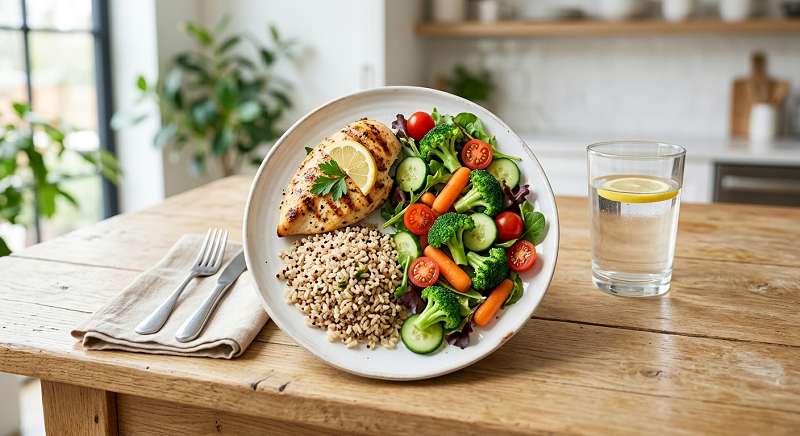
One of the easiest ways to practice portion control is to use the plate method.
The basic idea is simple:
- Half of your plate: vegetables
- One-quarter: protein
- One-quarter: carbohydrates or starchy foods
Choosing nutritious foods is just as important as controlling portions. For more ideas, explore our guide to the best everyday foods for a healthy diet.
The CDC uses a similar plate method for diabetes meal planning, with half the plate made up of non-starchy vegetables, one-quarter protein, and one-quarter carbohydrate foods.
Fill Half Your Plate With Vegetables
Vegetables can add volume, fiber, vitamins, and minerals to your meal.
Try foods such as:
- Broccoli
- Carrots
- Cabbage
- Spinach
- Green beans
- Tomatoes
- Cucumber
- Bell peppers
- Cauliflower
- Eggplant
You can use fresh, frozen, or canned vegetables. If using canned vegetables, look for options that are lower in sodium when possible.
The NHS recommends making vegetables a large part of your main meals because many vegetables are high in fiber and relatively low in calories.
Add Protein to Each Meal
Protein can help make meals more satisfying.
Good choices include:
- Eggs
- Chicken
- Fish
- Lean meat
- Tofu
- Beans
- Lentils
- Greek yogurt
- Nuts and seeds
The CDC recommends including a variety of protein foods as part of a healthy eating pattern.
Keep Carbohydrates in the Right Portion
Carbohydrates are not something you need to avoid.
Rice, potatoes, oats, bread, pasta, corn, and other carbohydrate foods can be part of a healthy diet.
The key is to pay attention to the amount.
When possible, choose higher-fiber or whole-grain options such as:
- Brown rice
- Oatmeal
- Whole-grain bread
- Whole-wheat pasta
- Potatoes with the skin
The NHS notes that higher-fiber starchy foods can help you feel full for longer.
Use Your Hand as a Portion Size Guide
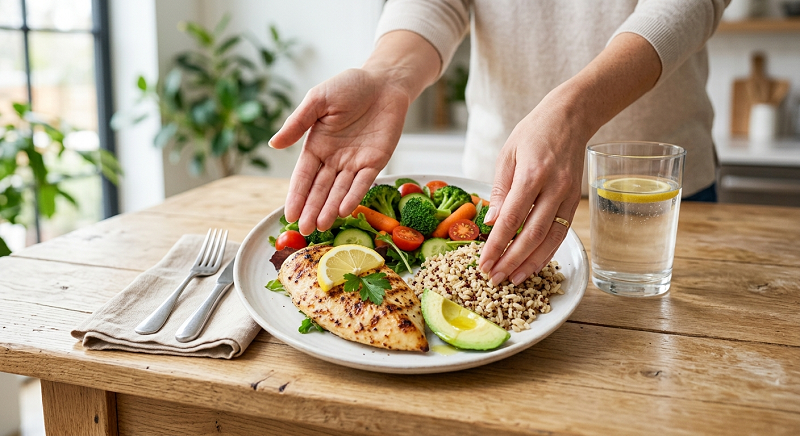
You do not always have a measuring cup or kitchen scale with you.
Your hands can provide a simple visual guide.
A common approach is:
- Protein: about the size of your palm
- Carbohydrates: about the size of your cupped hand
- Vegetables: one or two handfuls
- Fats: about the size of your thumb
These are general guides, not strict rules.
Your nutritional needs can vary based on your age, body size, activity level, health needs, and goals.
The CDC also provides a hand-based guide for estimating portions, including using the palm for about 3 ounces of meat, fish, or poultry and a fist for about one cup or one medium fruit.
Learn the Difference Between Serving Size and Portion Size
Food labels can be confusing.
One of the first things to check is the serving size.
For example, imagine a cereal box says:
Serving size: 1 cup
If you pour 2 cups into your bowl, you have eaten two servings.
That does not mean two cups are “bad.” It simply means you need to understand how much you are eating.
The CDC notes that the serving size shown on a Nutrition Facts label is not necessarily the amount you should eat.
This is why reading labels can be helpful when learning portion control.
Look at:
- Serving size
- Calories
- Protein
- Fiber
- Added sugars
- Saturated fat
- Sodium
You can learn more about nutrition labels through the CDC’s Nutrition Facts Label guide.
10 Simple Portion Control Tips for Beginners
You do not need to change everything at once.
Start with one or two habits and build from there.
1. Use Smaller Plates
A smaller plate can make a reasonable portion look more satisfying.
The NHS recommends trying smaller plates and bowls as one simple way to manage portion sizes.
2. Serve Food Before You Sit Down
Instead of putting a large serving dish beside you, serve your meal onto your plate first.
This makes it easier to see how much you are eating.
It can also reduce automatic second helpings.
3. Eat Slowly
Your body needs time to recognize that you are becoming full.
Slow down and take breaks during your meal.
Put your fork down between bites if that helps.
4. Avoid Eating Directly From the Package
This is especially useful for snacks.
Instead of eating chips, nuts, cookies, or crackers straight from the bag, place a portion in a bowl.
The CDC recommends this strategy because it makes it easier to see how much you plan to eat.
5. Drink Water With Meals
Water can be a simple choice when you want to reduce sugary drinks.
Try keeping a glass or bottle of water nearby during meals.
6. Measure High-Calorie Ingredients
Some foods are healthy but still high in calories when eaten in large amounts.
Examples include:
- Cooking oils
- Peanut butter
- Nuts
- Cheese
- Salad dressing
- Mayonnaise
Try using a measuring spoon for these foods when you are learning portion control.
7. Add More Vegetables
If your plate looks small, add vegetables instead of simply adding more high-calorie foods.
A larger serving of vegetables can add color, texture, and volume to your meal.
8. Keep Healthy Snacks Ready
When you are very hungry, it can be harder to make thoughtful choices.
Prepare simple snacks such as:
- Fruit
- Plain yogurt
- Carrot sticks
- Cucumber
- Boiled eggs
- A small portion of nuts
- Whole-grain crackers
9. Be Careful With Restaurant Portions
Restaurant meals can be larger than the amount you need.
You can:
- Share a meal
- Order a smaller option
- Ask for vegetables
- Save part of the meal for later
- Avoid automatically ordering the largest size
The CDC suggests considering splitting an entrée or setting aside part of the meal when eating at restaurants.
10. Stop When You Are Comfortably Full
You do not have to finish every piece of food on your plate.
Pay attention to how you feel while eating.
Ask yourself:
“Am I still hungry, or am I eating because the food is still there?”
This simple question can help you become more mindful.
Portion Control for Weight Loss
If your goal is weight loss, portion control can be useful because the amount you eat affects your total energy intake.
However, portion control should not mean extreme restriction.
You still need enough food and nutrients to support your body.
A balanced weight-management meal can include:
- Plenty of vegetables
- A good source of protein
- A moderate portion of carbohydrates
- A small amount of healthy fat
- Water or another low-sugar drink
The NHS notes that there is no single perfect way to lose weight. A sustainable eating pattern should help reduce calorie intake while still being healthy and realistic for everyday life.
You can find additional healthy eating guidance in the NHS guide to healthy eating for weight loss.
Portion Control Does Not Mean Giving Up Your Favorite Foods
One common mistake is believing that portion control means eating only “perfect” foods.
It does not.
You can enjoy pizza, pasta, dessert, chocolate, or other favorite foods while still practicing portion control.
For example, instead of eating several slices of pizza with no vegetables, you could have:
- A smaller serving of pizza
- A large side salad
- Water or another low-sugar drink
- Fruit for dessert
The goal is balance.
A healthy diet is not built from one meal. It is built from the choices you make over days, weeks, and months.
The NHS Eatwell Guide also emphasizes that balance does not have to be perfect at every single meal. The overall pattern across the day or week matters.
Common Portion Control Mistakes to Avoid
Even when you have good intentions, a few habits can make portion control harder.
Mistake #1: Making Portions Too Small
Eating very little may leave you hungry.
Instead, build meals that contain protein, fiber-rich foods, vegetables, and a reasonable amount of carbohydrates.
Mistake #2: Thinking Healthy Food Has No Portion Limit
Foods such as nuts, avocado, olive oil, and nut butter can provide valuable nutrients.
But they are still easy to overeat.
Healthy does not always mean unlimited.
Mistake #3: Eating While Distracted
Watching television or scrolling on your phone can make it harder to notice how much you are eating.
Try giving your meal your full attention when possible.
Mistake #4: Drinking Too Many Calories
Coffee drinks, soda, sweetened tea, energy drinks, and other beverages can add a lot of calories.
Water is often the simplest choice.
Mistake #5: Trying to Be Perfect
One large meal does not ruin your progress.
If you eat more than planned, simply return to your normal eating habits at the next meal.
Consistency is more important than perfection.
A Simple Portion Control Example
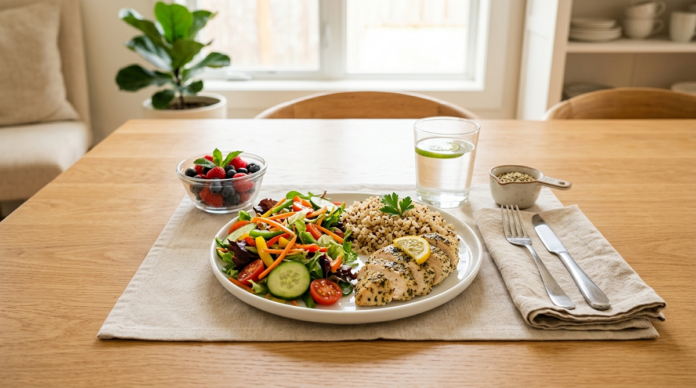
Here is what a balanced dinner might look like:
Half the plate:
- Steamed broccoli
- Carrots
- Cabbage salad
One-quarter of the plate:
- Grilled chicken
One-quarter of the plate:
- Brown rice
Optional addition:
- A small amount of olive oil-based dressing
- A piece of fruit
- Water
This type of meal provides variety without requiring complicated calculations.
You can use the same idea with many different foods.
For example:
Filipino-style meal:
- ½ plate vegetables or ensalada
- ¼ plate grilled fish or chicken
- ¼ plate rice
- Water or unsweetened drink
Breakfast:
- Eggs
- Whole-grain toast
- Fruit
- Plain yogurt
Lunch:
- Chicken or tofu
- Mixed vegetables
- A moderate serving of rice
The exact portion you need can vary. Think of these examples as starting points, not strict rules.
How to Make Portion Control a Long-Term Habit
The best portion control plan is one you can follow for a long time.
Start small.
For the first week, focus on just one habit, such as using a smaller plate.
During the next week, add another habit, such as putting snacks into a bowl instead of eating from the package.
Over time, these small changes can become automatic.
Try this simple plan:
Week 1: Use smaller plates.
Week 2: Add more vegetables.
Week 3: Include protein with each meal.
Week 4: Measure high-calorie ingredients.
Week 5: Practice eating without distractions.
You do not need to change everything overnight.
Healthy eating is a skill. Like any skill, it improves with practice.
Frequently Asked Questions About Portion Control
Is portion control good for weight loss?
Yes. Portion control can help you become more aware of how much food you eat. This can support weight management when combined with a balanced eating pattern and regular physical activity.
Do I need to count calories?
No. Calorie tracking can be useful for some people, but it is not required for everyone. Using your plate, hand, and hunger cues can provide a simpler approach.
How much food should I eat at each meal?
There is no single portion size that works for everyone. Your needs depend on factors such as your age, body size, activity level, and health goals.
Can I eat snacks while practicing portion control?
Yes. Snacks can be part of a healthy eating plan. The key is to choose reasonable amounts and avoid eating directly from large packages.
Can I still eat dessert?
Yes. Portion control is about balance, not banning foods. A small serving of dessert can fit into an overall healthy eating pattern.
What is the easiest portion control method?
For beginners, the plate method is one of the easiest approaches. Start with vegetables, add protein, and include a moderate portion of carbohydrates.
Final Thoughts: Start Small and Stay Consistent
Learning portion control does not have to be complicated.
You do not need to weigh every food or follow a strict diet.
Start by paying attention to your plate.
Fill much of it with vegetables. Add a good source of protein. Choose a sensible amount of carbohydrates. Be aware of high-calorie ingredients and snacks. Eat slowly and listen to your body’s hunger and fullness signals.
Most importantly, give yourself time.
Healthy eating habits are built through small actions repeated over and over. One meal does not define your diet, and one large meal does not erase your progress.
If you are ready to get started, choose one portion control habit today. Use a smaller plate, measure your cooking oil, put your snack into a bowl, or add more vegetables to your next meal.
Then keep going.
What portion control habit will you try first? Share your goal in the comments and inspire someone else to start their own healthy eating journey.