

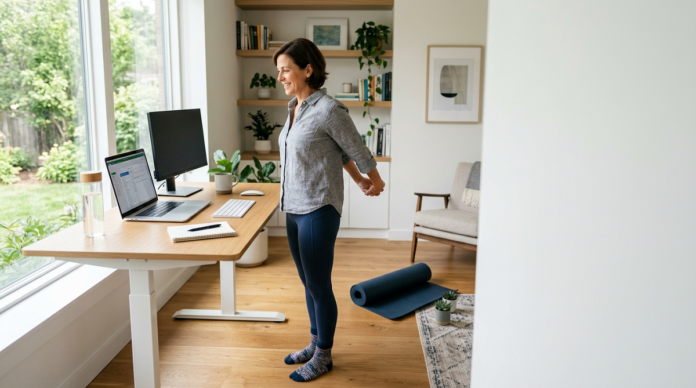
Working from home has many benefits. You can skip the commute, enjoy a flexible schedule, and work in the comfort of your own space. But there is one common problem: it can be easy to sit for hours without moving enough.
You may start your workday at your desk, eat lunch at your desk, and finish the day in the same chair. Before you know it, your body has barely moved.
The good news is that you do not need a gym membership or long workouts to become more active. Small changes throughout your workday can add up. Walking during phone calls, stretching between tasks, taking the stairs, and doing short home workouts can all help.
The World Health Organization recommends that adults get 150 to 300 minutes of moderate aerobic activity each week, or 75 to 150 minutes of vigorous activity. Adults should also do muscle-strengthening activities on at least two days each week.
More importantly, some movement is better than none.
If you work from home, you can build physical activity into the same routine that helps you get your work done.
Why Staying Active While Working From Home Matters
A home office can make life easier, but it can also encourage a sedentary lifestyle.
When you work in an office, you may naturally walk to meetings, get coffee, visit another department, or commute to and from work. At home, many of those small movements disappear.
Long periods of sitting can also leave you feeling stiff and tired. Your neck, shoulders, back, and hips may feel uncomfortable after hours at a computer.
The Occupational Safety and Health Administration recommends changing positions, varying tasks, and taking short breaks during computer work. Short breaks can include standing, stretching, or walking.
Regular movement can also support your overall health. Physical activity can help improve heart health, support mental well-being, and reduce the risk of several chronic diseases.
You do not have to become an athlete.
The goal is simple:
Move more often and sit for fewer uninterrupted hours.
1. Start Your Workday With Movement
One of the easiest ways to stay active when working from home is to move before you start working.
Instead of going straight from bed to your desk, give your body 10 to 20 minutes of movement.
You could:
- Take a short walk around your neighborhood.
- Stretch your legs and back.
- Do a few bodyweight squats.
- Practice gentle yoga.
- Walk around your home while drinking your morning water.
- Do a short beginner workout.
You do not need to sweat heavily.
The goal is to create a habit that tells your body, “The day has started.”
Starting with movement can also make it easier to stay active later.
Try a 10-Minute Morning Routine
For a simple routine, try:
- 2 minutes: Walk around and warm up.
- 2 minutes: Do gentle arm and shoulder movements.
- 2 minutes: Do bodyweight squats.
- 2 minutes: March in place.
- 2 minutes: Stretch your legs and back.
If you are new to exercise, start slowly and choose movements that feel comfortable.
2. Take Movement Breaks During the Workday
One of the best work-from-home fitness habits is taking regular movement breaks.
It is easy to become focused on a project and forget to move for several hours. Instead of waiting until your body feels stiff, schedule short breaks.
For example, every hour, stand up and move for a few minutes.
You can:
- Walk around the house.
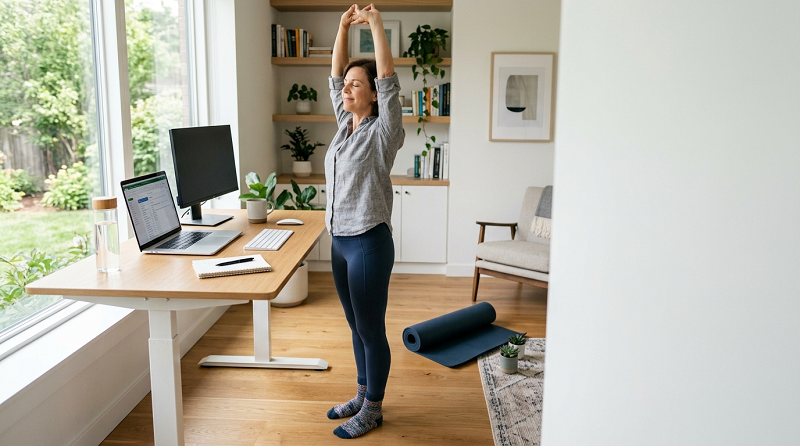
- Stretch your arms.
- Roll your shoulders.
- Refill your water bottle.
- Walk up and down the stairs.
- Do a few gentle squats.
- Look outside while standing.
- Do some light housework.
OSHA notes that frequent short breaks can help give muscles and tendons time to recover. It specifically suggests getting up, stretching, or walking during short breaks from computer work.
Use a Simple Reminder
If you often forget to move, use a phone, computer, or smartwatch reminder.
Try a simple rule:
Every hour = get up and move.
Even a few minutes can break up long periods of sitting.
3. Walk While You Talk
Do you spend part of your day on phone calls or meetings that do not require a camera?
Use that time to walk.
Instead of sitting at your desk, put on comfortable shoes and walk around your home or outside.
This is one of the easiest ways to add more activity without creating another task on your schedule.
You could walk while:
- Talking with a coworker.
- Listening to a podcast.
- Joining an audio-only meeting.
- Talking to a family member.
- Making a personal phone call.
The CDC also recommends simple strategies such as walking during lunch breaks and making walking dates with friends or family.
A 10-minute walk may not seem like much.
But 10 minutes today, tomorrow, and the next day can become a meaningful habit.
4. Turn Your Lunch Break Into an Active Break
Lunch does not have to mean sitting for another hour.
After eating, take a short walk.
Even a 10- to 15-minute walk can help you get away from your screen and add movement to your day.
Try this simple routine:
Eat → clean up → walk → return to work.
You could walk around your neighborhood, visit a nearby store, or simply walk around your home.
If the weather is poor, walk indoors.
You can also use part of your lunch break for light stretching or a short home workout.
The important thing is to avoid spending your entire lunch break sitting in the same place where you work.
5. Create a Home Workout Routine
You do not need expensive equipment to exercise at home.
Bodyweight exercises can provide a simple way to build strength.
Try exercises such as:
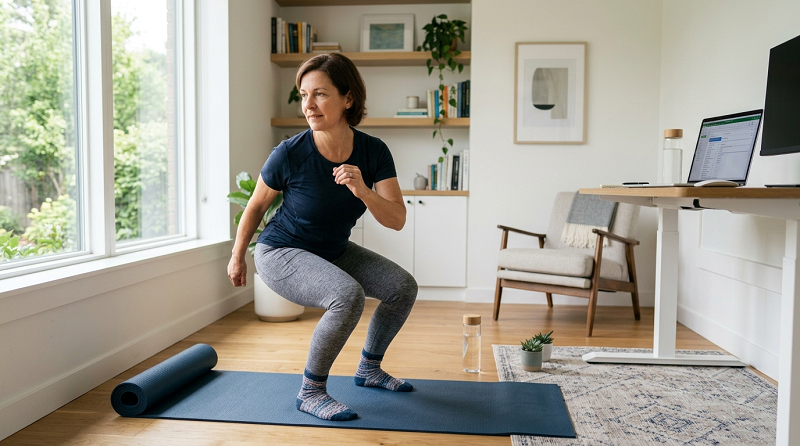
- Squats
- Wall push-ups
- Lunges
- Glute bridges
- Calf raises
- Step-ups
- Standing leg raises
- Planks
Start with a few exercises and keep the routine short.
For example:
Beginner 15-Minute Home Workout
Warm-up — 3 minutes
- March in place
- Arm circles
- Gentle side steps
Workout — 10 minutes
Complete 2 rounds:
- 10 squats
- 8 wall push-ups
- 10 glute bridges
- 10 calf raises
- 20-second plank
Cool-down — 2 minutes
- Gentle leg stretch
- Shoulder stretch
- Deep breathing
You can increase the number of repetitions as you become stronger.
The CDC recommends that adults include both aerobic activity and muscle-strengthening activity in their weekly routine.
6. Make Your Home Office More Movement-Friendly
Your workspace can influence how much you move.
If everything you need is within arm’s reach, there may be little reason to stand up.
You can make small changes that encourage movement.
For example:
- Keep your water bottle away from your desk.
- Place the printer farther away.
- Stand during some phone calls.
- Use a standing desk if it works for you.
- Move your trash bin away from your chair.
- Keep your shoes near your desk for walking breaks.
- Put reminders where you can see them.
The goal is not to make work harder.
The goal is to create more natural reasons to get up.
OSHA recommends workstations that allow workers to change positions and alternate between sitting and standing or other activities.
7. Try Standing While You Work
Standing can be a useful way to change your position during the day.
If you have an adjustable desk, try alternating between sitting and standing.
You do not need to stand all day.
Instead, experiment with short periods.
For example:
- Sit for 45 minutes.
- Stand for 10 to 15 minutes.
- Walk for a few minutes.
- Return to sitting.
Find a pattern that feels comfortable.
The main goal is to avoid staying in one position for too long.
A comfortable and adjustable workstation can also help you change positions more easily.
8. Use Household Chores as Extra Activity
Exercise does not have to look like exercise.
Household tasks can help you stay active throughout the day.
Try:
- Sweeping the floor.
- Cleaning your home.
- Gardening.
- Washing the car.
- Doing laundry.
- Organizing a room.
- Carrying groceries.
- Walking while putting things away.
The WHO notes that physical activity includes more than planned exercise. It can also come from work, transportation, household tasks, and everyday activities.
So do not overlook the small movements you make at home.
They all count toward a more active lifestyle.
9. Take the Stairs More Often
If you have stairs at home, use them as an easy movement opportunity.
Instead of taking the elevator when you are out, choose the stairs when it is safe and practical.
You can also use stairs for short activity breaks.
For example, walk up and down the stairs for a few minutes during a work break.
If you have balance problems, joint pain, or another health concern, choose a safer activity that fits your needs.
The goal is not to push yourself too hard.
The goal is to find simple ways to move more.
10. Go for a Walk After Work
Working from home can blur the line between work and personal time.
One minute you are answering emails. The next, it is evening and you are still sitting at your desk.
A short walk after work can help create a clear end to your workday.
Think of it as your new commute.
You can walk for:
- 10 minutes
- 20 minutes
- 30 minutes
- Longer if you enjoy it
You can walk alone, with your partner, with your children, or with a friend.
Walking does not have to be fast or complicated.
It can simply be time to move, breathe, and step away from your screen.

11. Build an Active Work-From-Home Schedule
A schedule can make staying active much easier.
Without a plan, exercise may become something you keep postponing.
Try building movement into your normal workday.
Example Work-From-Home Activity Schedule
7:30 AM: 10-minute morning walk
9:00 AM: Start work
10:00 AM: 5-minute stretch and walk
11:30 AM: Walk during a phone call
12:30 PM: Lunch followed by a 15-minute walk
2:00 PM: 5-minute movement break
3:30 PM: Short stretch and water break
5:00 PM: 20-minute walk or home workout
This does not have to be your exact schedule.
Adjust it to your work hours and fitness level.
The CDC suggests that adults can spread their weekly activity across several days and break it into manageable periods.
12. Set a Daily Step Goal
A step goal can make movement more visible.
You can use a phone, smartwatch, or fitness tracker to see how much you walk each day.
But do not feel pressured to hit a specific number right away.
If you currently take 3,000 steps a day, try increasing your movement gradually.
You might aim for:
- More steps than yesterday.
- A short walk after lunch.
- A walk before dinner.
- Extra movement during breaks.
The goal is progress, not perfection.
13. Make Exercise Social
Exercise can be easier when you do it with someone else.
Ask a friend, family member, or coworker to join you for a walk or workout.
You can also schedule virtual workout sessions together.
Try:
- A morning walking group.
- A lunchtime walking buddy.
- A weekend family hike.
- A short workout with a friend.
- A stretching session with your partner.
Social support can make exercise more enjoyable and help you stay accountable.
14. Stretch When Your Body Feels Stiff
Long computer sessions can make your neck, shoulders, back, and hips feel tight.
Gentle stretching can be a useful part of your movement breaks.
Try simple stretches such as:
- Neck turns
- Shoulder rolls
- Chest stretches
- Standing side stretches
- Calf stretches
- Hamstring stretches
- Hip stretches
Move slowly and avoid forcing a stretch.
If you feel sharp pain, numbness, or unusual symptoms, stop and seek appropriate medical advice.
OSHA recommends short pauses that include stretching and movement during computer work.
15. Avoid the “All or Nothing” Mindset
One of the biggest mistakes people make is believing exercise only counts if it is long or intense.
That mindset can make it harder to stay active.
Maybe you only have 10 minutes today.
Use the 10 minutes.
Maybe you cannot complete a full workout.
Take a walk.
Maybe you are tired after work.
Stretch for five minutes.
The WHO emphasizes that any amount of physical activity is better than none, and people who are currently inactive can start with small amounts and gradually increase their activity.
Small actions become powerful when repeated.
How Much Exercise Should You Get Each Week?
For most adults, a useful goal is at least:
- 150–300 minutes of moderate aerobic activity per week, or
- 75–150 minutes of vigorous aerobic activity per week, or
- A combination of moderate and vigorous activity.
Adults should also include muscle-strengthening activities at least two days per week.
Moderate activity could include brisk walking, while more vigorous activity may include activities such as running.
However, your ideal activity level can depend on your age, fitness, health, and physical abilities.
If you have a medical condition or are unsure how to begin, talk with a qualified health professional before starting a new exercise program.
According to the CDC physical activity guidelines for adults, adults should aim for at least 150 minutes of moderate-intensity activity each week, along with muscle-strengthening activities on at least two days.
A Simple 5-Step Plan to Stay Active While Working From Home
If everything above feels like too much, start here.
Step 1: Walk for 10 Minutes
Take a short walk before or after work.
Step 2: Move Every Hour
Stand up, stretch, or walk for a few minutes.
Step 3: Walk During Calls
Use phone calls as an opportunity to move.
Step 4: Exercise Twice a Week
Start with simple bodyweight exercises.
Step 5: Make Movement a Habit
Repeat these actions until they become part of your normal routine.
You do not need a perfect plan.
You need a plan you can actually follow.
If you want more simple ideas for adding movement to your daily routine, check out our guide to 10 Easy Ways to Stay Active Every Day.
Common Mistakes to Avoid When Working From Home
Staying active is easier when you know what can get in the way.
Sitting All Day
Even if you exercise in the evening, try not to remain seated for the entire workday.
Break up long periods of sitting with movement.
Waiting for Motivation
Motivation comes and goes.
Use reminders and routines instead.
Doing Too Much Too Soon
Starting with a very hard workout can leave you sore or discouraged.
Begin at a level you can manage.
Ignoring Your Workstation
Your desk setup matters.
Make sure your chair, monitor, keyboard, and other equipment allow you to work comfortably. OSHA provides detailed guidance on computer workstation setup and posture.
Treating Exercise as a Chore
Choose activities you enjoy.
Walking, dancing, gardening, cycling, stretching, and home workouts can all provide movement.
The best exercise is often the one you are willing to do regularly.
Final Thoughts: Make Movement Part of Your Workday
Learning how to stay active when you work from home does not require a complete lifestyle makeover.
You can start with a short morning walk.
Stand up during breaks.
Walk while talking on the phone.
Take a walk after lunch.
Stretch between tasks.
Do a short home workout a few times each week.
These actions may seem small, but they can add more movement to a day that would otherwise be spent mostly sitting.
The key is consistency.
You do not need to be perfect. You simply need to keep moving.
Start today with one small change. Take a 10-minute walk, stretch between meetings, or stand up and move around your home right now.
Then build from there.
Your workday does not have to keep you stuck in a chair.
What is your favorite way to stay active while working from home? Share your tip in the comments and help inspire someone else to move more today.