

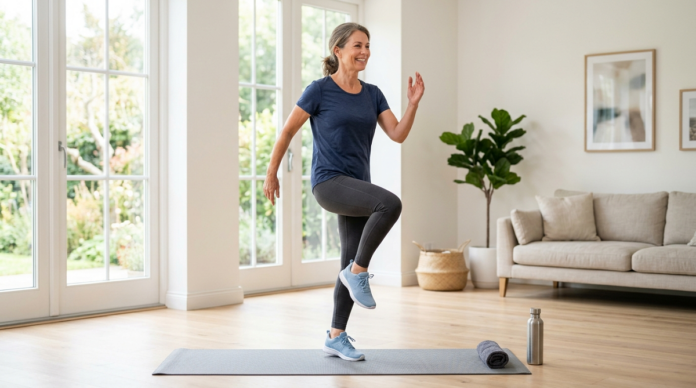
You do not need a gym membership, expensive equipment, or hours of free time to get a good cardio workout. Your home can be enough.
Simple movements such as marching in place, dancing, step-ups, and jumping jacks can raise your heart rate and help you build a regular exercise habit. The key is to choose activities you enjoy and do them often.
Regular physical activity can support heart health, improve fitness, boost mood, and help you manage your weight. The World Health Organization recommends that adults get 150 to 300 minutes of moderate aerobic activity each week, or 75 to 150 minutes of vigorous activity.
The good news? You do not have to reach that goal in one long workout.
You can break your activity into smaller sessions throughout the week. This makes home cardio a practical choice, even when your schedule is busy.
In this guide, you will learn about easy cardio workouts you can do at home, how to make them harder or easier, and how to build a simple routine that fits your lifestyle.
What Is Cardio Exercise?
Cardio, also called aerobic exercise, is activity that makes your heart beat faster and causes you to breathe harder.
Common examples include:
- Walking
- Jogging
- Cycling
- Dancing
- Swimming
- Jumping rope
- Aerobic workouts
Cardio can be done at different intensity levels.
The American Heart Association explains that during moderate-intensity exercise, your heart rate and breathing increase, but you should still be able to talk. During vigorous exercise, breathing becomes much harder and talking is more difficult.
This means your home workout does not have to leave you exhausted to be useful.
A brisk movement session that gets you breathing harder can still count.
Why Do Cardio Workouts at Home?
Home workouts are convenient.
You do not have to drive to a gym, wait for equipment, or spend time getting ready to leave the house. You can exercise in your living room, bedroom, garage, or another safe open space.
Home cardio can also make it easier to stay consistent.
Here are some benefits of regular cardio exercise:
- Supports heart and lung fitness
- Helps improve stamina
- Can support healthy weight management
- May improve mood
- Can help reduce long periods of sitting
- Helps you stay active during busy days
- Can improve your overall fitness
- Gives you a simple way to build an exercise habit
The WHO notes that physical activity can benefit both physical and mental health. It also emphasizes that some activity is better than none.
That is an important point.
You do not need a perfect workout. You simply need to start moving.
10 Easy Cardio Workouts You Can Do at Home
You can mix and match the exercises below to create your own home cardio workout.
Start at a comfortable pace. As your fitness improves, slowly increase the time, speed, or number of rounds.
1. Marching in Place
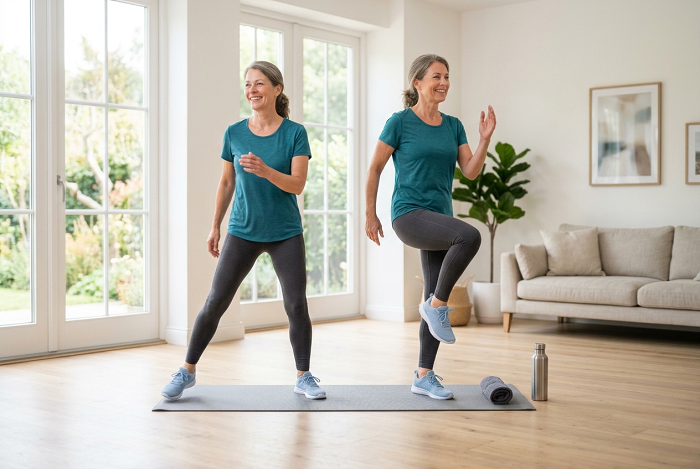
Marching in place is one of the easiest cardio exercises for beginners.
Stand tall with your feet about hip-width apart. Lift one knee, then the other. Swing your arms naturally as you move.
Try marching for 5 to 10 minutes.
To make it harder, lift your knees higher or move your arms faster.
Why it works
Marching raises your heart rate without requiring much space. It is also easy to slow down when you need a break.
This makes it a great choice for beginners or anyone returning to exercise.
2. Step-Touch
Step-touch is another simple low-impact cardio exercise.
Stand with your feet together. Step to one side, bring the other foot toward it, and repeat on the opposite side.
Add gentle arm movements to make the exercise more active.
You can perform step-touch for several minutes while listening to music or watching a workout video.
Make it harder
Try taking wider steps, moving your arms overhead, or increasing your pace.
If you want a lower-impact workout, keep your movements small and controlled.
3. Dancing
Dancing may be one of the most enjoyable ways to do cardio at home.
Put on a few favorite songs and keep moving.
You can dance freely or follow a beginner dance workout online.
There is no need to have perfect technique. The goal is simply to keep your body moving.
Dancing can also make exercise feel less like a workout.
Try this
Create a playlist with five upbeat songs.
Dance for the length of each song. Take a short water break when needed.
By the end, you may have completed a fun 20- to 30-minute cardio session.
4. Jumping Jacks
Jumping jacks are a classic cardio exercise that can quickly raise your heart rate.
Start with your feet together and arms by your sides. Jump or step your feet apart while raising your arms. Return to the starting position.
Repeat at a steady pace.
Low-impact option
You do not have to jump.
Step one foot out at a time while moving your arms. This reduces impact while still keeping you active.
If jumping feels uncomfortable, choose the step version instead.
5. Step-Ups
If you have a stable, secure step that is designed for exercise, step-ups can provide a simple cardio challenge.
Step up with one foot, bring the other foot up, then step back down.
Alternate which foot leads.
Always make sure your surface is stable before using it. Avoid chairs or unstable household furniture.
Why step-ups are useful
Step-ups can raise your heart rate while also challenging the muscles in your legs.
Start slowly and focus on balance and control.
As you become fitter, you can increase the pace or workout time.
6. High-Knee Marching
High-knee marching is a simple way to make marching more challenging.
Stand tall and lift one knee toward your waist or as high as feels comfortable. Lower it and switch sides.
Pump your arms as you move.
You can perform this exercise slowly or at a faster pace.
Beginner tip
Do not worry about lifting your knees very high.
Good form and steady movement are more important than trying to move as fast as possible.
7. Shadow Boxing
Shadow boxing is a fun cardio exercise that requires no equipment.
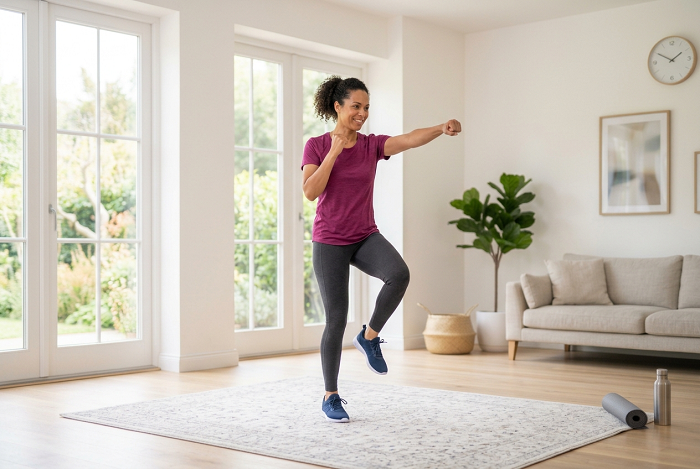
Stand with your feet comfortable and your knees slightly bent. Gently punch forward, alternating arms.
You can add small steps from side to side.
Try combinations such as:
- Left punch
- Right punch
- Left punch
- Right punch
- Step side to side
Keep your movements controlled.
Shadow boxing can make a short workout feel more varied and engaging.
8. Fast Feet
Fast feet are a simple way to add intensity to your home workout.
Stand with your feet slightly apart. Take quick, small steps in place.
Keep your knees slightly bent and your upper body relaxed.
Start with 15 to 20 seconds.
Then rest before repeating.
Low-impact version
Instead of moving as fast as possible, simply increase your marching speed.
This lets you control the intensity based on your fitness level.
9. Stair Walking
If you have safe stairs in your home, walking up and down them can provide a useful cardio workout.
Start slowly.
Walk up at a comfortable pace, then carefully walk back down.
Repeat for a few minutes.
Always use a handrail if needed, and avoid rushing.
If stairs are not comfortable or safe for you, choose another exercise from this list.
10. Low-Impact Skaters
You can create a skater-style movement without jumping.
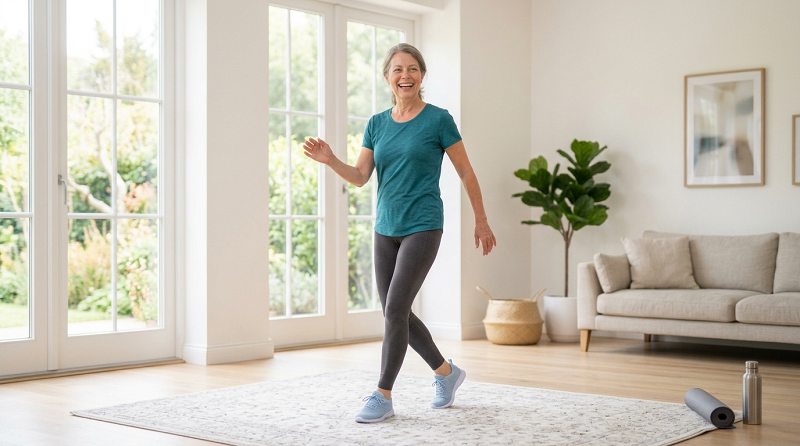
Step to the right and bring your left foot behind you. Then step to the left and bring your right foot behind you.
Move your arms naturally.
This creates a side-to-side cardio movement while keeping the exercise low impact.
As your balance improves, you can make the steps wider or slightly faster.
A Simple 20-Minute Home Cardio Workout
Want to put these exercises together?
Try this beginner-friendly routine.
Warm-up — 5 minutes
Start slowly with:
- Marching in place
- Shoulder rolls
- Easy step-touch
- Gentle arm movements
The goal is to gradually prepare your body for exercise.
Main workout — 12 minutes
Perform each exercise for 40 seconds, followed by 20 seconds of easy movement or rest.
- Marching in place
- Step-touch
- Dancing
- High-knee marching
- Shadow boxing
- Low-impact skaters
Repeat the circuit twice.
Cool-down — 3 minutes
Slow your movements.
Try gentle walking in place followed by relaxed stretching.
Take slow breaths and allow your heart rate to come down gradually.
Remember, this is only an example. You can make the workout shorter or longer based on your current fitness level.
How Often Should You Do Cardio at Home?
There is no need to exercise for hours every day.
For general health, adults should aim for at least 150 minutes of moderate-intensity aerobic activity each week, or 75 minutes of vigorous activity, along with muscle-strengthening activity on at least two days each week.
You could divide 150 minutes into five 30-minute workouts.
Or you could use shorter sessions throughout the day.
For example:
- Monday: 20-minute cardio
- Tuesday: 30-minute walk
- Wednesday: 20-minute cardio
- Thursday: Rest or light activity
- Friday: 30-minute cardio
- Saturday: 30-minute walk or dance
- Sunday: Easy movement or rest
You do not need to follow this exact schedule.
The best routine is one you can maintain.
How to Make Home Cardio Easier
If you are new to exercise, start gently.
You can make almost any cardio exercise easier by:
- Moving more slowly
- Exercising for less time
- Taking longer rest breaks
- Choosing low-impact movements
- Keeping your movements smaller
- Using a chair or wall for balance when appropriate
Do not feel pressured to match someone else’s workout.
Your fitness level is your starting point.
The WHO recommends that inactive adults begin with small amounts of physical activity and gradually increase duration, frequency, and intensity.
How to Make Your Cardio Workout Harder
Once your body gets used to your routine, you can gradually increase the challenge.
Try:
- Exercising for a few extra minutes
- Moving at a faster pace
- Adding another round
- Reducing rest periods
- Using larger movements
- Adding hills or stairs when appropriate
- Mixing moderate and vigorous activities
You do not need to make every workout harder.
Progress should be gradual.
If you suddenly increase your workout volume or intensity, you may feel overly tired or increase your risk of injury.
Cardio Without Jumping
Many people think cardio must involve jumping.
It does not.
Low-impact cardio can still raise your heart rate.
Try these options:
- Marching
- Step-touch
- Dancing
- Side steps
- High-knee marching
- Shadow boxing
- Low-impact skaters
- Walking stairs carefully
Low-impact exercises can be especially useful if you prefer less jumping or want a gentler workout.
The important thing is to find movements that feel comfortable and allow you to stay active.
How to Stay Motivated With Home Workouts
Knowing what to do is one thing.
Doing it regularly is another.
The best way to stay active is to make exercise easier to start.
Set a small goal
Instead of saying, “I need to exercise for an hour,” start with 10 minutes.
Ten minutes may feel much easier.
Once you begin, you may decide to continue.
Use music
Create a workout playlist that makes you want to move.
Music can make dancing, marching, and step workouts more enjoyable.
Schedule your workout
Choose a regular time.
Morning, lunch break, or early evening can all work.
Treat your workout like another important appointment.
Keep it simple
You do not need a complicated routine.
Pick three or four exercises you enjoy and repeat them.
Simple workouts are easier to remember and easier to maintain.
Track your progress
Write down:
- Workout time
- Exercises completed
- Number of sessions
- How you felt afterward
Your goal is not perfection.
Your goal is consistency.
Common Home Cardio Mistakes to Avoid
Even simple workouts can become less effective or less enjoyable when you make them too complicated.
Going too hard too soon
You may feel motivated at the beginning, but doing too much too quickly can leave you sore and tired.
Start at a manageable level.
Skipping the warm-up
A few minutes of easy movement can help prepare your body for exercise.
Start slowly before increasing your pace.
Ignoring pain
There is a difference between normal exercise effort and pain.
Stop if you experience sharp or unusual pain.
If you have concerns about your health or exercise safety, speak with a qualified health professional.
Comparing yourself with others
Your workout does not need to look like someone else’s.
Fitness levels vary.
Focus on your own progress.
Tips for a Safe Home Cardio Workout
Before exercising, make sure you have enough space to move.
Remove objects that could cause you to trip.
Wear comfortable shoes when appropriate.
Keep water nearby, especially during longer workouts or in a hot environment.
Start with a warm-up and finish with a gradual cool-down.
If you have a medical condition, have been inactive for a long time, are pregnant, or are unsure what level of exercise is right for you, consider talking with a health professional before starting a new exercise program.
Most importantly, listen to your body.
Exercise should challenge you, but it should also be something you can recover from.
Can Home Cardio Help With Weight Management?
Regular physical activity can be part of a healthy approach to weight management.
Cardio uses energy and can help increase your overall activity level. However, weight management involves more than exercise alone.
Your eating habits, sleep, stress, daily activity, and other factors can also matter.
Instead of focusing only on the number on the scale, look at other signs of progress.
You may notice:
- Better stamina
- More energy
- Easier movement
- Improved mood
- Better workout endurance
- Greater confidence
- A stronger exercise habit
These changes can be valuable even when the scale does not change quickly.
Make Movement Part of Your Everyday Life
Your workout does not have to be the only time you move.
Look for simple ways to become more active during the day.
For example:
- Walk while talking on the phone.
- Take short movement breaks during work.
- Walk around your home during TV breaks.
- Choose stairs when practical.
- Dance while doing household chores.
- Take a short walk after a meal.
- Stand up and move around every so often.
The WHO emphasizes that all physical activity counts, including movement during transportation, work, household tasks, recreation, and planned exercise.
This is good news.
You do not have to create a perfect fitness routine to become more active.
Every bit of movement can help you build a more active lifestyle.
Looking for more simple ways to add movement to your routine? Check out our guide to 10 easy ways to stay active every day for practical ideas you can use beyond your home cardio workouts.
Your Next Step: Start With 10 Minutes
You do not need a fancy home gym.
You do not need expensive equipment.
You do not need to wait until Monday.
Choose one exercise from this guide and start with 10 minutes today.
Try marching while listening to music. Dance around your living room. Do a short circuit of step-touch, high-knee marching, and shadow boxing.
The goal is not to do everything at once.
The goal is to create a habit you can keep.
According to the CDC, adults can spread their aerobic activity throughout the week and break it into smaller periods rather than doing it all at once.
So start small.
Then build from there.
Conclusion: Easy Cardio Can Start Right at Home
Easy cardio workouts at home can be a practical way to improve your fitness without a gym membership or expensive equipment.
Marching, dancing, step-ups, jumping jacks, shadow boxing, and low-impact movements can all help you get your heart rate up.
The most important part is consistency.
Start with a level that feels manageable. Move regularly. Increase your workout slowly as your fitness improves. And choose activities that you actually enjoy.
Remember, some movement is better than none.
Now it is your turn.
Which home cardio workout will you try first? Share your favorite exercise or your go-to home workout in the comments. And if this guide helped you get moving, share it with someone who could use a simple fitness boost today.