


Every year, a new diet trend seems to take over social media.
One month, everyone is talking about intermittent fasting. The next month, it may be a carnivore diet, keto, a “detox” plan, or an eating schedule based on your body clock.
These diets often make big promises.
Lose weight fast. Burn more fat. Reduce inflammation. Balance your hormones. Improve your energy. Feel younger.
But are new diet trends actually healthy?
The answer is not always simple.
Some modern diet trends are based on ideas that may help certain people. Others can be very restrictive, hard to maintain, or lacking in important nutrients. It can also help with short-term weight loss without being the best choice for long-term health.
The good news is that you do not need to follow every new food trend to eat well.
Research continues to support a few basic ideas: eat plenty of vegetables and fruits, choose whole grains and high-fiber foods, include healthy sources of protein and fats, and limit excess added sugar, sodium, and highly processed foods. The American Heart Association’s updated 2026 guidance also emphasizes these same core principles.
So before you jump onto the next viral diet, it helps to look past the hype.
Let’s explore the most popular diet trends, what the evidence says, and how to tell whether a new diet is truly healthy.
Why Are New Diet Trends So Popular?
This trends spread quickly because they offer simple answers to a complicated problem.
People want to know:
- What should I eat?
- What should I stop eating?
- How much should I eat?
- When should I eat?
- How can I lose weight faster?
A trendy diet often provides a clear set of rules.
That can feel easier than learning about nutrition and building healthy habits over time.
Social media also plays a major role. A person may post a dramatic before-and-after photo and credit one specific diet. Another person may share a video claiming that a certain food is “toxic” or that another food can “melt fat.”
The problem is that personal stories are not the same as scientific evidence.
One person’s results do not tell us how a diet will affect millions of people.
The American Heart Association has noted that misinformation about popular diets has become a serious issue, while research-based eating patterns such as Mediterranean and DASH-style diets have stronger support for long-term heart health.
This is why it is important to ask a better question.
Instead of asking, “Is this diet popular?”
Ask:
“Does this eating pattern provide the nutrients my body needs, and can I follow it for years?”
That question can help you separate a useful diet strategy from a short-lived trend.
What Makes a Diet Actually Healthy?
A healthy diet does not need to be perfect.
It needs to provide enough nutrients while supporting your health, energy, and daily life.
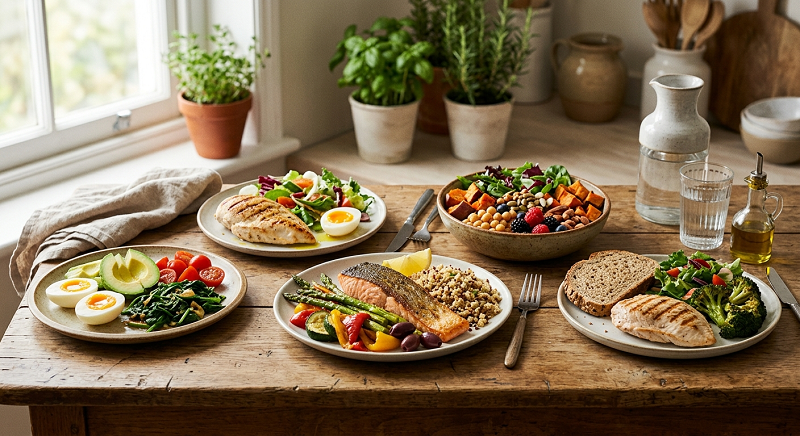
A healthy eating pattern usually includes:
- Plenty of vegetables and fruits
- Whole grains and other high-fiber foods
- Healthy sources of protein
- Beans, lentils, nuts, and seeds
- Healthy unsaturated fats
- Enough water
- Limited added sugars
- Limited excess sodium
- Fewer foods high in saturated fat
- Mostly minimally processed foods
The CDC recommends including a variety of protein foods, vegetables, fruits, healthy fats, and fiber-rich whole grains while limiting added sugars, saturated fat, and highly processed foods.
Notice something important.
These recommendations do not require a magic food.
They also do not require you to remove every carbohydrate, every grain, or every food you enjoy.
Instead, they focus on the overall quality of your eating pattern.
That is a major difference between a healthy diet and a fad diet.
The Rise of Intermittent Fasting
Intermittent fasting has become one of the most popular diet trends in recent years.
The basic idea is simple.
Instead of focusing only on what you eat, intermittent fasting focuses on when you eat.
Common approaches include eating during a limited number of hours each day or fasting on certain days of the week.
For some people, this approach may make it easier to reduce overall food intake. It may also help create a more organized eating routine.
But intermittent fasting is not a magic weight-loss solution.
Is Intermittent Fasting Healthy?
It depends on the person and how it is done.
If a shorter eating window helps someone eat a balanced diet and avoid constant snacking, it may be useful.
But if fasting causes someone to skip nutritious meals, overeat later, feel weak, or become overly focused on food, it may not be a good fit.
Research on time-restricted eating is still developing. The American Heart Association has noted that there is not yet clear evidence that restricting eating times improves long-term cardiovascular health, and the quality of the foods people eat remains very important.
The lesson is simple:
When you eat matters, but what you eat still matters greatly.
Who Should Be Careful With Fasting?
Fasting may not be appropriate for everyone.
People who are pregnant or breastfeeding, people with certain medical conditions, people taking medications that affect blood sugar, and people with a history of eating disorders should speak with a qualified health professional before trying a fasting plan.
If fasting makes you feel unwell, it is not something you need to force.
Is the Keto Diet Actually Healthy?
The ketogenic diet, or keto diet, is another trend that has attracted a huge following.
Keto is very low in carbohydrates and high in fat. It changes the way the body gets much of its energy.
Some people lose weight while following keto.
That does not automatically mean that keto is the healthiest diet for long-term use.
The American Heart Association has found that Mediterranean and DASH-style eating patterns align more closely with its heart-health recommendations than very-low-carbohydrate ketogenic patterns.
Why Does Keto Help Some People Lose Weight?
One reason may be that keto reduces the number of foods people commonly eat.
When bread, sweets, sugary drinks, many grains, and other carbohydrate-rich foods are removed, calorie intake may fall.
The diet can also increase fullness for some people.
But weight loss is not the same thing as overall health.
It should also provide enough fiber, vitamins, minerals, and other nutrients.
Very restrictive keto diets can make this harder.
Long-term safety data for ketogenic diets remain limited, and reported concerns can include nutrient deficiencies, digestive problems, kidney stones, and changes in blood lipids.
That does not mean keto is automatically dangerous.
It means that it should not be treated as a universal diet that everyone needs to follow.
What About the Carnivore Diet?
The carnivore diet takes restriction even further.
It focuses almost entirely on animal foods such as meat, fish, eggs, and sometimes dairy.
Supporters often claim that removing plant foods can improve digestion, energy, weight, or other health concerns.
But the long-term evidence is still limited.
A 2026 scoping review of the available human research found only a small number of studies and noted concerns about possible nutrient deficiencies, low fiber intake, and increases in LDL and total cholesterol in some people.
That is important because fiber is found mainly in plant foods.
Fiber supports normal digestion and is linked with many aspects of good health.
Fruits, vegetables, beans, lentils, nuts, seeds, and whole grains also provide a wide range of vitamins, minerals, and plant compounds.
Removing all or most of these foods creates a nutritional challenge.
Does Eating More Meat Make a Diet Healthier?
Not necessarily.
Protein is important, but more protein does not automatically mean better health.
A balanced diet can include protein from:
- Fish
- Poultry
- Eggs
- Beans
- Lentils
- Soy
- Nuts
- Seeds
- Dairy products
The better question is not simply, “How much protein am I eating?”
It is:
“Where is my protein coming from, and what other nutrients come with it?”
A serving of beans, for example, provides protein and fiber. Nuts provide protein along with healthy fats. Fish can provide protein and beneficial fats.
Variety matters.
What Is the “Anti-Inflammatory” Diet Trend?
Another popular trend is the anti-inflammatory diet.
This idea has some reasonable nutrition principles behind it.
Eating patterns that emphasize vegetables, fruits, whole grains, nuts, seeds, fish, and healthy oils can support overall health.
However, there is no single official “anti-inflammatory diet.”
Harvard Health notes that anti-inflammatory eating is better understood as a general eating pattern rather than one strict diet with a fixed menu.
A practical approach is to focus on foods that are naturally rich in nutrients.
Try adding:
- Leafy green vegetables
- Berries and other fruits
- Beans and lentils
- Whole grains
- Nuts and seeds
- Fatty fish
- Olive oil
- Herbs and spices
At the same time, reduce your intake of foods that are high in added sugar, excess sodium, and unhealthy fats.
You do not need to buy expensive “anti-inflammatory” powders or special foods.
Real food can be a great starting point.
Are Detox Diets Healthy?
Detox diets are another trend that returns again and again.
They may involve juices, teas, supplements, fasting, or very low-calorie eating.
The promise is usually that these products or diets will “flush toxins” from the body.
But your body already has systems that remove waste.
Your liver and kidneys play major roles in processing and removing substances your body does not need.
A short juice cleanse may also lead to temporary weight loss because you are consuming fewer calories.
But losing water or food weight is not the same as losing body fat.
Very restrictive detox plans may also leave you short on protein, fiber, and important nutrients.
Instead of searching for a quick cleanse, focus on the basics:
Eat well, drink enough water, sleep well, move your body, and give your body time to work.
What About the “No Ultra-Processed Foods” Trend?
This trend has a stronger nutrition foundation than many other viral diets.
Research has raised concerns about diets high in ultra-processed foods, especially foods that are high in added sugar, sodium, saturated fat, and calories while providing few nutrients.
But there is an important detail.
“Processed” does not always mean “bad.”
Freezing vegetables is processing.
Canning beans is processing.
Making yogurt is processing.
Whole-grain bread is processed.
Processing can make food safer, easier to store, and easier to prepare.
The bigger issue is the nutritional quality of the food.
For example, a can of beans with little added sodium can be a useful part of a healthy diet.
A sugary drink may be heavily processed and provide very little nutritional value.
So instead of trying to eliminate every packaged food, look at the whole picture.
A Better Way to Think About Processed Foods
Ask:
- Does this food provide useful nutrients?
- Is it high in added sugar?
- Is it high in sodium?
- Does it provide fiber?
- Does it contain healthy protein or fats?
- How often am I eating it?
- What food is it replacing?
These questions are more useful than simply asking whether a food came from a package.
Is the Mediterranean Diet Still Healthy?
While it may not feel as exciting as the latest viral diet, the Mediterranean diet has remained popular for a reason.
It is based on a broad pattern of eating rather than strict food rules.
A Mediterranean-style diet commonly emphasizes:
- Vegetables
- Fruits
- Whole grains
- Beans and legumes
- Nuts and seeds
- Olive oil
- Fish
- Moderate amounts of poultry and dairy
- Smaller amounts of red and processed meat
The American Heart Association supports a Mediterranean-style eating pattern as part of a heart-healthy diet.
Harvard’s Nutrition Source also notes that research supports the health benefits of the overall Mediterranean dietary pattern rather than one individual food.
That is an important point.
Healthy eating is rarely about one “superfood.”
It is about what you eat most of the time.
What Is the DASH Diet?
DASH stands for Dietary Approaches to Stop Hypertension.
It was designed to help support healthy blood pressure.
But its benefits can go beyond blood pressure.
The DASH eating pattern emphasizes:
- Vegetables
- Fruits
- Whole grains
- Beans
- Nuts
- Seeds
- Fish
- Poultry
- Low-fat dairy
- Healthy oils
It also limits foods high in sodium, saturated fat, and added sugars.
Research funded by the National Heart, Lung, and Blood Institute has found that DASH can lower blood pressure, improve cholesterol levels, support healthy weight loss, and reduce the risk of certain chronic diseases.
Unlike many trendy diets, DASH does not require eliminating an entire major food group.
That makes it easier to adapt to everyday life.
You can read the official NHLBI DASH Eating Plan for more detailed guidance.
Why Restrictive Diets Can Be Hard to Maintain
Imagine a diet that tells you to stop eating bread.
At first, you may be motivated.
But then you attend a family dinner.
There is fresh bread on the table.
You love it.
You eat some.
Then you feel guilty.
That can create an unhealthy cycle.
Very strict diets may make people feel that they have failed when they eat foods outside the rules.
Healthy eating does not have to work that way.
A sustainable eating pattern should allow room for real life.
Birthdays happen.
Vacations happen.
Family meals happen.
Busy days happen.
You can enjoy foods that are less nutritious while still maintaining a healthy overall diet.
The goal is not perfection.
The goal is consistency.
The Biggest Problem With Many New Diet Trends
One of the biggest problems is that they focus on a single idea.
Eat more protein.
Eat fewer carbs.
Eat only meat.
Fast for 16 hours.
Avoid all processed food.
Drink a special tea.
Avoid sugar completely.
One simple rule can sound powerful.
But your body needs many different nutrients.
Health is also affected by more than food.
Sleep, physical activity, stress, genetics, age, medical history, and other factors all matter.
A diet that ignores these factors can create unrealistic expectations.
7 Questions to Ask Before Trying a New Diet
Before you follow the latest diet trend, stop and ask these questions.
1. Does the diet have good scientific evidence?
Look beyond social media.
Search for research from respected medical organizations, universities, and government health agencies.
Personal testimonials can be interesting, but they are not strong evidence.
2. Does it provide enough nutrients?
A healthy diet should provide protein, fiber, vitamins, minerals, healthy fats, and other nutrients.
If an eating plan removes several food groups, ask what nutrients may be missing.
3. Is it extremely restrictive?
Be careful when a diet says you can never eat a large category of foods.
Extreme rules can make a diet harder to maintain.
4. Can you follow it for years?
Do not ask only whether you can follow the diet for two weeks.
Ask whether you can still follow it two years from now.
That is a much better test.
5. Does it fit your lifestyle?
A healthy eating plan should fit your budget, culture, schedule, cooking skills, and food preferences.
The best diet on paper is not useful if you cannot live with it.
6. Does it promise extremely fast results?
Be skeptical of claims such as:
- “Lose 20 pounds in two weeks.”
- “Burn fat while you sleep.”
- “Detox your entire body.”
- “Never exercise again.”
- “Eat this one food to cure everything.”
Big promises need strong evidence.
7. What happens when you stop?
This question is often ignored.
If you lose weight only while following a very strict diet, what happens afterward?
A healthy eating pattern should help you build habits that remain useful even when you are no longer following a formal “diet.”
How to Make Any Diet Healthier
You do not always have to throw away an eating plan completely.
You can often improve it.
For example, if you enjoy a lower-carb diet, choose more vegetables, beans, nuts, seeds, fish, and healthy oils rather than relying mainly on processed meats and high-saturated-fat foods.
If you practice intermittent fasting, focus on nutrient-rich meals during your eating window.
If you like high-protein eating, include plant-based protein sources and high-fiber foods.
If you follow a Mediterranean-style diet, keep the focus on the overall pattern rather than expensive specialty products.
The goal is to take the useful parts and avoid the extreme parts.
A Simple Healthy Eating Formula
You do not need a complicated meal plan.
A simple plate can work.
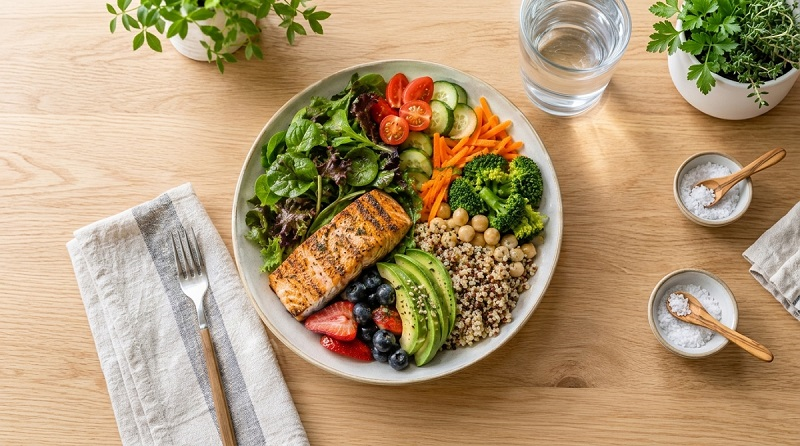
Try making about half your plate vegetables and fruit, then add a source of protein and a high-fiber carbohydrate or whole grain.
For example:
Breakfast:
Oatmeal with berries, nuts, and plain yogurt.
Lunch:
Grilled fish or chicken with brown rice and mixed vegetables.
Snack:
Fruit with a small handful of nuts.
Dinner:
Beans or lean protein with vegetables and a whole grain.
Drink:
Water most of the time.
This is not a “trendy” diet.
That is part of its strength.
It is simple.
It is flexible.
And it can be adapted to many cultures and budgets.
Healthy Eating Does Not Mean Eating Perfectly
One unhealthy meal will not destroy your health.
One healthy meal will not fix everything.
What matters most is your overall pattern.
Think about your diet as a weekly or monthly picture rather than judging yourself based on one meal.
If you eat vegetables today, that is a good step.
If you eat pizza tomorrow, enjoy it.
Then return to your normal healthy habits.
This approach is often easier to maintain than an all-or-nothing mindset.
The Best Diet May Be the One You Can Sustain
There is no single diet that is perfect for every person.
Someone may feel comfortable eating Mediterranean-style meals.
Another person may prefer a vegetarian pattern.
Someone else may benefit from the structure of DASH.
The important question is whether the eating pattern supports your nutritional needs and long-term health.
The American Heart Association’s 2026 dietary guidance emphasizes a broad pattern that includes vegetables and fruits, whole grains, healthy protein sources, unsaturated fats, minimally processed foods, and lower amounts of added sugars, sodium, and saturated fats.
That gives us a useful framework.
You do not need to chase every new diet.
Instead, build your diet around foods that have stood the test of time.
How to Spot a Diet Red Flag
Be especially careful when a diet:
- Promises instant or dramatic results
- Claims to work for everyone
- Says doctors are hiding the “truth”
- Depends on expensive supplements
- Eliminates many foods without a clear reason
- Uses fear to sell products
- Relies mostly on testimonials
- Says exercise is unnecessary
- Claims one food can cure multiple health problems
- Has no clear explanation of how nutrients are supplied
A healthy diet does not need secret ingredients.
It should be understandable.
It should be realistic.
And it should be supported by credible evidence.
What Should You Eat More Often?
If you are confused by all the diet trends, start here.
Try adding more:
Vegetables
Choose different colors and types.
Fresh, frozen, and low-sodium canned vegetables can all fit into a healthy diet.
Fruits
Whole fruit provides fiber and many useful nutrients.
Choose a variety rather than relying on one “superfruit.”
Whole Grains
Oats, brown rice, whole-grain bread, quinoa, and other whole grains can provide fiber and nutrients.
Beans and Lentils
These foods can provide both protein and fiber.
They are also often affordable.
Nuts and Seeds
They provide healthy fats, protein, and other nutrients.
Because they are calorie-dense, portions still matter.
Fish
Fish can be a useful source of protein and healthy fats.
Healthy Oils
Olive and other non-tropical plant oils can be useful alternatives to fats high in saturated fat.
Water
Do not underestimate the basics.
Water should usually be your main drink.
If you’re looking for simple ways to improve your diet without following a strict food trend, start with the basics. Choosing more vegetables, fruits, whole grains, beans, nuts, seeds, and other nutrient-rich foods can help you build a balanced eating pattern. For more practical ideas, explore our guide to healthy everyday foods for energy, digestion, and wellness.
What Should You Limit?
You do not have to fear food.
But it can help to limit foods and drinks that provide lots of calories without many useful nutrients.
Pay attention to:
- Sugary drinks
- Excess added sugar
- Highly processed snack foods
- Processed meats
- Foods very high in sodium
- Foods high in saturated fat
- Large portions of calorie-dense foods
The goal is not to ban these foods forever.
It is to make them a smaller part of your overall diet.
So, Are New Diet Trends Actually Healthy?
Sometimes.
But popularity is not proof of health.
Some trends borrow useful ideas from established nutrition science. Others take one idea and push it to an extreme.
Intermittent fasting may help some people manage their eating schedule.
Keto may lead to weight loss for some people, but it can also be restrictive and may create nutritional challenges.
The carnivore diet is highly restrictive, and long-term evidence remains limited.
Anti-inflammatory eating can encourage nutritious food choices, but it does not need to be a complicated or expensive program.
Reducing low-quality ultra-processed foods can be useful, but “processed” does not automatically mean unhealthy.
Meanwhile, eating patterns such as Mediterranean and DASH have strong support from major health organizations.
The common thread is clear.
Healthy eating is more about the overall pattern than following the newest diet trend.
A Better Goal Than “Going on a Diet”
Instead of saying:
“I need to start a new diet.”
Try saying:
“I want to improve the way I eat.”
That small change can make a big difference.
You are no longer looking for a temporary fix.
You are building habits.
Start with one change.
Add a vegetable to dinner.
Replace a sugary drink with water.
Choose whole grains more often.
Add beans to one meal.
Eat fruit instead of a highly processed snack.
Cook one more meal at home each week.
Small changes can become lasting habits.

Final Thoughts: Don’t Chase Every New Diet Trend
So, are new diet trends actually healthy?
Some can have useful ideas. But many are not backed by enough long-term evidence to justify the bold claims made online.
The healthiest approach is usually less exciting—but much more practical.
Eat a wide variety of nutrient-rich foods.
Get plenty of vegetables and fruits.
Choose whole grains and high-fiber foods.
Include healthy protein.
Choose unsaturated fats more often.
Limit excess added sugar and sodium.
Reduce your intake of low-quality ultra-processed foods.
And choose an eating pattern you can actually maintain.
You can explore evidence-based guidance from the American Heart Association and the Harvard T.H. Chan School of Public Health Nutrition Source for more information.
Most importantly, do not feel pressured to follow every diet that becomes popular online.
Your health does not need a viral trend.
It needs habits that work in real life.
What diet trend have you tried—or considered trying—and what was your experience? Share your thoughts in the comments. Your experience may help someone else make a more informed choice.