


Living a healthier life does not mean changing everything at once. You do not need a strict diet, long workouts, or a perfect morning routine.
Real health often comes from small choices made again and again.
What you eat, how much you move, how well you sleep, and how you handle stress can all shape how you feel each day. A simple daily health checklist can help you stay on track without making healthy living feel hard.
The good news is that many healthy habits are simple. You can drink more water, add vegetables to your meals, take a walk, get enough sleep, and make time to relax. These small actions can add up over time.
This daily checklist for a healthier life gives you practical habits that you can use every day. Pick a few to start, then build from there.
Why a Daily Health Checklist Matters
Busy days can make it easy to forget the basics.
You may skip breakfast, sit for hours, grab fast food, stay up too late, or spend little time moving. Doing these things once is not usually a problem. The bigger issue is when they become daily habits.
A checklist gives your day some structure.
It helps you remember the habits that support your physical and mental well-being. It also lets you focus on progress instead of perfection.
The World Health Organization recommends healthy eating, regular physical activity, enough sleep, avoiding tobacco, and staying connected with others as important parts of self-care.
Your checklist does not have to be long. Even a few healthy actions can make your day better.
Your Daily Checklist for a Healthier Life
Use the following habits as a simple guide. You can save this list, print it, or keep it on your phone.
Daily Health Checklist
- ☐ Drink water throughout the day
- ☐ Eat a balanced diet
- ☐ Include fruits and vegetables
- ☐ Choose healthy sources of protein
- ☐ Move your body
- ☐ Take breaks from sitting
- ☐ Get some fresh air and daylight
- ☐ Make time to relax
- ☐ Connect with someone you care about
- ☐ Limit highly processed foods and sugary drinks
- ☐ Avoid smoking and tobacco
- ☐ Get enough quality sleep
Now, let’s look at each habit in more detail.
1. Start Your Day With Water
One of the easiest healthy habits is also one of the simplest: drink water.
Your body needs water for many normal functions. Water helps support digestion, temperature control, and other body processes.
You do not need to force yourself to drink huge amounts at once. Instead, keep water nearby and drink regularly throughout the day.
Try starting your morning with a glass of water. Then carry a reusable bottle when you go to work, school, or run errands.
Simple ways to drink more water
- Keep a water bottle on your desk.
- Drink water with meals.
- Have water after physical activity.
- Choose water instead of sugary drinks more often.
- Add slices of lemon, lime, or fruit if you prefer more flavor.
Your hydration needs can vary based on factors such as activity, climate, and individual health needs. Listen to your body and follow advice from your health professional if you have a condition that affects fluid intake.
2. Eat a Balanced Breakfast
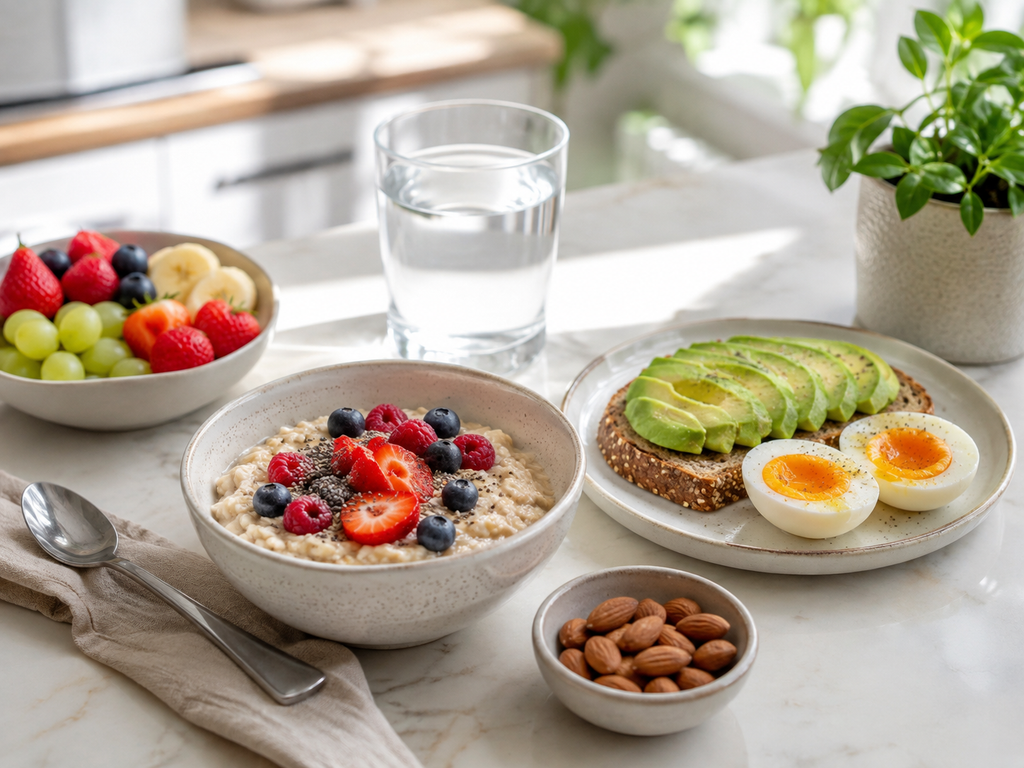
A healthy day often starts with a healthy meal.
Breakfast does not need to be complicated. The goal is to choose foods that provide useful nutrients and help keep you satisfied.
Try combining protein, fiber-rich carbohydrates, fruits or vegetables, and healthy fats.
Easy healthy breakfast ideas
- Oatmeal with berries and nuts
- Eggs with vegetables and whole-grain toast
- Plain yogurt with fruit and seeds
- A vegetable omelet
- A smoothie with fruit, yogurt, and vegetables
A balanced breakfast can also help you avoid reaching for sugary snacks when hunger hits later.
If you are not hungry in the morning, you do not have to force yourself to eat a large meal. Focus on your overall eating pattern throughout the day.
3. Make Fruits and Vegetables Part of Every Day
Fruits and vegetables are an important part of a healthy diet.
They provide vitamins, minerals, fiber, and other nutrients. The WHO recommends that people older than 10 aim for at least 400 grams of fruits and vegetables per day.
You do not have to eat the same foods every day.
Try different colors and types. Variety can make healthy eating more enjoyable while giving you a wider range of nutrients.
Easy ways to eat more vegetables and fruit
- Add berries or bananas to breakfast.
- Keep fruit where you can see it.
- Add leafy greens to sandwiches.
- Include vegetables in soups and stir-fries.
- Keep cut vegetables ready for snacks.
- Add frozen vegetables to quick meals.
Fresh produce is great, but frozen and canned options can also be useful. When buying canned foods, look for options without added sugar or with less sodium when possible.
4. Choose Better Sources of Protein
Protein helps support muscles and many other body functions.
You can get protein from both plant and animal foods. Good choices may include fish, eggs, poultry, beans, lentils, tofu, yogurt, nuts, and seeds.
Try to include a protein source in your main meals.
Healthy protein ideas
Animal sources:
- Fish
- Eggs
- Chicken
- Plain yogurt
- Milk
Plant sources:
- Beans
- Lentils
- Chickpeas
- Tofu
- Nuts
- Seeds
You do not need to follow a complicated eating plan. Focus on variety and choose nutritious foods that fit your lifestyle.
The WHO notes that a healthy diet should be varied and balanced, with foods such as whole grains, vegetables, fruits, legumes, nuts, and other nutritious foods forming important parts of the diet.
5. Move Your Body Every Day

Exercise is one of the most important habits on your daily health checklist.
But exercise does not have to mean spending an hour at the gym.
Walking, cycling, dancing, swimming, gardening, playing with your children, and doing household tasks can all involve physical activity.
For adults, WHO recommends 150–300 minutes of moderate aerobic activity per week, or an equivalent amount of vigorous activity. Adults should also include muscle-strengthening activities at least two days each week.
Make movement easier
Try:
- Taking a 10-minute walk after a meal
- Using the stairs when practical
- Walking while talking on the phone
- Stretching during work breaks
- Dancing to your favorite songs
- Doing simple strength exercises at home
- Walking instead of driving for short trips when practical
If you are currently inactive, start small. Some movement is better than none, and you can gradually increase your activity.
6. Take Breaks From Sitting
You can exercise regularly and still spend many hours sitting.
Long periods of sedentary behavior are common when you work at a desk, drive often, or spend a lot of time watching screens.
Try breaking up long periods of sitting.
Try the 30-minute movement reminder
Set a reminder to:
- Stand up.
- Stretch.
- Walk around your home or office.
- Refill your water bottle.
- Do a few simple movements.
These short breaks can help you add more movement to your day.
The goal is not to sit perfectly or avoid sitting completely. Instead, look for simple chances to move more often.
7. Get Some Daylight and Fresh Air
Spending time outside can be a simple way to add movement and a change of scenery to your day.
A short morning walk can combine several healthy habits at once. You get movement, fresh air, and natural light while giving yourself a break from screens.
You might:
- Walk around your neighborhood.
- Sit outside during a break.
- Eat lunch outdoors.
- Take a short evening walk.
- Spend time gardening.
You do not need an expensive fitness program to become more active. Everyday movement counts. WHO includes activities such as walking, cycling, household tasks, and active transportation as physical activity.
8. Eat More Whole and Minimally Processed Foods
Healthy eating is not about labeling every food as “good” or “bad.”
Instead, focus on the overall pattern of your diet.
Build most meals around nutritious foods such as:
- Vegetables
- Fruits
- Whole grains
- Beans and lentils
- Fish and other lean protein
- Nuts and seeds
- Healthy sources of unsaturated fats
The WHO recommends a varied diet based largely on minimally processed and unprocessed foods while limiting excess free sugars, salt, and unhealthy fats.
This does not mean you can never enjoy pizza, dessert, chips, or other treats.
A healthy lifestyle can include foods you enjoy. The key is balance and moderation.
9. Give Your Mind Time to Rest

Physical health is only part of a healthier life.
Your mental and emotional well-being matter too.
Daily responsibilities can create stress. Work, family duties, money concerns, social pressure, and constant notifications can leave you feeling overwhelmed.
Make time for small moments of calm.
Simple stress-relief habits
- Take slow, deep breaths.
- Read a few pages of a book.
- Listen to relaxing music.
- Spend time outdoors.
- Write down your thoughts.
- Practice gentle stretching.
- Turn off unnecessary notifications.
- Spend a few quiet minutes without your phone.
You do not need a long meditation session for every break to count. Even a few minutes can give you a chance to pause and reset.
10. Stay Connected With People You Care About
Healthy living is not only about food and exercise.
Social connection can also be an important part of well-being.
Make time to talk with family members, friends, coworkers, or people in your community.
It could be a phone call, a shared meal, a short walk, or a simple message.
Add connection to your daily routine
Try:
- Calling a friend.
- Eating a meal with family.
- Checking in with someone who matters to you.
- Joining a group or community activity.
- Having a conversation without looking at your phone.
You do not need a large social circle. A few meaningful relationships can make a difference.
WHO includes connecting with others among healthy self-care practices.
11. Avoid Tobacco and Limit Harmful Habits
If you smoke or use tobacco, quitting is one of the most valuable steps you can take for your health.
Tobacco use increases the risk of serious diseases, including heart disease, stroke, and cancer.
If quitting feels difficult, do not think of it as a failure if you need several attempts.
Consider asking a healthcare professional for support and using proven quit-smoking resources.
It is also helpful to be mindful of alcohol use. WHO identifies avoiding alcohol consumption among lifestyle choices that can support health and well-being.
12. Make Sleep a Daily Priority

Sleep is not wasted time.
It is an important part of taking care of your body and mind.
Most adults need at least seven hours of sleep each night, according to the CDC.
Poor sleep can make it harder to focus, manage emotions, and function well during the day.
Build a better sleep routine
Try to:
- Go to bed at a similar time each night.
- Wake up around the same time each morning.
- Create a relaxing bedtime routine.
- Keep your bedroom comfortable and quiet.
- Reduce screen use before bed.
- Get natural light during the day.
- Stay physically active during the day.
You do not need a perfect sleep routine. Start by making your bedtime and wake-up times more consistent.
A Simple Morning Health Checklist
Your morning can set the tone for the rest of your day.
Try this simple routine:
☐ Drink water
☐ Eat a nutritious breakfast if you prefer breakfast
☐ Get some natural light
☐ Move or stretch
☐ Decide on one healthy goal for the day
Your goal could be as simple as, “I will take a 20-minute walk today.”
Small goals are easier to follow than huge plans.
A Simple Afternoon Health Checklist
Afternoons can be busy, so keep your checklist practical.
☐ Drink water
☐ Eat a balanced lunch
☐ Include vegetables or fruit
☐ Stand and move regularly
☐ Take a short mental break
☐ Avoid relying on sugary drinks for energy
If you feel tired, do not automatically assume you need more caffeine or sugar. Consider whether you need food, water, movement, fresh air, or rest.
A Simple Evening Health Checklist
Your evening is a chance to slow down.
☐ Eat a balanced dinner
☐ Take a short walk if practical
☐ Spend time with family or friends
☐ Limit unnecessary screen time
☐ Prepare for tomorrow
☐ Follow a relaxing bedtime routine
☐ Aim for enough sleep
A calm evening can make it easier to get into bed on time and start the next day feeling prepared.
How to Make Healthy Habits Stick
Knowing what to do is one thing. Doing it every day is another.
The secret is to make healthy habits easy.
Do not try to change your entire life overnight.
Start with two or three habits.
For example:
Week 1: Drink more water and take a daily walk.
Week 2: Add more vegetables to your meals.
Week 3: Create a regular bedtime.
Week 4: Add strength training twice a week.
This approach gives you time to adjust.
Use habit stacking
Habit stacking means connecting a new habit to something you already do.
For example:
- After brushing your teeth → stretch for two minutes.
- After lunch → take a 10-minute walk.
- After dinner → prepare tomorrow’s water bottle.
- Before bed → put your phone away and read.
When a healthy habit becomes part of an existing routine, it can feel more natural.
Building a healthier lifestyle starts with small, consistent actions. For more practical ideas, check out our guide to simple healthy habits to practice every day.
Do Not Aim for a Perfect Day
One of the biggest mistakes people make is expecting perfection.
Maybe you miss your workout.
Maybe you eat fast food.
Maybe you stay up too late.
That does not mean your healthy lifestyle is ruined.
One unhealthy choice does not define your health.
Simply return to your routine at the next opportunity.
Think about your habits across weeks and months rather than judging yourself based on one day.
Healthy living is a long-term process.
Your Printable Daily Health Checklist
Here is a simple version you can use every day:
Morning
☐ Drink water
☐ Eat a balanced meal if hungry
☐ Get natural light
☐ Stretch or move
☐ Set one healthy goal
During the Day
☐ Eat fruits and vegetables
☐ Choose nutritious protein
☐ Drink water regularly
☐ Move your body
☐ Take breaks from sitting
☐ Take time to relax
☐ Connect with someone
Evening
☐ Eat a balanced dinner
☐ Limit highly processed foods
☐ Avoid tobacco
☐ Prepare for tomorrow
☐ Reduce unnecessary screen time
☐ Follow a calming bedtime routine
☐ Get enough sleep
The Bottom Line: Small Habits Create a Healthier Life
A healthier life does not require a perfect routine.
It starts with simple choices that you can repeat.
Drink water. Eat nutritious foods. Move your body. Take breaks. Get enough sleep. Manage stress. Stay connected. Avoid tobacco. Make time for yourself.
These habits may seem small, but they can become powerful when practiced consistently.
The best daily checklist for a healthier life is one you can actually follow.
So do not try to change everything today.
Choose three habits from this checklist and start there. Once they become easier, add another.
Your health is built one choice, one meal, one walk, and one night of good sleep at a time.
What healthy habit will you check off first today? Share your goal in the comments and inspire someone else to take the next step toward a healthier life.