

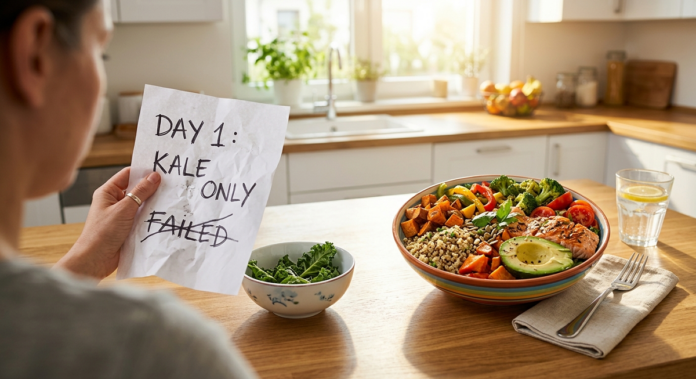
Have you ever started a new diet with high hopes, only to quit a few weeks later? You buy fresh groceries. You count every calorie. You say no to your favorite foods. But then, life happens. You get busy, stressed, or hungry. Before you know it, you are back to your old eating habits.
If this sounds familiar, you are not alone. Millions of people go through this exact cycle every year. They start a strict meal plan, lose a few pounds, and then gain it all back.
Here is the truth: you are not the problem. The diet is.
Most popular diets are built for quick fixes, not long-term success. They ask you to fight your body instead of working with it. In this guide, we will look at why most diets fail, the biology behind weight gain, and simple habits you can build today to achieve lasting health.
The Hidden Mechanics of Dieting: Why 95% of Diets Fail
Why do so many people struggle with dieting? The simple answer is that standard diets do not fit real life. When you restrict your eating too much, your brain and body kick into survival mode.
1. Extreme Restriction Triggers the “Starvation Mode”
When you slash your daily food intake, your body does not know you are trying to fit into a new pair of jeans. It thinks food is scarce. To protect you, your body slows down your metabolic rate to burn fewer calories.
At the same time, your brain boosts production of ghrelin, the hormone that makes you feel hungry. It also lowers leptin, the hormone that signals when you are full. This biological push forces you to crave high-calorie foods. Fighting your own biology with willpower alone is an uphill battle you will eventually lose.
While extreme restriction often fails over time, popular plans work for some in the short term. If you are exploring low-carb options, read our complete guide to the keto diet to see if it fits your long-term goals.
2. The “All-or-Nothing” Mindset Drives Binge Eating
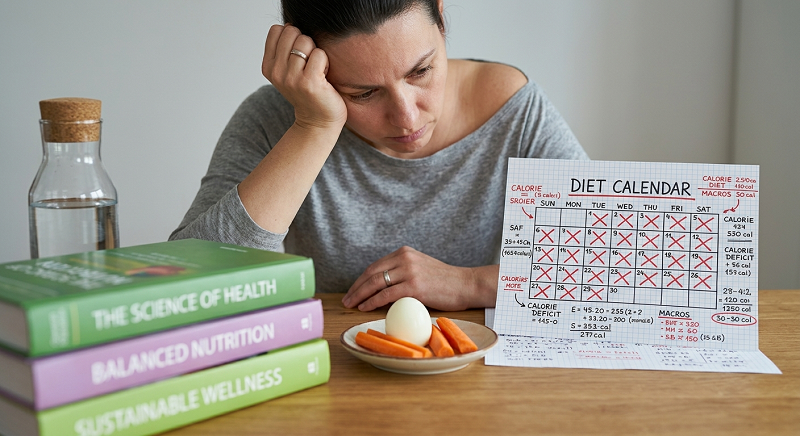
Most popular diets divide food into two categories: “good” and “bad.” When you label a food as bad, you naturally want it more.
If you eat a single slice of pizza on a strict diet, you might think, “I already ruined my diet, so I might as well eat the whole box.” This black-and-white thinking creates a damaging cycle:
- Phase 1: Strict rule-following and low energy.
- Phase 2: Intense cravings for forbidden foods.
- Phase 3: Overeating and feelings of guilt.
- Phase 4: Starting a new strict diet to make up for it.
3. Diets Focus on Short-Term Wins Instead of Long-Term Habits
A diet is treated like a temporary trip. You “go on” a diet, and once you reach your goal, you “go off” it.
When you return to your old habits, the weight returns too. Real, lasting change requires a lifestyle shift, not a temporary trick. According to research from the National Institutes of Health (NIH)
, long-term weight maintenance depends on consistent behavioral habits rather than short-term calorie cuts.
Diet Culture vs. Sustainable Habits
To break free from the weight-loss rollercoaster, you need to understand how quick-fix diets compare to steady, sustainable lifestyle changes.
| Feature | Fad Diets & Quick Fixes | Sustainable Lifestyle Habits |
| Primary Focus | Rapid weight loss in weeks | Long-term health and energy |
| Food Choices | Bans major food groups or macros | Includes all foods in moderation |
| Hunger Levels | High; relies on fighting appetite | Low; relies on dense, full foods |
| Flexibility | Rigid rules; hard to social eat | Adaptable to travel and events |
| Long-Term Success | Very low (high weight regain rate) | High (supports lifelong maintenance) |
What to Do Instead: 5 Steps to Lasting Health
If strict diets do not work, what does? The answer lies in building simple, healthy routines that you enjoy. Here are five practical steps you can start taking today.
Step 1: Shift to Nutrient-Dense Whole Foods
Instead of cutting out foods, focus on adding healthy options to your plate. Whole foods keep you full longer because they contain fiber, protein, and water.
When cutting out entire food groups, cravings for quick energy hit hardest. Understanding how sugar impacts your body and slows fat loss helps you make smarter swaps without feeling deprived.
- Prioritize Protein: Eat lean meats, fish, eggs, tofu, or beans with every meal. Protein preserves muscle tissue and keeps hunger at bay.
- Load Up on Fiber: Vegetables, fruits, whole grains, and legumes slow down digestion. Aim for half your plate to be colorful vegetables.
- Choose Healthy Fats: Avocados, nuts, seeds, and olive oil keep your joints healthy and make your meals taste great.
The Centers for Disease Control and Prevention (CDC)
notes that dropping just 1 to 2 pounds per week is the gold standard for keeping weight off permanently.
Step 2: Practice Mindful Eating
Many people eat while watching TV, working at a desk, or scrolling through their phones. When you eat while distracted, your brain misses the signals that tell you you are full.
To practice mindful eating:
- Turn off screens during mealtime.
- Put your fork down between bites.
- Chew your food slowly and enjoy the flavors.
- Stop eating when you feel about 80% full.
Step 3: Build Muscle with Resistance Training

When people cut calories without exercising, they often lose muscle along with fat. Muscle tissue burns more calories at rest than fat tissue does.
Adding simple strength training to your week helps keep your metabolism strong:
- Try bodyweight moves like squats, push-ups, and lunges.
- Use light dumbbells or resistance bands 2 to 3 times per week.
- Take daily walks to stay active without adding excess physical stress.
You don’t need a heavy gym routine to protect your metabolic rate. Incorporating simple full-body exercises for a stronger body 2 to 3 times a week is enough to build lean muscle mass.
Step 4: Prioritize Sleep and Stress Management
Weight loss is not just about food and exercise; sleep and stress play massive roles too.
When you get fewer than seven hours of sleep, your body produces more ghrelin and less leptin. Chronic stress releases cortisol, a hormone linked to increased abdominal fat storage.
- Aim for 7 to 9 hours of quality sleep each night.
- Keep your bedroom cool, dark, and quiet.
- Practice deep breathing, meditation, or light stretching daily to keep stress levels low.
Step 5: Follow the 80/20 Rule
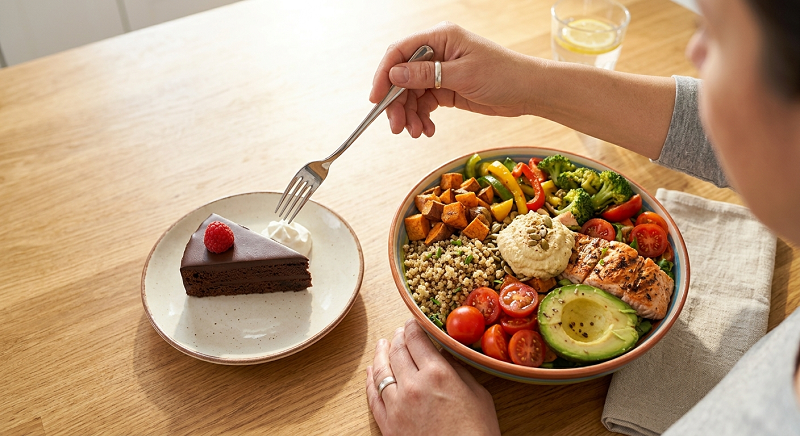
Rigid rules breed frustration. The 80/20 rule gives you room to live your life while still reaching your health goals.
- 80% of the time: Eat whole, nutrient-dense foods that nourish your body.
- 20% of the time: Enjoy your favorite treats—like a slice of birthday cake or a night out with friends—without guilt.
Action Plan for Long-Term Success
Changing your life does not happen overnight. Use this simple schedule to build healthy routines step by step.
Weeks 1–2: Master Hydration and Sleep
Phase 1
Drink a large glass of water every morning when you wake up. Set a firm bedtime to ensure you get at least 7 hours of rest each night.
Weeks 3–4: Build Balanced Plates
Phase 2
Focus on adding a palm-sized portion of protein and a fist-sized portion of vegetables to your lunch and dinner plates.
Weeks 5–6: Add Daily Movement
Phase 3
Aim for 8,000 to 10,000 steps per day. Add two 20-minute bodyweight or resistance band workouts each week.
Weeks 7–8: Practice Mindful Eating
Phase 4
Remove screens from mealtime. Slow down your eating speed and listen closely to your body’s full signals.
Frequently Asked Questions About Dieting
How fast should I expect to lose weight?
Safe, sustainable weight loss typically averages 1 to 2 pounds per week. Losing weight faster often means you are losing water weight or muscle tissue rather than fat tissue.
Can I lose weight without exercise?
Yes, weight loss comes down to energy balance. However, exercise helps preserve your muscle tissue, keeps your metabolism healthy, and improves your overall heart health.
Do I need to count calories to succeed?
Not necessarily. While tracking calories can raise awareness, focusing on food quality, portion sizes, and internal hunger cues works well for long-term health.
Final Thoughts: Ditch the Diet, Build a Life
Diets fail because they demand perfection in an imperfect world. True health isn’t about skipping meals, cutting out entire food groups, or feeling guilty after eating a meal you love.
By shifting your focus to whole foods, strength training, quality sleep, and consistency, you can reach your goals without the frustration of fad diets. Small, steady changes add up to big results over time.
What is the hardest part about sticking to a healthy routine for you? Have you tried the 80/20 approach before? Share your thoughts and stories in the comments below!