

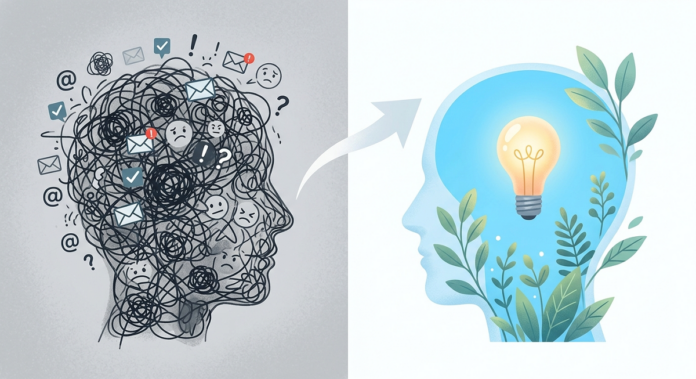
Have you ever felt like your brain has too many tabs open at once? Your heart speeds up. Your shoulders feel tight. You have a long to-do list, but you cannot figure out where to begin.
This feeling is called overwhelm, and it is completely normal.
According to data from the National Institute of Mental Health (NIMH), nearly 1 in 5 adults in the United States experiences an anxiety disorder each year. Stress affects almost everyone at some point. When life throws too much at you at once, your body goes into overdrive.
The good news? You do not have to stay trapped in that frantic state. You can learn how to quiet your thoughts, reset your nervous system, and find your focus again.
In this guide, you will learn easy, science-backed ways to calm your mind when life feels like too much.
What Happens to Your Body When You Feel Overwhelmed?
To fix overwhelm, it helps to know what causes it.
When you face too many demands, your brain senses danger. It does not care if the danger is a wild animal or a inbox full of emails. It triggers your fight-or-flight response.
When this happens, your body releases stress hormones like cortisol and adrenaline:
- Your heart beats faster to pump blood to your muscles.
- Your breathing gets shallow and quick.
- Your muscle groups tense up, preparing for action.
- Your executive function shuts down, making simple choices feel hard.
This reaction kept our ancestors safe from real danger. But in modern life, it can make everyday tasks feel impossible. The key to relief is sending a clear sign to your brain that you are safe right now.
Step 1: Fast Ways to Stop an Anxiety Spiral
When your thoughts are racing, you need fast tools to break the loop. These simple physical hacks act like a emergency brake for your nervous system.
1. Practice the 5-4-3-2-1 Grounding Method

Grounding brings your mind back to the present moment. It stops you from worrying about the future or dwelling on the past.
Look around your room and list:
- 5 things you can see: A blue mug, a houseplant, a cloud outside, your shoe, a picture frame.
- 4 things you can feel: Your feet on the floor, the texture of your jeans, the cool air on your skin, a smooth desk.
- 3 things you can hear: The hum of the fridge, birds outside, traffic in the distance.
- 2 things you can smell: Fresh coffee, hand lotion, or fresh laundry.
- 1 thing you can taste: A sip of water, gum, or the taste of your lunch.
This simple exercise forces your brain to shift focus from internal panic to external reality.
2. Use Box Breathing for Quick Stress Relief
Your breath is the most direct tool you have to control your autonomic nervous system. Slow, deliberate breathing activates your parasympathetic nervous system (your “rest and digest” system).
Try Box Breathing, a technique used by Navy SEALs to stay calm under pressure:
- Inhale through your nose for 4 seconds.
- Hold your breath for 4 seconds.
- Exhale slowly through your mouth for 4 seconds.
- Hold empty for 4 seconds.
Repeat this cycle 4 or 5 times. You will feel your heart rate drop almost right away.
3. Change Your Body Temperature
A fast way to reset a racing mind is through the mammalian dive reflex. When cold water touches your face, your heart rate slows down automatically.
- Splash cold water on your face.
- Hold an ice cube in your hand.
- Place a cool, damp cloth on the back of your neck.
This physical shock interrupts anxiety loops instantly.
Step 2: Clear the Mental Clutter

Once your body starts to settle down, you need to address the mental traffic jam causing your overwhelm.
1. Do a “Brain Dump”
Trying to hold everything in your head causes immense mental fatigue. Get a blank sheet of paper and write down every single thing on your mind.
Do not worry about neatness, order, or grammar. Just write:
- Work deadlines and projects
- Errands you need to run
- Unpaid bills
- Random worries or fears
Getting your thoughts out of your head and onto paper lowers cognitive load. It makes invisible stress visible and manageable.
2. Try the Eisenhower Matrix to Prioritize Tasks
Once your brain dump is on paper, look at the items. You cannot do everything today, and that is okay. Use the simple Eisenhower Matrix model to sort your list into four quick categories:
| Priority Category | What It Means | Action Plan |
| Urgent & Important | Fire drills with real, immediate costs | Do these first. |
| Important, Not Urgent | Long-term goals, self-care, core projects | Schedule a specific time for them. |
| Urgent, Not Important | Interruptions, non-essential requests | Delegate or simplify if possible. |
| Not Urgent & Not Important | Distractions, low-value busywork | Delete them from your list entirely. |
Focusing on just 1 to 3 “Do First” items removes the pressure to fix everything at once.
3. Take the Next Small Step
Overwhelm makes simple projects look like giant mountains. The fix is to make your next step as small as possible.
Instead of writing “Clean the entire house,” change your goal to “Put away three items on the desk.”
Instead of “Write the full monthly report,” aim for “Open a blank document and write one title.”
Starting creates momentum. Once you take one micro-step, the next step becomes much easier.
Step 3: Set Better Boundaries to Protect Your Energy
You cannot calm your mind if you keep taking on more tasks than you can handle. Preventing overwhelm requires setting smart personal boundaries.
1. Say “No” Without Feeling Guilty
Every time you say “yes” to something small, you say “no” to your own peace of mind. You do not need long excuses to turn down a request.
Here are simple, polite ways to protect your time:
- “Thank you for thinking of me, but I do not have the bandwidth for this right now.”
- “I am fully booked this week, but I can check back with you next month.”
- “I cannot take on a new task right now without dropping another priority.”
2. Take a Break from Digital Noise
Constant notifications, news updates, and social media feeds keep your nervous system on high alert.
To give your brain room to breathe:
- Turn off non-essential notifications on your phone.
- Keep your phone out of the bedroom overnight.
- Schedule a 30-minute tech-free window every morning or evening.
The American Psychological Association (APA) reports that constant connection to digital devices directly contributes to higher stress levels in adults. Giving yourself regular screen breaks acts as a shield against digital fatigue.
Step 4: Build Daily Habits for Long-Term Mental Calm

Stopping acute stress is essential, but preventing overwhelm requires a proactive lifestyle. Focusing on building daily healthy habits helps strengthen your nervous system so stress doesn’t catch you off guard.
Here are three core routines to help build long-term mental resilience:
1. Move Your Body Daily
Physical exercise is one of the most reliable ways to process stress hormones. You do not need intense gym sessions to see benefits—a simple 20-minute daily walk outdoors lowers cortisol levels significantly.
Exercise releases endorphins, the natural chemicals in your brain that lift mood and calm tension.
2. Create Simple Morning and Evening Routines
Chaos at the start or end of your day sets a stressful tone. Establish simple routines to create predictable anchors for your mind:
- In the morning: Drink a glass of water, step outside for natural sunlight, and review your top priorities before checking your phone.
- In the evening: Dim lights early, write down tomorrow’s to-do list to clear your head, and read a book before bed.
Predictable routines reduce decision fatigue, saving your mental energy for what truly matters.
3. Practice Mindfulness and Meditation
Mindfulness is simply paying attention to the present moment without judgment. Research published by high-authority health sources like the Mayo Clinic confirms that regular mindfulness practices reduce anxiety, improve focus, and build stress resilience.
You do not need to sit still for hours. Starting with just 3 to 5 minutes of guided meditation using apps like Headspace or Calm can retrain how your brain responds to daily pressure.
Frequently Asked Questions About Mental Overwhelm
How do I know if I am stressed or completely overwhelmed?
Stress usually involves feeling like there is too much work, but you believe you can manage it if you push through. Overwhelm happens when you feel completely defeated, paralyzed, or unable to figure out where to start.
Can physical health issues cause mental overwhelm?
Yes. Lack of sleep, poor nutrition, dehydration, and underlying conditions like thyroid imbalance or burnout directly lower your ability to handle everyday stress.
When should I seek professional help for overwhelm?
If overwhelming feelings persist for weeks, interfere with daily functioning, affect sleep regularly, or cause feelings of hopelessness, reach out to a licensed counselor or mental health professional. Organizations like the Substance Abuse and Mental Health Services Administration (SAMHSA) offer free resources and helplines to find professional support.
Final Thoughts: Take Control of Your Peace Today
Feeling overwhelmed does not mean you are weak or failing. It simply means you have been carrying too much for too long.
When your mind starts to feel cluttered and chaotic, pause. Take a deep breath, put your feet flat on the floor, and choose one small action step from this guide to take back control.
Now, we want to hear from you! What is your favorite way to reset when life gets too busy? Do you prefer quick breathing exercises, going for a walk, or doing a brain dump on paper?
Drop a comment below and share your thoughts. Your tip might be exactly what someone else needs to read today!