

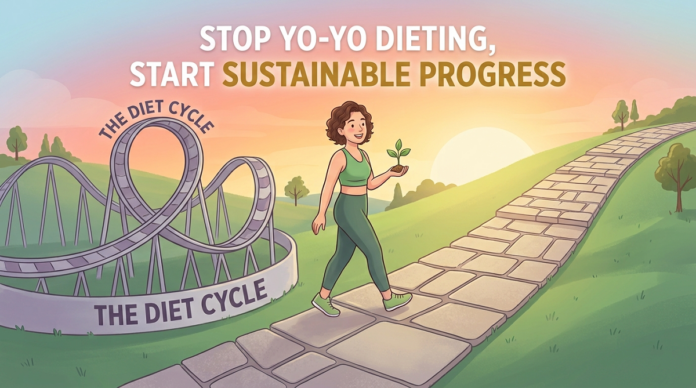
Have you ever lost 15 pounds for a summer trip, only to gain back 20 pounds a few months later?
If that sounds like your life, you are not alone. Millions of people get stuck on this daily roller coaster. It is called yo-yo dieting, or weight cycling. You drop calories low, feel tired and hungry, lose weight, and then regain it all the moment life gets busy.
It feels frustrating, exhausting, and confusing. You might feel like you lack willpower. But here is the secret: The problem is not you. The problem is the diet.
Fad diets are built for fast results, not long-term success. They ask you to cut out major food groups or survive on liquid shakes. When you cannot stick to those hard rules forever, the weight comes right back.
It is time to throw away the quick fixes. In this step-by-step guide, you will learn how to stop yo-yo dieting, protect your health, and lose weight in a way that fits your real life.
What Is Yo-Yo Dieting and Why Is It Hazardous?
Yo-yo dieting happens when you repeatedly lose and regain weight over time. You hop on a new diet, lose weight quickly, stop the diet, and put the weight back on. Soon, the cycle starts all over again.
This constant shift is not just tough on your mind. It also strains your body in ways you might not see right away.
The Physical Hazards of Weight Cycling
When you lose weight quickly on a crash diet, your body does not just burn fat. It also breaks down precious lean muscle.
Muscle is like an engine that burns calories all day, even when you sleep. Less muscle means a slower metabolic rate. When you gain weight back, you usually gain back fat, not muscle. Over time, you end up with a higher percentage of body fat than when you started.
According to health guidelines from the Centers for Disease Control and Prevention (CDC), gradual and steady weight loss gives you the best chance to keep weight off long term. Fast loss often leads to:
- Slower Metabolism: Your body tries to save energy because it thinks food is scarce.
- Hormone Imbalance: Your hunger hormone (ghrelin) goes up, while your fullness hormone (leptin) drops.
- Heart and Metabolic Stress: Constant shifts in body weight can raise your blood pressure and strain your cardiovascular system.
The Mental Toll of the Diet Cycle
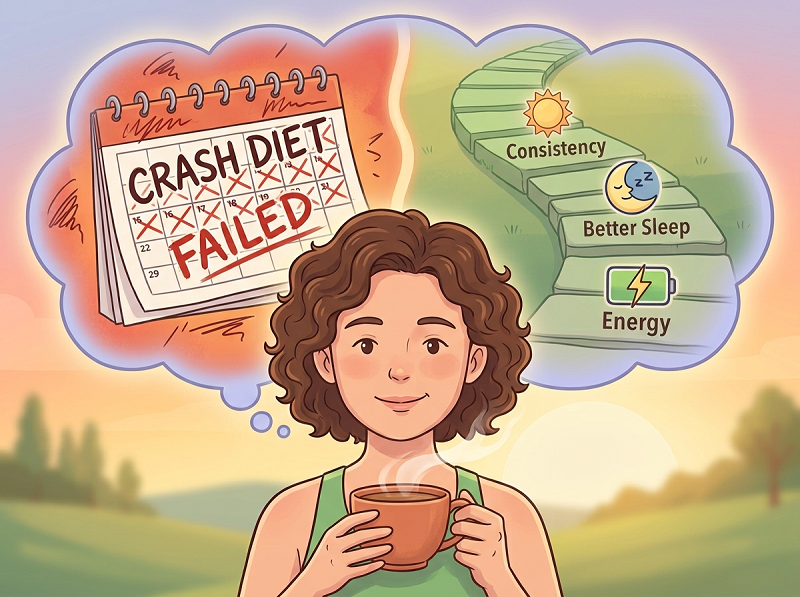
The physical toll is only half the battle. Weight cycling also hurts your mental health and relationship with food.
- Guilt and Shame: You blame yourself when a diet fails, even though the diet was flawed from the start.
- All-or-Nothing Thinking: You view foods as strictly “good” or “bad.” Eating one “bad” food makes you feel like giving up completely.
- Loss of Trust: You lose touch with your body’s natural signs of hunger and fullness.
The Root Causes: Why Do Quick Diets Fail?
To stop yo-yo dieting, you must know why extreme plans fail in the first place. Most popular diets rely on simple tricks that are impossible to keep up over time.
Extreme Calorie Restrictive Diets Are Unusable
Your body needs a basic level of energy to breathe, pump blood, and keep your organs working. Extremely low-calorie plans act like an emergency brake on your system.
When you do not eat enough, your brain sends strong hunger signals. You might feel irritable, weak, or obsessed with thoughts of food. Eventually, biological drive wins, leading to overeating or bingeing.
Cutting Out Whole Food Groups Creates Cravings
Diets that ban carbs, fats, or entire groups of food often backfire. Carbs supply energy for your brain and muscles. Healthy fats keep your hormones balanced and help you feel full.
When you ban foods you love, you create psychological resistance. Banning a food makes you want it even more.
Quick Fixes Target Water, Not Fat
When you cut carbs sharply, your body burns stored carbohydrates called glycogen. Glycogen holds onto water.
When you lose five pounds in the first three days of a quick diet, most of that loss is water weight, not body fat. As soon as you eat a normal meal, that water weight returns, leaving you discouraged.
When you cut back on processed treats, paying attention to hidden sugars is crucial. Learn more about how sugar affects your body and slows down fat loss to make smarter food swaps.
5 Practical Steps to Stop Yo-Yo Dieting Forever
Ready to break the weight-loss loop for good? You do not need a new diet. You need a simple lifestyle shift. Here are five practical steps to build habits that last.
1. Shift Your Mindset From Fast Results to Lasting Habits
Stop treating weight loss like a short sprint. View it as a lifelong walk. Focus on habits you can stick with for five or ten years, not just five or ten days.
- Set Action Goals: Instead of saying “I want to lose 10 pounds this month,” say “I will walk 30 minutes four days a week.”
- Celebrate Small Wins: Progress is not just a lower scale number. Better sleep, more energy, and stronger workouts are huge wins too.
- Ditch Perfection: One high-calorie meal will not ruin your progress. Simply pick right back up with your next planned meal.
Focusing on daily wellness routines builds momentum. Check out these 10 things healthy people do every day to complement your sustainable weight loss journey.
2. Aim for Slow, Steady Weight Loss
Fast weight loss feels exciting, but slow weight loss lasts. The Harvard T.H. Chan School of Public Health highlights that small, steady changes in diet and daily movement are easier to maintain over time.
Target a gentle weight loss rate of 0.5 to 2 pounds per week. This rate protects your lean muscle, keeps your energy steady, and prevents extreme hunger.
To reach this goal, create a small calorie deficit. Eating just 300 to 500 calories less than your daily maintenance level is often enough to see steady results without feeling starved.
3. Build Meals Around Protein, Fiber, and Healthy Fats
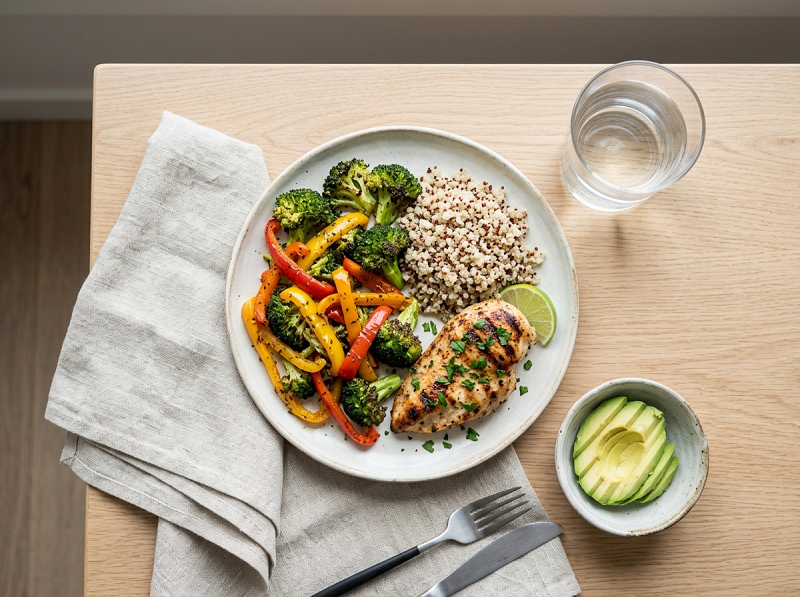
Instead of focusing on what to remove from your plate, focus on what to add. Nutrient-dense foods keep you satisfied and nourish your body.
| Food Group | Why You Need It | Great Options |
| Lean Protein | Protects muscle, boosts satiety, burns calories during digestion | Chicken breast, tofu, eggs, Greek yogurt, fish, lentils |
| High-Fiber Foods | Slows digestion, keeps blood sugar steady, aids gut health | Vegetables, berries, beans, oats, whole grains |
| Healthy Fats | Supports hormone balance, helps absorb vitamins, adds flavor | Avocados, olive oil, almonds, walnuts, seeds |
Use the Plate Method to simplify your meal prep:
- Fill half your plate with colorful vegetables or salad greens.
- Fill one-quarter of your plate with lean protein.
- Fill one-quarter of your plate with complex carbs (like quinoa, brown rice, or sweet potatoes).
- Add a small thumb-sized portion of healthy fats.
4. Lift Weights to Protect Your Metabolism
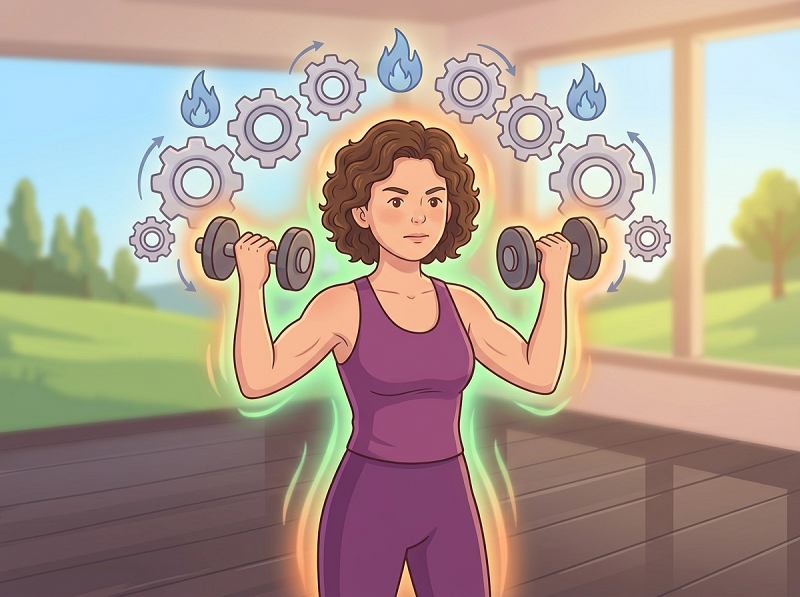
Cardio exercises like running and cycling are great for your heart, but strength training is essential for sustainable weight loss.
Lifting weights or doing bodyweight exercises tells your body to keep its muscle while burning fat. Research tracked by the National Weight Control Registry shows that long-term successful weight maintainers make daily physical activity a central habit.
- Start Simple: Aim for 2 to 3 strength sessions per week.
- Focus on Full-Body Movements: Exercises like squats, lunges, push-ups, and rows work multiple muscle groups at once.
- Increase Challenge Over Time: Gradually add more weight or repetitions as you get stronger.
You don’t need hours in the gym to maintain lean muscle—start with these 10 must-try exercises for a stronger body to boost your metabolic rate naturally.
5. Practice Mindful and Intuitive Eating
Mindful eating means paying full attention to your food without distractions like phones or televisions. It helps you reconnect with your body’s true cues.
- Eat Slowly: It takes about 20 minutes for your brain to receive the signal that your stomach is full.
- Rate Your Hunger: Before eating, rate your hunger on a scale of 1 to 10. Eat when you hit a 3 or 4 (hungry, but not starving). Stop when you reach a 6 or 7 (satisfied, but not stuffed).
- Enjoy Every Bite: Taste your food, notice the textures, and appreciate your meal. Food is a source of joy as well as fuel.
How to Manage Slip-Ups Without Giving Up
Every weight loss journey has bumps along the road. Vacations, holidays, stressful work weeks, and social events happen. A slip-up only becomes permanent if you let it throw you completely off track.
Ditch the “All-or-Nothing” Trap
Imagine driving down the highway and getting a flat tire. Would you slash the other three tires in frustration? Of course not! You would repair the flat and keep driving.
Treat your diet the same way. If you overeat at lunch, do not throw away the whole day. Do not skip dinner to punish yourself. Simply eat a balanced, nutrient-dense meal for dinner and move on.
Handle Emotional Eating with Skill
Food often becomes a coping tool for stress, boredom, sadness, or fatigue. While eating might comfort you for a few minutes, it does not fix the root issue.
When you feel an urge to emotional eating, try the HALT Check:
- H – Am I actually Hungry?
- A – Am I feeling Angry or anxious?
- L – Am I feeling Lonely?
- T – Am I simply Tired?
If you are not physically hungry, try an activity that lowers stress without food. Take a ten-minute walk, call a close friend, drink a warm cup of herbal tea, or practice deep breathing.
Sleep and Stress: The Hidden Factors in Weight Control
You can eat a clean diet and exercise daily, but if your sleep and stress are out of balance, sustainable weight loss will remain difficult.
Sleep Loss Disrupts Hunger Hormones
Getting less than seven hours of sleep per night throws your appetite hormones out of balance:
- Ghrelin Increases: This hormone tells you to eat. Higher levels make you feel hungry all day.
- Leptin Decreases: This hormone signals fullness. Lower levels make it harder to feel satisfied after a normal meal.
- Craving High-Calorie Foods: A tired brain seeks quick energy, driving cravings for sugary, high-fat foods.
Aim for 7 to 9 hours of quality sleep every night. Keep your bedroom cool, dark, and free of screen light before bed.
Chronic Stress Promotes Fat Storage
When you experience stress, your body releases a hormone called cortisol. High cortisol levels over time can increase your appetite and lead to fat storage, particularly around your midsection.
Build daily habits to lower stress:
- Practice 5 minutes of deep breathing every morning.
- Spend time outside in natural sunlight.
- Set firm boundaries with work hours and screen time.
- Engage in hobbies that relax you, like reading or gardening.
FAQs: Sustainable Weight Loss Cleared Up
Q: Is it bad if I lose weight very slowly?
A: Not at all! Slow weight loss is actually a sign that you are building sustainable habits. Losing 0.5 pounds a week equals 26 pounds lost in a year—and you are far more likely to keep that weight off forever.
Q: Can I still eat my favorite treats while losing weight?
A: Yes! Total restriction leads to intense cravings and eventual bingeing. Use the 80/20 rule: get 80% of your daily energy from nutrient-dense whole foods, and leave 20% for fun treats you enjoy.
Q: How do I know if I am losing fat and not muscle?
A: Pay attention to how your clothes fit and how your energy feels, not just the scale number. If you are strength training, eating enough protein, and losing inches around your waist while maintaining your strength, you are losing fat.
Take Control of Your Health Today
Stopping the yo-yo diet cycle is not about finding more willpower. It is about choosing a path built on self-care, simple nutrition, and patience.
When you nourish your body with real food, move in ways you enjoy, and give yourself time to adapt, weight loss becomes a natural side effect of a healthier life.
Pick one small step from this guide to focus on this week. You might choose to drink an extra glass of water, add a protein source to your breakfast, or go to bed 30 minutes earlier. Small steps taken consistently lead to massive results over time.
Now, we would love to hear from you! What is the biggest challenge you face when trying to build long-term healthy habits? Have you tried any of these strategies before? Leave a comment below and join the discussion!