

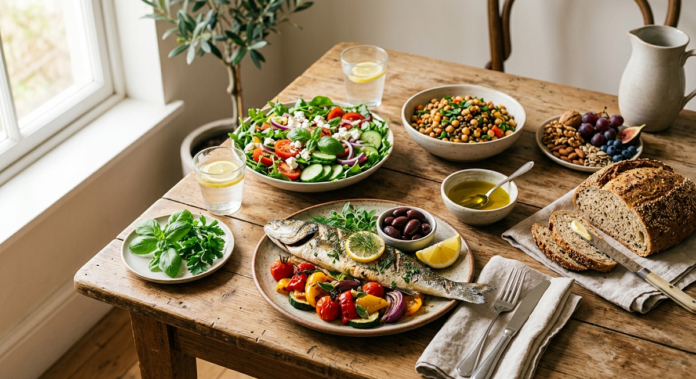
The Mediterranean diet is one of the simplest ways to improve the quality of your diet without following strict rules or giving up enjoyable food.
Instead of focusing on counting every calorie, this eating style focuses on vegetables, fruits, whole grains, beans, nuts, seeds, fish, olive oil, and other minimally processed foods. It also encourages eating less processed meat, added sugar, and highly processed foods.
The best part? You do not need to live near the Mediterranean Sea to follow this style of eating.
You can use the basic ideas at home, with foods you already enjoy and foods that are easy to find.
Research has linked the Mediterranean diet with better heart health and a lower risk of several chronic diseases.
If you are new to this way of eating, don’t worry. You do not need to change everything overnight.
This beginner’s guide will show you what the Mediterranean diet is, what foods to eat, what foods to limit, its possible health benefits, and how to create simple Mediterranean-style meals.
What Is the Mediterranean Diet?
The Mediterranean diet is based on traditional eating patterns found in countries around the Mediterranean Sea.
There is no single Mediterranean diet. Food choices differ from one country and region to another. However, most versions share a focus on plant foods, healthy fats, whole grains, beans, fish, and minimally processed foods.
A typical Mediterranean-style diet includes:
- Plenty of vegetables
- Fresh fruits
- Whole grains
- Beans and lentils
- Nuts and seeds
- Olive oil
- Fish and seafood
- Moderate amounts of poultry
- Some dairy foods
- Small amounts of red meat
- Limited sweets and highly processed foods
Olive oil is often used as the main added fat. Fish and seafood are commonly eaten, while red and processed meats are eaten less often.
The goal is not perfection.
Instead, the Mediterranean diet is about creating a healthy eating pattern that you can enjoy and follow for the long term.
Why Is the Mediterranean Diet So Popular?
Many diets promise fast results. Some require strict meal plans, special products, or large food restrictions.
The Mediterranean diet takes a different approach.
It focuses on quality, variety, and balance.
You can eat flavorful foods while still making healthy choices. Herbs, spices, garlic, onions, lemon, tomatoes, olive oil, and fresh vegetables can add plenty of flavor without relying heavily on processed sauces.
The diet is also flexible.
You do not have to follow a perfect menu every day. You can adjust meals based on your budget, culture, location, and personal taste.
This flexibility may make it easier to follow than highly restrictive diets.
The American Heart Association recognizes the Mediterranean-style pattern as a healthy dietary pattern that emphasizes vegetables, fruits, whole grains, beans, nuts, fish, and healthy sources of unsaturated fat.
Mediterranean Diet Food List for Beginners
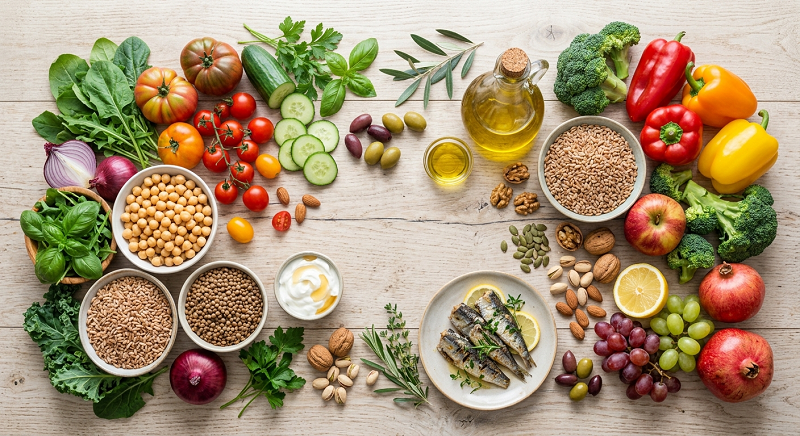
Knowing what to eat is one of the easiest ways to get started.
Think of your grocery cart as your first step toward a Mediterranean-style diet.
1. Vegetables
Vegetables should make up a large part of your meals.
Try to eat a variety of colors throughout the week.
Good choices include:
- Spinach
- Broccoli
- Carrots
- Tomatoes
- Bell peppers
- Cabbage
- Eggplant
- Cucumbers
- Green beans
- Mushrooms
- Onions
- Leafy greens
Fresh, frozen, or canned vegetables can all work.
If you use canned vegetables, choose options with little or no added sodium when possible.
Simple tip
Add vegetables to foods you already eat.
Put spinach in eggs, add tomatoes to sandwiches, mix vegetables into rice dishes, or serve roasted vegetables with fish.
Small changes can add up.
2. Fruits
Fruit is another important part of the Mediterranean diet.
Choose whole fruit more often than fruit juice. Whole fruit provides fiber and can be more filling.
Good choices include:
- Apples
- Oranges
- Bananas
- Berries
- Grapes
- Pears
- Melons
- Mangoes
- Papaya
- Pineapple
You can eat fruit as a snack or add it to breakfast.
For example, try plain yogurt with berries and a small handful of nuts.
3. Whole Grains
Whole grains provide carbohydrates, fiber, vitamins, and minerals.
Instead of making refined grains the main part of your diet, try choosing whole-grain options more often.
Examples include:
- Oats
- Brown rice
- Whole-grain bread
- Whole-wheat pasta
- Barley
- Quinoa
- Whole-grain cereals
You do not have to completely avoid white rice or other refined grains.
A practical approach is to slowly replace some refined grains with whole grains.
4. Beans and Legumes
Beans and legumes are excellent Mediterranean diet staples.
They provide plant protein and fiber and can be inexpensive.
Try:
- Chickpeas
- Lentils
- Black beans
- Kidney beans
- White beans
- Green peas
You can add beans to soups, salads, rice dishes, wraps, or vegetable meals.
For beginners, beans are an easy way to eat more plant-based protein without giving up satisfying meals.
5. Nuts and Seeds
Nuts and seeds provide healthy fats, protein, fiber, and other nutrients.
Good choices include:
- Almonds
- Walnuts
- Pistachios
- Cashews
- Chia seeds
- Flaxseeds
- Pumpkin seeds
- Sunflower seeds
Because nuts and seeds are energy-dense, you do not need large amounts.
A small handful can be enough for a snack or topping.
Choose unsalted or lightly salted varieties when possible.
6. Olive Oil
Extra-virgin olive oil is a well-known part of the Mediterranean diet.
It can be used for:
- Salad dressings
- Roasted vegetables
- Cooking
- Marinades
- Grain bowls
- Dips
Olive oil is still a source of calories, so more is not always better.
Use it as a replacement for less healthy fats rather than simply adding more fat to your diet.
7. Fish and Seafood
Fish is an important protein source in many Mediterranean-style eating patterns.
Options include:
- Salmon
- Sardines
- Tuna
- Mackerel
- Trout
- Shrimp
- Other local fish
Fish can be grilled, baked, steamed, or added to salads and grain bowls.
Try choosing fish instead of processed meat when possible.
8. Dairy and Poultry
Dairy products can be included in moderate amounts.
Examples include:
- Plain yogurt
- Cheese
- Milk
Poultry such as chicken and turkey can also fit into the diet.
The focus is on balance rather than completely removing these foods.
What Foods Should You Limit?
The Mediterranean diet is not about creating a huge list of forbidden foods.
Instead, it encourages you to eat some foods less often.
Try to limit:
- Processed meats
- Large amounts of red meat
- Sugary drinks
- Candy
- Cakes and pastries
- Highly processed snacks
- Refined grains
- Foods high in added sugar
- Foods high in saturated fat
- Highly processed foods
The American Heart Association’s current dietary guidance also emphasizes minimally processed foods, vegetables, fruits, whole grains, healthy protein sources, unsaturated fats, and lower intake of added sugars and sodium.
What about alcohol?
Alcohol is not required for a Mediterranean diet.
If you do not drink alcohol, there is no health reason to start. Current heart-health guidance advises people who do not drink not to begin drinking for potential health benefits.
Mediterranean Diet Benefits: What Does the Science Say?
One reason the Mediterranean diet has received so much attention is the amount of research behind it.
Studies have found associations between greater adherence to the Mediterranean diet and better cardiovascular health, lower risk of some chronic diseases, and improved overall health outcomes.
However, it is important to understand that a healthy diet is not a cure for disease.
Your overall lifestyle matters too.
1. May Support Heart Health
Heart health is one of the strongest reasons people choose the Mediterranean diet.
The diet emphasizes vegetables, fruits, whole grains, beans, fish, nuts, and unsaturated fats while reducing highly processed foods and processed meats.
A review of randomized controlled trials found evidence that Mediterranean dietary patterns can reduce cardiovascular risk compared with usual care, although the strength of evidence varies across outcomes.
2. May Help Support Healthy Blood Sugar
The Mediterranean diet contains many foods that provide fiber, including vegetables, fruits, beans, whole grains, nuts, and seeds.
Fiber can help slow digestion and may support better blood sugar control.
The overall dietary pattern has also been associated with better metabolic health in research.
Still, people with diabetes or other medical conditions should work with a qualified health professional when making major dietary changes.
3. May Support Healthy Weight Management
The Mediterranean diet is not a strict weight-loss diet.
However, its focus on vegetables, fruit, beans, whole grains, nuts, and other nutrient-rich foods can help create satisfying meals.
Replacing highly processed snacks and sugary drinks with whole foods may also improve overall diet quality.
For weight management, portion size and total energy intake still matter.
4. May Support Brain Health
A healthy dietary pattern may benefit the brain as you age.
The American Heart Association notes that healthy eating patterns, including Mediterranean-style eating, are associated with brain-health benefits.
Research also continues to explore the connection between Mediterranean-style eating and cognitive health.
More research is needed, but eating a variety of nutrient-rich foods is a smart foundation for overall health.
How to Start the Mediterranean Diet
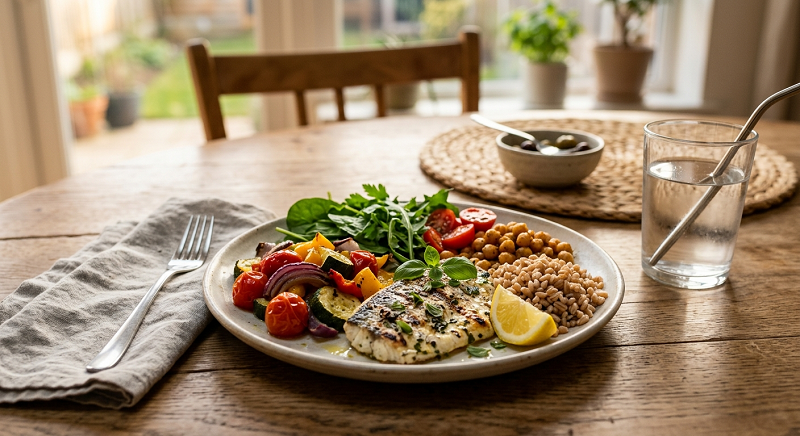
You do not need to clean out your entire kitchen.
Start with a few simple changes.
Step 1: Add More Vegetables
Make vegetables part of lunch and dinner.
For example, add a side salad or cooked vegetables to your usual meal.
Step 2: Switch Your Main Fat
Use olive oil more often when it fits the meal.
You can use it for cooking, dressings, or roasted vegetables.
Step 3: Eat More Beans
Try adding beans or lentils to one meal several times a week.
Step 4: Choose Whole Grains
Replace some refined grains with brown rice, oats, barley, quinoa, or whole-grain bread.
Step 5: Eat Fish More Often
Try having fish instead of processed meat when practical.
Step 6: Make Fruit Your Sweet Snack
Instead of reaching for cookies or candy every time, try fresh fruit with yogurt or a small serving of nuts.
Step 7: Reduce Ultra-Processed Foods
You do not need to eliminate them overnight.
Simply make whole or minimally processed foods the foundation of most meals.
Starting a healthier diet does not mean changing everything overnight. For more practical ways to build healthy habits into your daily routine, check out our guide to 10 Simple Healthy Habits to Practice Every Day.
Easy Mediterranean Meal Plan for Beginners
Here is a simple one-day example.
Breakfast
Oatmeal with:
- Berries or banana
- Chia seeds
- A small handful of walnuts
- Plain yogurt
Lunch
Mediterranean-style bowl:
- Brown rice or quinoa
- Chickpeas
- Cucumber
- Tomatoes
- Leafy greens
- Olive oil and lemon dressing
Snack
Apple with a small handful of almonds
Dinner
Grilled fish with:
- Roasted vegetables
- Brown rice or potatoes
- Green salad
- Olive oil and lemon
Dessert
Fresh fruit or plain yogurt with berries.
This is only an example. You can change the foods based on your culture, budget, and preferences.
Mediterranean Diet Meal Prep Tips
Meal preparation can make healthy eating much easier.
You do not need to cook complicated recipes every day.
Try preparing a few basic foods in advance.
For example:
- Cook a batch of brown rice or quinoa.
- Wash and cut vegetables.
- Prepare beans or lentils.
- Boil a few eggs.
- Keep fruit ready for snacks.
- Make a simple olive oil and lemon dressing.
- Cook several portions of fish or chicken.
Then you can combine these ingredients in different ways throughout the week.
This saves time and makes it easier to avoid unhealthy convenience foods when you are hungry.
Common Mediterranean Diet Mistakes
Even a healthy diet can become less healthy if it is misunderstood.
Here are a few mistakes to avoid.
Mistake 1: Eating Too Much Olive Oil
Olive oil is nutritious, but it is still calorie-dense.
Use reasonable portions.
Mistake 2: Eating Too Much Bread and Pasta
Whole grains can be part of a healthy diet, but portion size still matters.
Balance grains with vegetables, beans, fish, and other protein sources.
Mistake 3: Thinking Processed Foods Are Automatically Healthy
A food labeled “Mediterranean” is not always healthy.
Look at the ingredients and nutrition facts.
Mistake 4: Focusing Only on Individual Foods
The Mediterranean diet is a dietary pattern, not a list of magic foods.
Olive oil alone will not make an unhealthy diet healthy.
The overall combination of foods matters.
Mistake 5: Trying to Be Perfect
One pizza, dessert, or restaurant meal will not ruin your progress.
Think about what you eat most of the time.
Consistency is more important than perfection.
Can You Follow the Mediterranean Diet on a Budget?
Yes.
You do not need expensive specialty foods.
Some affordable Mediterranean diet staples include:
- Beans
- Lentils
- Oats
- Brown rice
- Seasonal vegetables
- Bananas
- Apples
- Canned fish
- Eggs
- Frozen vegetables
- Plain yogurt
- Peanuts and other affordable nuts
Buy seasonal produce when possible.
Frozen vegetables can also be useful because they are convenient and can last longer.
You can also build meals around inexpensive plant proteins instead of making meat the center of every meal.

Is the Mediterranean Diet Right for Everyone?
The Mediterranean diet can be a healthy choice for many adults, but there is no single diet that works perfectly for everyone.
Your nutritional needs can change based on your age, activity level, health conditions, medications, allergies, food preferences, and other factors.
If you have diabetes, kidney disease, food allergies, or another medical condition, talk with your doctor or registered dietitian before making major dietary changes.
The goal should be a healthy eating pattern that is safe, enjoyable, affordable, and realistic for you.
Frequently Asked Questions About the Mediterranean Diet
Is the Mediterranean diet good for beginners?
Yes. It can be beginner-friendly because it does not require strict calorie counting or a long list of forbidden foods.
Start with simple changes such as eating more vegetables, beans, fruit, whole grains, fish, nuts, and healthy fats.
Can I eat rice on the Mediterranean diet?
Yes.
Rice can fit into a Mediterranean-style diet. When possible, choose whole-grain options such as brown rice, but you can also enjoy other types of rice in sensible portions.
Can I eat chicken on the Mediterranean diet?
Yes.
Chicken and other poultry can be eaten in moderate amounts. The Mediterranean pattern generally places more emphasis on plant foods and fish than on meat.
Can I eat eggs?
Yes.
Eggs can fit into a Mediterranean-style eating pattern. Pair them with vegetables, whole grains, or other nutrient-rich foods.
Do I have to eat Mediterranean food every day?
No.
The Mediterranean diet is better understood as a general eating pattern.
You can apply its principles to foods from your own culture and local grocery store.
For example, you can create a Mediterranean-style meal using local vegetables, fish, beans, whole grains, fruit, and healthy oils.
The Bottom Line: Start Small and Keep It Simple
The Mediterranean diet is not about following complicated rules.
It is about building meals around nutritious foods that can support your health over time.
Focus on:
- More vegetables and fruits
- More beans and whole grains
- Fish and seafood regularly
- Nuts and seeds
- Olive oil and other unsaturated fats
- Less processed meat
- Less added sugar
- Fewer highly processed foods
- Reasonable portions
- Plenty of variety
The research is encouraging, especially for heart health, but no diet is a magic solution. The Mediterranean diet works best as part of a healthy lifestyle that also includes regular physical activity, good sleep, and other healthy habits.
Most importantly, you do not have to change everything at once.
Start with one meal.
Add vegetables to dinner. Swap a sugary snack for fruit. Try beans instead of meat. Use olive oil in a simple dressing. Choose whole grains more often.
Then build from there.
Ready to try it?
Choose three Mediterranean diet changes you can start this week and stick with them. After a few weeks, add another small change.
And we’d love to hear from you: What Mediterranean-style food or recipe would you like to try first? Share your favorite idea in the comments and inspire someone else to eat healthier, too.