

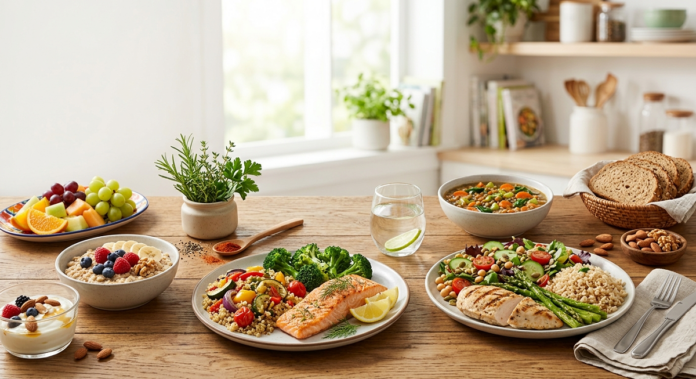
If you have ever wondered, “What is the DASH diet?”, you are not alone. The DASH diet is one of the best-known eating plans for supporting healthy blood pressure and heart health.
DASH stands for Dietary Approaches to Stop Hypertension. It was created to help people prevent or manage high blood pressure, also called hypertension. Unlike many popular diets, DASH does not focus on cutting out an entire food group. Instead, it encourages a balanced mix of vegetables, fruits, whole grains, beans, nuts, fish, lean meats, and low-fat dairy foods.
The plan also focuses on eating less sodium, added sugar, and saturated fat.
The good news is that you do not need special foods or expensive products to follow the DASH diet. Most of the foods are easy to find at a regular grocery store.
So, is the DASH diet right for you? Let’s look at how it works, what you can eat, its possible benefits, and simple ways to get started.
What Is the DASH Diet?
The DASH diet is a heart-healthy eating plan designed to help prevent and manage high blood pressure.
It was developed through research supported by the National Heart, Lung, and Blood Institute (NHLBI). The eating plan puts a strong focus on foods that provide nutrients such as potassium, calcium, magnesium, fiber, and protein.
At the same time, it limits foods that are high in sodium and saturated fat.
The main foods encouraged on the DASH diet include:
- Vegetables
- Fruits
- Whole grains
- Beans and legumes
- Nuts and seeds
- Fish
- Poultry
- Low-fat or fat-free dairy
- Healthy vegetable oils
The plan also recommends limiting foods such as fatty meats, full-fat dairy products, highly processed foods, sugary drinks, and sweets.
One of the most important parts of DASH is sodium control. The standard DASH plan allows up to 2,300 milligrams of sodium per day, while a lower-sodium version aims for 1,500 milligrams per day.
How Does the DASH Diet Work?
The DASH diet works by changing the overall quality of your diet.
Instead of building meals around processed foods, salty snacks, and fatty meats, you build them around nutrient-rich whole foods.
For example, a typical DASH-style meal might include:
- Grilled fish
- Brown rice
- Steamed vegetables
- A side salad
- Fresh fruit
- Low-fat yogurt
This type of meal provides a range of important nutrients while keeping sodium and saturated fat under control.
Why Is Sodium Important?
Sodium is a mineral found naturally in some foods and added to many processed foods. Your body needs some sodium, but too much can contribute to higher blood pressure in many people.
Reducing sodium is one of the key parts of the DASH eating plan.
The NHLBI recommends reading food labels, choosing lower-sodium products, limiting processed foods, and using herbs, spices, lemon, or lime instead of relying heavily on salt.
You do not have to make every meal bland.
Garlic, ginger, black pepper, paprika, basil, oregano, turmeric, lemon juice, vinegar, and other salt-free seasonings can add plenty of flavor.
DASH Diet Food List: What Can You Eat?
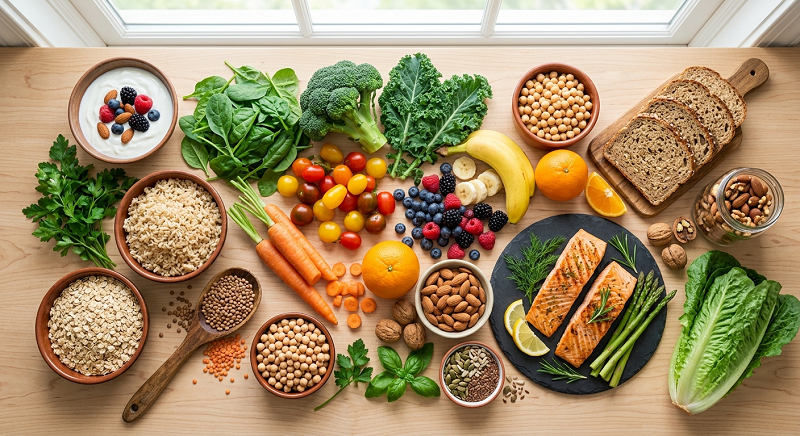
One reason the DASH diet is easy to follow is that it includes a wide range of foods.
The focus is not simply on eating less. It is about eating better-quality foods more often.
1. Vegetables
Vegetables are a major part of the DASH diet.
Good choices include:
- Spinach
- Broccoli
- Carrots
- Tomatoes
- Cabbage
- Green beans
- Bell peppers
- Squash
- Sweet potatoes
- Leafy greens
Vegetables provide fiber, vitamins, minerals, and other nutrients. Many are also good sources of potassium and magnesium.
Try adding vegetables to lunch and dinner. You can also add spinach, tomatoes, mushrooms, or peppers to breakfast dishes.
2. Fruits
Fruit is another key part of the DASH diet.
Healthy choices include:
- Apples
- Bananas
- Oranges
- Berries
- Mangoes
- Melons
- Peaches
- Grapes
- Pineapple
- Pears
Whole fruit is usually a better choice than fruit drinks because it provides fiber and does not require added sugar.
Fresh, frozen, or canned fruit can all work. If buying canned fruit, look for options without added sugar when possible.
3. Whole Grains
The DASH diet encourages whole grains because they provide fiber and important nutrients.
Examples include:
- Oatmeal
- Brown rice
- Whole-grain bread
- Whole-wheat pasta
- Barley
- Whole-grain cereals
The NHLBI recommends making most grain servings whole grains.
A simple change is to replace white bread with whole-grain bread or white rice with brown rice or another whole grain.
4. Low-Fat Dairy
Low-fat and fat-free dairy foods can provide calcium and protein.
Examples include:
- Low-fat milk
- Fat-free milk
- Low-fat yogurt
- Reduced-fat cheese
If you cannot tolerate dairy, you can discuss suitable alternatives with a health professional.
5. Fish and Lean Protein
The DASH diet includes lean sources of protein.
Good choices include:
- Fish
- Skinless chicken
- Turkey
- Eggs
- Beans
- Lentils
- Peas
Fish can be a useful choice because certain types provide omega-3 fatty acids.
When preparing meat, choose methods such as baking, grilling, roasting, or steaming instead of deep-frying.
6. Nuts, Seeds, and Legumes
Nuts, seeds, beans, and lentils can be an important part of the DASH diet.
Examples include:
- Almonds
- Walnuts
- Peanuts
- Chia seeds
- Sunflower seeds
- Kidney beans
- Black beans
- Lentils
- Chickpeas
These foods can provide protein, fiber, and minerals.
However, portion size still matters because nuts and seeds are energy-dense foods.
Foods to Limit on the DASH Diet
The DASH diet does not mean that you can never eat your favorite foods.
Instead, it encourages you to eat certain foods less often and in smaller amounts.
Foods to limit include:
High-Sodium Foods
Common sources of sodium include:
- Processed meats
- Canned soups
- Instant noodles
- Salty snacks
- Fast food
- Pickled foods
- Some sauces and condiments
- Processed frozen meals
The NHLBI notes that processed and prepared foods can be major sources of sodium.
Foods High in Saturated Fat
Try to limit:
- Fatty cuts of meat
- Bacon
- Sausage
- Full-fat dairy
- Large amounts of butter
- Foods made with high amounts of saturated fat
The DASH plan favors healthier fat sources and limits saturated fat.
Sugary Foods and Drinks
DASH also recommends limiting added sugars.
This includes:
- Soda
- Sweetened drinks
- Candy
- Cakes
- Cookies
- Pastries
- Sugary desserts
You do not need to completely eliminate dessert. The goal is to make sweets an occasional part of your diet rather than a daily staple.
DASH Diet and High Blood Pressure
One of the biggest reasons people choose DASH is its connection to blood pressure management.
The eating plan was specifically designed to help prevent and manage hypertension. Current American Heart Association guidance also recommends heart-healthy eating patterns such as DASH as part of lifestyle changes for preventing or treating high blood pressure.
The DASH diet combines several helpful habits:
- Eating more vegetables and fruits
- Choosing whole grains
- Eating more beans, nuts, and seeds
- Choosing lean proteins
- Eating low-fat dairy
- Reducing sodium
- Limiting saturated fat
- Limiting added sugars
These changes can create an overall eating pattern that supports heart health.
For more information about healthy blood pressure habits, visit the American Heart Association’s guide to managing blood pressure with a heart-healthy diet.
Other Possible Benefits of the DASH Diet
Although DASH is best known for supporting healthy blood pressure, its overall eating pattern may offer other health benefits.
May Support Heart Health
The DASH diet emphasizes vegetables, fruits, whole grains, fish, nuts, beans, and healthier fats while limiting sodium and saturated fat.
These are important parts of a heart-healthy eating pattern.
May Help With Weight Management
The DASH diet is not strictly a weight-loss diet.
However, its focus on vegetables, fruits, whole grains, lean protein, and reasonable portions can support a healthy calorie intake.
The NHLBI notes that DASH can be used alongside appropriate calorie intake to help with weight loss when needed.
May Improve Overall Diet Quality
Many people eat too many highly processed foods and not enough vegetables, fruits, whole grains, and legumes.
Moving toward DASH can help improve the overall quality of your meals.
It is less about following a short-term diet and more about building eating habits that can last.
How Many Servings Should You Eat?
The exact number of servings depends on your calorie needs.
For a 2,000-calorie DASH eating plan, the NHLBI lists these general targets:
| Food Group | Daily Target |
|---|---|
| Grains | 6–8 servings |
| Vegetables | 4–5 servings |
| Fruits | 4–5 servings |
| Low-fat or fat-free dairy | 2–3 servings |
| Lean meat, poultry, fish | Up to 6 servings |
| Fats and oils | 2–3 servings |
| Nuts, seeds, beans, peas | 4–5 servings per week |
| Sweets | Up to 5 servings per week |
| Sodium | Up to 2,300 mg |
These are general targets, not a one-size-fits-all prescription. Your needs may be different based on your age, activity level, health goals, and other factors.
What Does a Day on the DASH Diet Look Like?
You do not need complicated recipes to follow DASH.
Here is a simple example of what a day could look like.
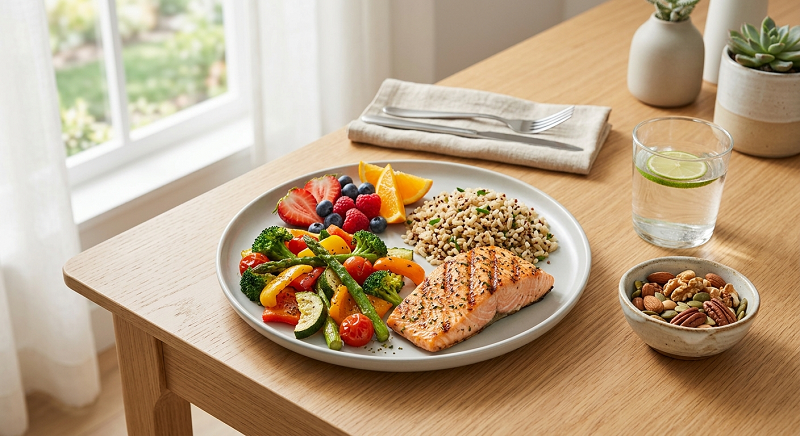
Breakfast
- Oatmeal with banana and berries
- Low-fat milk or yogurt
- Unsweetened coffee or tea
Lunch
- Grilled chicken or bean salad
- Mixed vegetables
- Whole-grain bread
- Fresh fruit
- Water
Snack
- A small handful of unsalted nuts
- An apple
Dinner
- Grilled or baked fish
- Brown rice
- Steamed broccoli
- Side salad
- Low-fat yogurt
This is only an example. The DASH plan is flexible and allows you to create meals that fit your tastes and culture.
Mayo Clinic also provides sample DASH menus for people who want practical meal ideas.
How to Start the DASH Diet
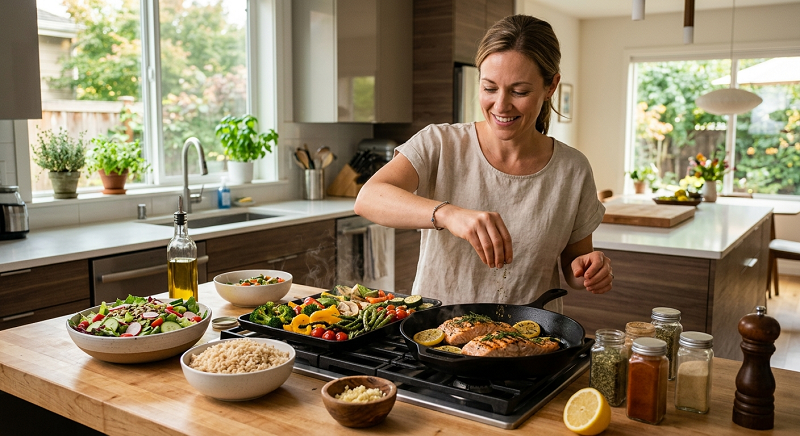
Changing your eating habits overnight can be difficult.
Instead, start with small changes.
Step 1: Add More Vegetables
Add one extra serving of vegetables to lunch or dinner.
For example, add broccoli, carrots, leafy greens, or tomatoes to your plate.
Step 2: Choose Whole Grains
Try oatmeal for breakfast or whole-grain bread for sandwiches.
You can also slowly replace some white rice with brown rice or another whole grain.
Step 3: Reduce Salt
Do not automatically add salt to your food.
Taste your meal first.
Use herbs, spices, garlic, ginger, lemon, or vinegar to add flavor.
Step 4: Read Food Labels
Compare similar products and choose the one with less sodium when possible.
This can make a big difference because many packaged foods contain more sodium than you may expect.
Step 5: Eat More Beans and Lentils
Try adding beans or lentils to soups, salads, rice dishes, or wraps.
They are affordable, filling, and provide fiber and plant-based protein.
Step 6: Make Water Your Main Drink
Replace sugary drinks with water more often.
If plain water feels boring, add lemon, lime, cucumber, or fresh mint.
Step 7: Make Changes Slowly
You do not need to change everything in one week.
The NHLBI recommends making smaller changes and building new habits over time.
Is the DASH Diet Hard to Follow?
For many people, DASH can be easier to maintain than restrictive diets because it does not require special foods or extreme rules.
You can still enjoy a wide variety of foods.
The biggest challenge may be reducing your intake of salty and highly processed foods if they are already a regular part of your meals.
Eating at restaurants can also require some planning.
When eating out, consider:
- Asking for sauces and dressings on the side
- Choosing grilled foods
- Ordering vegetables instead of fries
- Limiting processed meats
- Asking for less added salt
- Choosing water instead of sugary drinks
These small choices can help you stay closer to your DASH goals.
DASH Diet vs. Other Popular Diets
The DASH diet is different from restrictive diets such as very-low-carbohydrate or carnivore diets.
DASH does not require you to remove carbohydrates.
Instead, it encourages better carbohydrate choices, especially whole grains, fruits, and vegetables.
It also includes plant foods, dairy, fish, poultry, beans, and nuts.
In other words, DASH focuses less on strict food rules and more on the overall quality of your eating pattern.
That makes it a practical choice for people who want a balanced approach to long-term healthy eating.
Unlike restrictive diets, the DASH diet focuses on balanced, nutrient-rich foods rather than extreme food rules. If you’re curious about whether popular eating plans are actually supported by science, read our guide to Are New Diet Trends Actually Healthy?.
Who Should Be Careful With the DASH Diet?
The DASH diet is generally designed as a healthy eating pattern, but individual needs can vary.
For example, people with certain medical conditions may need to adjust their intake of sodium, potassium, fluids, or other nutrients.
If you have a medical condition, take medications, or have been advised to follow a specific diet, talk with your doctor or a registered dietitian before making major dietary changes.
Also, if you have high blood pressure, do not stop or change prescribed medication simply because you start eating healthier.
Lifestyle changes and medication may both be needed.
Frequently Asked Questions About the DASH Diet
Is the DASH diet good for beginners?
Yes. The DASH diet can be a beginner-friendly eating plan because it uses common foods and does not require special products.
Start with simple changes, such as eating more vegetables, choosing whole grains, and reducing salty processed foods.
Can you eat rice on the DASH diet?
Yes. Rice can fit into the DASH diet. Whole-grain choices such as brown rice are encouraged more often because they provide more fiber and nutrients.
Can you eat meat on the DASH diet?
Yes. DASH includes lean meat, poultry, and fish. The plan recommends limiting fatty meats and choosing leaner protein sources more often.
Is the DASH diet low-carb?
No. DASH is not a low-carbohydrate diet.
It includes grains, fruits, vegetables, beans, and other carbohydrate-containing foods. The focus is on choosing nutritious sources and reasonable portions.
How much sodium can you have on DASH?
The standard DASH plan uses a limit of 2,300 mg of sodium per day. A lower-sodium version uses 1,500 mg per day.
Can the DASH diet help with weight loss?
It can support weight management when combined with an appropriate calorie intake. However, DASH is primarily a heart-healthy eating pattern rather than a quick weight-loss diet.
Final Thoughts: Is the DASH Diet Worth Trying?
So, what is the DASH diet?
It is a flexible, balanced eating plan built around vegetables, fruits, whole grains, lean proteins, beans, nuts, seeds, and low-fat dairy. At the same time, it encourages you to reduce sodium, saturated fat, added sugar, and highly processed foods.
The goal is not perfection.
The goal is to build healthier habits that you can maintain for years.
If you are looking for an eating plan that supports heart health without extreme restrictions, DASH may be worth exploring. It gives you plenty of food choices while helping you pay more attention to the quality of your meals.
Start small. Add another vegetable to your plate. Choose fruit instead of a sugary snack. Swap a salty processed food for a fresh option. Try herbs and spices instead of extra salt.
Over time, these simple choices can become healthy habits.
Ready to give the DASH diet a try? Start with one small change today and build from there. What DASH-friendly food would you add to your next meal? Share your favorite healthy meal idea or tip in the comments and inspire someone else on their journey toward better health.