
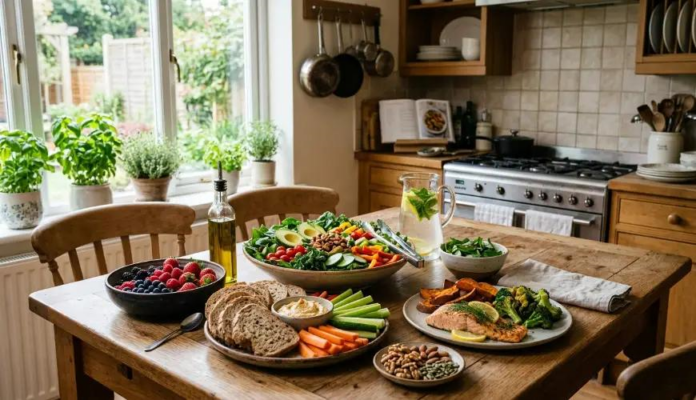
Eating healthy can seem confusing.
One day, you hear that carbs are bad. The next day, you hear that you need more protein. Then there are diets that tell you to avoid fat, skip breakfast, cut out sugar, or eat only certain foods.
With so much nutrition advice online, it is easy to wonder: What does a healthy diet really look like?
The good news is that healthy eating does not have to be complicated.
A healthy diet is not about eating perfectly. It is about choosing a wide range of nutritious foods most of the time and creating meals that give your body the fuel and nutrients it needs.
The World Health Organization (WHO) describes a healthy diet using four key ideas: adequacy, balance, moderation, and diversity. It also recommends a diet based mainly on minimally processed or unprocessed foods, with plenty of fruits, vegetables, whole grains, and other nutritious choices.
So, what should actually be on your plate?
Let’s break it down.
What Is a Healthy Diet?
A healthy diet provides your body with the nutrients and energy it needs to function well.
A healthy diet is built around nutritious foods that support your energy, digestion, and overall well-being. To learn more about nutritious options you can enjoy every day, explore our guide to the best everyday foods for energy, digestion, and wellness.
That means eating a variety of foods that provide:
- Protein
- Carbohydrates
- Healthy fats
- Fiber
- Vitamins
- Minerals
- Water
It also means limiting foods and drinks that are high in added sugar, sodium, unhealthy fats, and other ingredients that can make it harder to maintain good health.
Importantly, there is no single perfect diet for everyone.
Your food needs can depend on your age, activity level, body size, lifestyle, culture, food access, and other individual factors. WHO also notes that healthy diets can look different from person to person while still following the same basic principles.
The goal is not perfection.
The goal is balance and consistency.
The Healthy Plate Method: A Simple Way to Build Better Meals
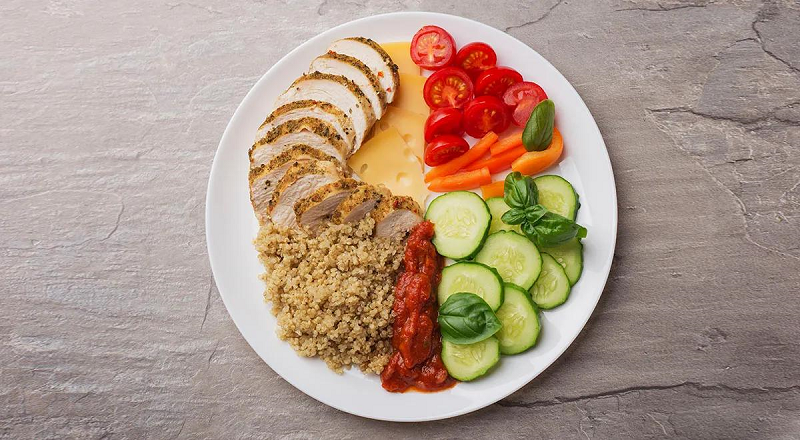
One of the easiest ways to understand a healthy diet is to picture your dinner plate.
Harvard’s Healthy Eating Plate recommends making about half of your plate vegetables and fruits, one-quarter whole grains, and one-quarter healthy protein. It also recommends healthy plant oils and water or other drinks without added sugar.
Think of your plate like this:
½ plate: Vegetables and fruits
¼ plate: Whole grains or other healthy carbohydrates
¼ plate: Healthy protein
Then add a small amount of healthy fat.
This simple approach can help you build a balanced meal without counting every calorie.
1. Fill Half Your Plate With Vegetables and Fruits
Vegetables and fruits are some of the most important parts of a healthy diet.
They provide fiber, vitamins, minerals, and many other helpful plant compounds.
Try to eat a variety of colors throughout the week.
For example:
- Spinach
- Broccoli
- Carrots
- Tomatoes
- Bell peppers
- Cabbage
- Green beans
- Pumpkin
- Bananas
- Apples
- Oranges
- Mangoes
- Berries
- Papaya
Fresh produce is great, but it is not the only option.
Frozen and canned fruits and vegetables can also be useful choices. WHO notes that frozen and canned options can be healthy when they do not contain added sugars or excess sodium.
For adults and children over age 10, WHO recommends at least 400 grams of fruits and vegetables per day.
2. Choose Whole Grains More Often
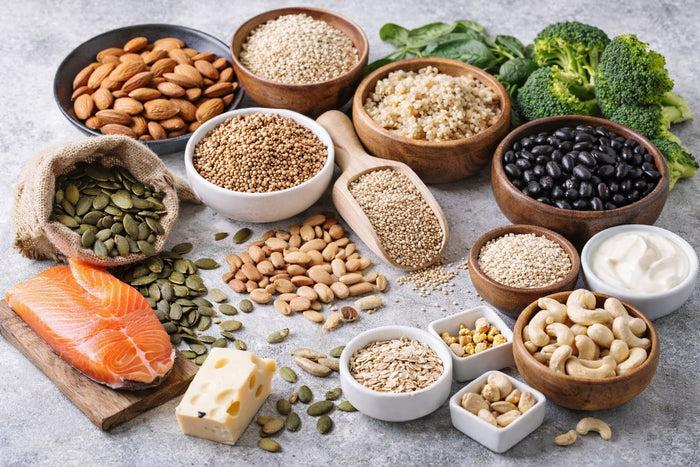
Carbohydrates are not automatically unhealthy.
Your body uses carbohydrates as an important source of energy. The bigger question is where your carbohydrates come from.
Whole grains contain more of the natural grain than refined grains. They can also provide fiber and other nutrients.
Good choices include:
- Oats
- Brown rice
- Quinoa
- Barley
- Whole-grain bread
- Whole-wheat pasta
- Corn
- Other intact or minimally processed grains
Harvard’s Healthy Eating Plate recommends choosing whole grains over refined grains because they tend to have a milder effect on blood sugar and insulin.
This does not mean you can never eat white rice, white bread, or pasta.
It simply means that whole-grain choices should appear more often when practical.
3. Include a Good Source of Protein
Protein helps build and maintain muscles and is also needed for many important functions in the body.
A healthy diet can include protein from both plants and animals.
Some good choices include:
- Fish
- Chicken
- Eggs
- Beans
- Lentils
- Chickpeas
- Tofu
- Nuts
- Seeds
- Yogurt
- Other nutritious protein foods
WHO recommends getting protein from a mix of sources and notes that shifting toward more plant-based protein can provide health benefits for many adults.
You do not need to eat huge amounts of protein at every meal.
Instead, try adding a reasonable protein source to your meals.
For example, you could have grilled fish with vegetables and brown rice, or beans with vegetables and whole-grain rice.
4. Don’t Be Afraid of Healthy Fats
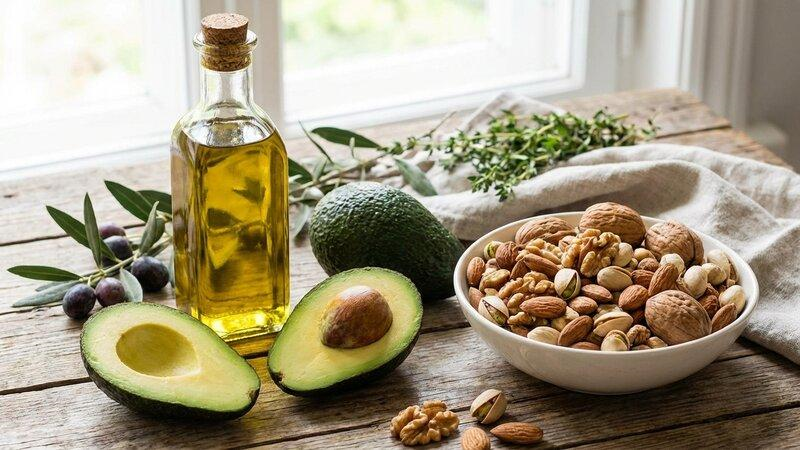
Fat has often been given a bad reputation.
But your body needs fat. The key is choosing the right types and eating them in reasonable amounts.
Healthy sources of unsaturated fats include:
- Avocado
- Nuts
- Seeds
- Fish
- Olive oil
- Canola oil
- Sunflower oil
- Other plant-based oils
WHO recommends replacing saturated and trans fats with unsaturated fats when possible.
You do not need to remove all fat from your diet.
Instead, focus on fat quality and portion size.
For example, adding a small amount of avocado or nuts to a meal can be a simple way to include healthy fats.
Why Fiber Matters in a Healthy Diet
Fiber is another important part of healthy eating.
It is found naturally in plant foods such as fruits, vegetables, beans, whole grains, nuts, and seeds.
Fiber can help support normal digestion and can also help you feel full after eating.
Good sources include:
- Oats
- Beans
- Lentils
- Apples
- Pears
- Vegetables
- Chia seeds
- Flaxseeds
- Whole grains
- Nuts
WHO recommends that adults and children over age 10 get at least 25 grams of naturally occurring dietary fiber each day.
One simple way to increase your fiber intake is to make small changes.
For example, choose oatmeal instead of a sugary breakfast pastry. Add beans to your lunch. Eat whole fruit instead of drinking fruit juice.
Small changes can add up.
What About Sugar?
You do not have to avoid every food that contains sugar.
Fruit, for example, naturally contains sugar and also provides fiber and other nutrients.
The bigger concern is free sugars, which include sugars added to foods and drinks, as well as sugars found naturally in honey, syrups, and fruit juices.
WHO recommends keeping free sugar intake below 10% of total daily energy intake, with additional benefits possible at 5% or less.
Common sources of added or free sugar include:
- Soft drinks
- Sweetened coffee
- Energy drinks
- Candy
- Cakes
- Cookies
- Sweetened cereals
- Many packaged desserts
- Some flavored drinks
You do not need to completely ban these foods.
Instead, enjoy them less often and in smaller portions.
Choose Water More Often
One of the simplest healthy eating habits is also one of the easiest to overlook: drink water regularly.
Water helps keep you hydrated without adding sugar or extra calories.
Harvard’s Healthy Eating Plate recommends water, coffee, or tea as beverage choices and advises limiting sugary drinks.
If you usually drink several sugary beverages each day, replacing even one with water can be a useful first step.
How Much Processed Food Is Okay?
This is where healthy eating can become confusing.
Not all processed foods are unhealthy.
Some foods are processed to make them safer, easier to store, or easier to prepare. Frozen vegetables, canned beans, plain yogurt, and whole-grain bread can all fit into a healthy diet.
The bigger concern is eating large amounts of highly processed foods that are often high in added sugar, sodium, unhealthy fats, or refined carbohydrates.
WHO recommends making minimally processed and unprocessed foods the foundation of a healthy diet.
The current U.S. Dietary Guidelines for Americans 2025–2030 also emphasize nutrient-dense whole foods and recommend reducing highly processed foods that contain refined carbohydrates, added sugars, excess sodium, and unhealthy fats.
Instead of asking, “Is this food processed?”
Try asking:
“How often am I eating this, and what foods make up most of my diet?”
That question gives you a more useful picture of your overall eating pattern.
A Healthy Diet Does Not Mean Giving Up Your Favorite Foods
Healthy eating should fit into your real life.
You can still enjoy pizza, burgers, desserts, chips, or your favorite comfort foods.
The important thing is how often you eat them and what your overall diet looks like.
For example, if you enjoy pizza, you might:
- Add a side salad or vegetables.
- Choose a reasonable portion.
- Drink water instead of soda.
- Enjoy fruit later as a snack.
- Avoid turning one meal into an entire day of overeating.
A healthy lifestyle has room for enjoyment.
Food is not only fuel. It can also be part of family gatherings, celebrations, culture, and pleasure.
What Does a Healthy Breakfast Look Like?
A healthy breakfast does not need to be fancy.
The goal is to combine nutritious foods that help you start the day well.
Here are a few ideas:
Option 1: Oatmeal Bowl
- Oats
- Banana or berries
- Chia seeds
- A small handful of nuts
- Plain yogurt
Option 2: Eggs and Whole-Grain Toast
- Eggs
- Whole-grain toast
- Avocado
- Tomatoes or other vegetables
- Water or unsweetened coffee
Option 3: Simple Yogurt Bowl
- Plain Greek yogurt
- Berries
- Chia seeds
- Nuts
- A small serving of oats
The key is not the specific recipe.
It is the combination of protein, fiber-rich carbohydrates, fruits or vegetables, and healthy fats.
What Does a Healthy Lunch Look Like?
Lunch can be just as simple.
Try building your meal around the healthy plate method.
For example:
Grilled chicken + brown rice + mixed vegetables + avocado
Or:
Beans + whole-grain rice + cabbage + tomatoes + a small amount of healthy oil
Or:
Fish + sweet potato + leafy greens + fruit
These meals provide a mix of protein, carbohydrates, fiber, vitamins, minerals, and healthy fats.
What Does a Healthy Dinner Look Like?
Dinner does not need to be a low-calorie meal.
Instead, focus on balance.
A simple dinner could include:
- Baked or grilled fish
- Brown rice
- Steamed broccoli
- Carrots
- A piece of fruit
Another option could be:
- Chicken
- Sweet potato
- Mixed vegetables
- Avocado
You can also make familiar meals healthier by changing the balance of ingredients.
For example, add more vegetables to soups, use beans in place of some meat, or choose whole grains more often.
Healthy Snacks Can Make Eating Well Easier
Snacks can fit into a healthy diet.
The trick is choosing foods that provide useful nutrients rather than relying mainly on highly sugary or salty snacks.
Try:
- Fresh fruit
- Plain yogurt
- Nuts
- Seeds
- Carrot sticks
- Cucumber slices
- Boiled eggs
- Hummus with vegetables
- Apple with nut butter
You do not need to snack if you are not hungry.
But if you are hungry between meals, a nutritious snack can help you make a better choice later.
Healthy Eating on a Budget
Eating healthy does not always mean buying expensive specialty foods.
Many affordable foods are highly nutritious.
Consider:
- Oats
- Beans
- Lentils
- Eggs
- Bananas
- Seasonal fruits
- Local vegetables
- Brown or other whole grains
- Canned fish with low sodium
- Frozen vegetables
Planning your meals can also help reduce food waste and unnecessary spending.
Before shopping, make a simple list.
Think about three or four meals you can prepare using some of the same ingredients.
For example, vegetables bought for dinner can also be used in an omelet the next morning.
How to Start Eating a Healthy Diet
You do not need to change everything at once.
In fact, trying to completely change your diet overnight may make healthy eating harder to maintain.
Instead, start with one or two simple habits.
Try These Small Changes
Week 1: Add one extra serving of vegetables each day.
Week 2: Replace one sugary drink with water.
Week 3: Choose whole grains more often.
Week 4: Add a healthy protein source to each main meal.
Week 5: Keep nutritious snacks available at home.
Over time, these small habits can become part of your normal routine.
Common Healthy Eating Mistakes to Avoid
Even people with good intentions can make healthy eating harder than it needs to be.
Mistake 1: Trying to Be Perfect
One unhealthy meal does not ruin your diet.
What matters is what you do consistently.
Mistake 2: Cutting Out Entire Food Groups Without a Reason
Some people remove carbohydrates, fats, or other food groups without understanding what they provide.
A balanced diet can include all three major macronutrients: carbohydrates, protein, and fats. WHO emphasizes balance among these energy sources as part of a healthy diet.
Mistake 3: Focusing Only on Calories
Calories matter, but food quality matters too.
Two foods can contain similar calories while providing very different amounts of fiber, vitamins, minerals, protein, and other nutrients.
Mistake 4: Drinking Too Many Calories
Sugary drinks can add a lot of sugar without making you feel as full as solid food.
Water is often the simplest everyday choice.
Mistake 5: Following Every New Diet Trend
Nutrition advice changes quickly online.
Instead of chasing every new trend, focus on basic habits supported by strong evidence:
- Eat more vegetables and fruits.
- Choose whole grains more often.
- Include healthy protein.
- Choose healthier fats.
- Drink water.
- Limit excess sugar, sodium, and unhealthy fats.
- Eat a variety of foods.
A Simple Healthy Diet Checklist
Use this checklist when planning your meals:
Every day, aim to:
- Eat several types of vegetables and fruits.
- Include a good source of protein.
- Choose whole grains often.
- Include healthy fats in reasonable amounts.
- Eat fiber-rich foods.
- Drink plenty of water.
- Limit sugary drinks.
- Keep highly processed foods from becoming the main part of your diet.
- Enjoy your food without feeling guilty.
- Focus on consistency rather than perfection.
The Bottom Line: What Does a Healthy Diet Really Look Like?
So, what does a healthy diet really look like?
It looks less like a strict meal plan and more like a balanced eating pattern.
It includes plenty of vegetables and fruits. It includes whole grains, beans, nuts, seeds, fish, eggs, poultry, and other nutritious protein sources. It includes healthy fats and enough fiber. It also limits excess sugar, sodium, unhealthy fats, and highly processed foods.
Most importantly, a healthy diet is flexible.
You do not need to eat perfectly every day. You do not need to avoid every dessert. You do not need to count every calorie.
Instead, focus on making nutritious foods the foundation of your meals.
A useful rule to remember is simple:
Fill more of your plate with whole, nutritious foods, and enjoy less nutritious foods in moderation.
That approach can make healthy eating feel less restrictive and much easier to maintain.
Ready to Improve Your Diet?
Start today with just one small change.
Add vegetables to your next meal. Drink water instead of a sugary drink. Choose whole grains. Add a serving of fruit. Or prepare a simple meal at home.
Then build from there.
What does your typical day of eating look like? Which healthy habit would you like to improve first? Share your thoughts in the comments and inspire others on their healthy living journey!